
New Book Blames Biden Inner Circle for Enabling Gaza War
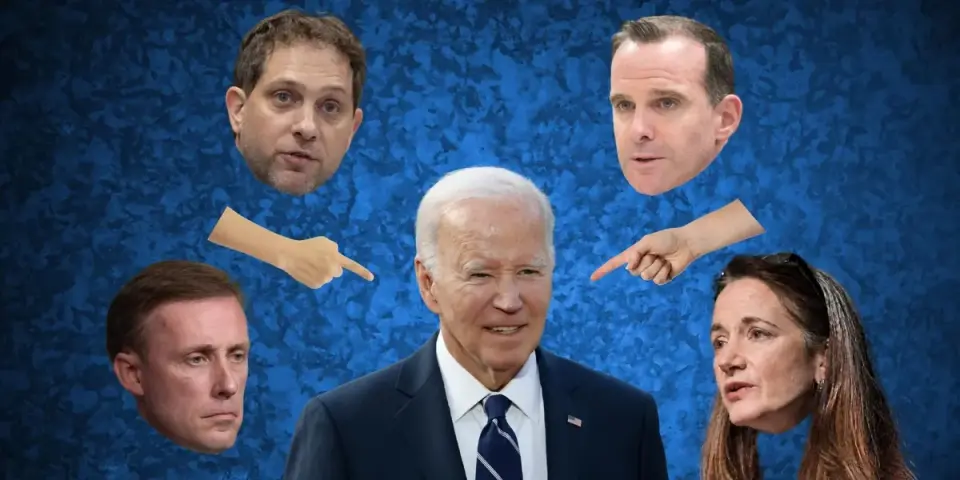
Journalist Akbar Shahid Ahmed’s new book, 'Crossing the Red Line,' details how former Biden administration officials enabled Israel’s military campaign in Gaza. The text argues that key figures, including Jake Sullivan and Brett McGurk, prioritized a 'bearhug' strategy that ignored humanitarian crises to maintain leverage. Critics argue this approach allowed a genocide to occur, while the administration avoided formal legal conclusions on Israeli conduct. The book highlights a culture of complicity among senior officials who are now seeking to shift blame to President Biden.
Key points
- Ahmed’s book identifies a shrinking inner circle of officials, including Antony Blinken, Jake Sullivan, Jon Finer, and Brett McGurk, who consistently refused to restrain Israel.
- The administration adopted a 'bearhug' strategy, publicly sympathizing with Israel while privately supporting maximalist goals, believing they had no leverage to shape the war early on.
- Brett McGurk is described as a central figure who discouraged public pressure for a ceasefire to pursue a broader Middle East grand bargain involving Saudi Arabia.
- Officials like Sullivan and Blinken avoided formal legal conclusions on Israeli war crimes, with Sullivan reportedly doubting the reality of famine in Gaza despite international evidence.
- Internal critics, such as Samantha Power and Linda Thomas-Greenfield, were sidelined or muzzled after speaking out against the policy in late 2023.
- The book notes that former officials have not publicly renounced the administration’s Gaza policy, instead blaming President Biden to protect their own reputations and future political prospects.
Background
This analysis follows ongoing humanitarian crises in Gaza, including recent building collapses and aid delivery disputes. It also comes amid diplomatic tensions, such as Israel’s consideration of expelling European officials from ceasefire monitoring hubs. The focus on the Biden administration’s legacy contrasts with current debates over US-Israel relations and the role of international law in the conflict.
Why it matters
The book provides a detailed account of how US foreign policy decisions may have enabled severe humanitarian consequences in Gaza. It raises questions about accountability within the Democratic foreign-policy establishment and the potential exclusion of key officials from future government roles. As the 2028 election cycle approaches, these revelations could influence voter sentiment and policy debates regarding US involvement in the Middle East.
What to watch
Activists are pushing to exclude 20 officials deemed responsible for the Gaza crisis from future government positions. The book may serve as evidence in these efforts, while former officials continue to defend their actions in public forums. The outcome of the 2028 election could determine whether these officials return to power or face lasting professional consequences.
Want the full story? Read the original reporting
Read on Responsible Statecraft