
New Zealand’s 2026 Election Hinges on Centrist Outsiders Amidst Record Voter Discontent
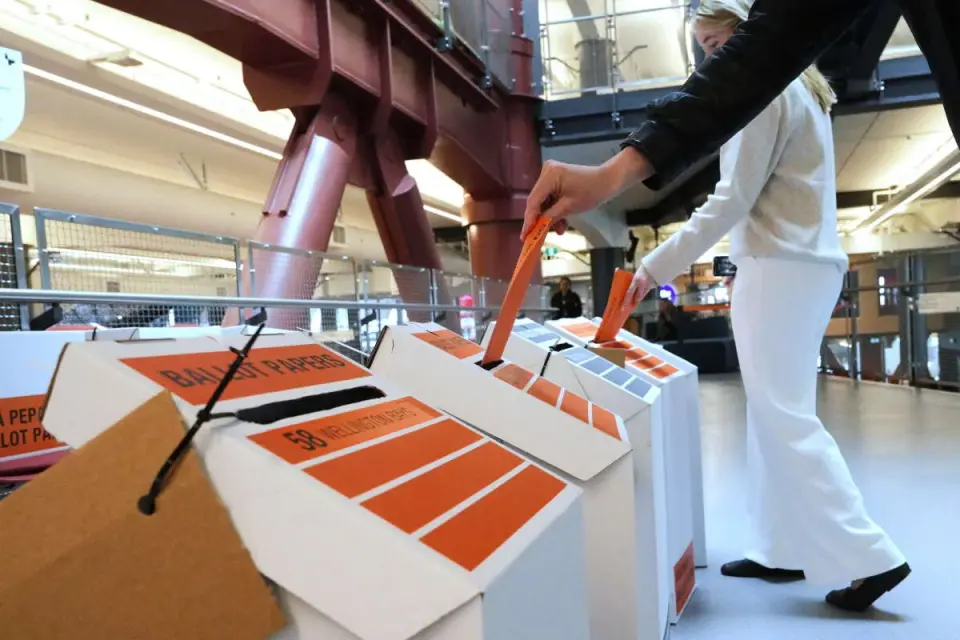
New Zealand voters cast ballots on November 7 in a tightly contested election where neither the incumbent National-led coalition nor the Labour-led opposition bloc is expected to secure a majority. Both major parties have fallen below 30% support in polls, creating a power vacuum that could be filled by minor parties, particularly the centrist Opportunity Party. The outcome will likely require complex coalition negotiations, with the balance of power potentially resting with newcomers who have never previously held parliamentary seats.
Key points
- Polls show both National and Labour parties trailing below 30% support, indicating widespread voter dissatisfaction with the traditional two-party system.
- The centrist Opportunity Party, led by 38-year-old Qiulae Wong, is projected to cross the 5% threshold for parliamentary representation, potentially making it the first all-outsider party to enter parliament in 30 years.
- Prime Minister Christopher Luxon faces a difficult re-election bid after surviving two confidence votes within his own caucus this year, while Labour leader Chris Hipkins seeks to recover from a decisive defeat in 2023.
- Economic factors, including an 11-year high in unemployment and persistent high living costs, have driven voters away from both major parties toward fringe and centrist alternatives.
- If no clear majority emerges, coalition negotiations will determine the next government, with minor parties like ACT and New Zealand First demanding greater influence than in previous terms.
Background
New Zealand has historically experienced stable, alternating terms between National and Labour governments, with second terms being nearly guaranteed for successful leaders. This pattern shifted in 2023 when the National-led coalition, including populist and libertarian parties, formed the country’s most conservative modern government. The current election follows a period of economic stagnation and social polarization that began during the pandemic era, breaking a decades-long trend of political consensus. Unlike the 2023 election, where the major parties dominated, this cycle features a fragmented landscape where minor parties hold significant leverage.
How outlets are covering it
AP News emphasizes the broad voter discontent with both major parties, highlighting the 'incumbency problems' faced by Luxon and the failure of Hipkins to surge in popularity. It frames the election as a referendum on three years of conservative rule and the resulting economic stagnation. CNN focuses more on the structural shift in power dynamics, specifically the rise of the Opportunity Party as a potential kingmaker. CNN details the specific policy demands of minor parties, such as ACT’s push to end affirmative action in medical schools and New Zealand First’s immigration stance, contrasting them with Labour’s proposed taxes on the wealthy. While AP notes the uncertainty of the result, CNN stresses the unprecedented influence of minor parties, describing the current situation as 'unprecedented territory' where small parties are no longer just supporting players but central negotiators.
Why it matters
The outcome of this election could mark a fundamental shift in New Zealand’s political landscape, ending the era of predictable two-party dominance. If the Opportunity Party or other minor parties hold the balance of power, they may force major policy concessions that were previously impossible. A loss for Luxon’s coalition would be the first single-term government in over 50 years, signaling deep public dissatisfaction with the current political establishment. The result will also determine the direction of social policies, including Indigenous Māori rights and economic reforms, as voters decide whether to continue with conservative austerity or pivot toward social spending and taxation of the wealthy.
What to watch
Results will be released on November 7, with 95% of votes counted by election night and a final tally due by November 27. If no clear majority emerges, coalition negotiations will begin immediately, with Qiulae Wong of the Opportunity Party indicating she will negotiate with whichever party wins the most votes. The outcome will determine whether Luxon secures a second term or if a new coalition, potentially led by Hipkins or a minor party leader, takes power. The next government will face immediate challenges regarding economic recovery, housing costs, and social policy concessions demanded by minor parties.
- New Zealand votes in an election expected to be tight after a tense campaign AP News
- New Zealand election campaign enters final day with result too close to call Reuters
- The final day of voting begins in New Zealand's election as an unusual law bans any talk of politics AP News
- A moderate millennial newcomer could decide knife-edge New Zealand election CNN
- Will New Zealand Join Voters’ Global Revolt Over Soaring Costs? The New York Times
Want the full story? Read the original reporting
Read on AP News