
Pakistan imposes emergency rule in Khyber Pakhtunkhwa, suspending Imran Khan’s party government
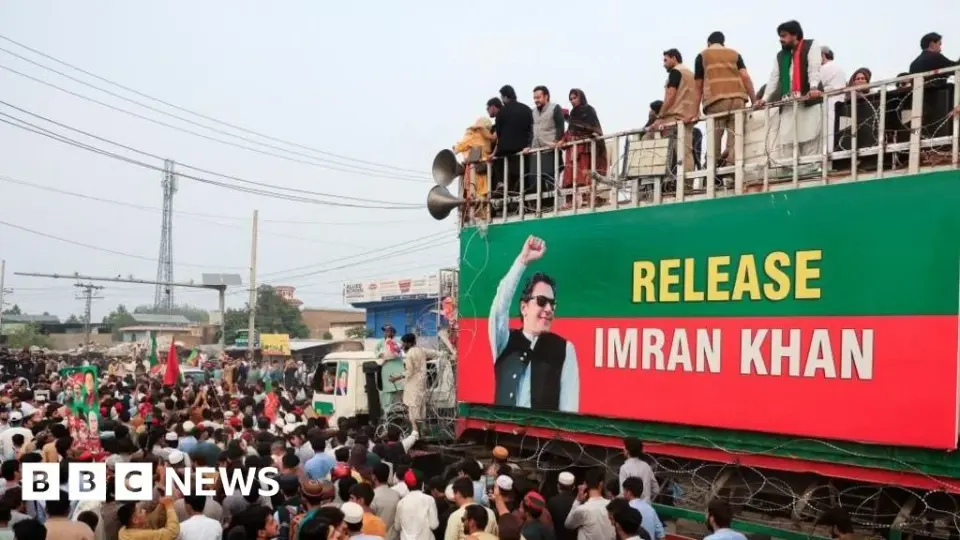
Pakistan’s federal government has imposed emergency rule and governor’s rule in Khyber Pakhtunkhwa, suspending the provincial government led by Imran Khan’s Pakistan Tehreek-e-Insaf (PTI). The move follows a week of mass protests by PTI supporters demanding Khan’s release and follows failed negotiations between the federal and provincial governments. While the federal government cites the need to combat terrorism and protect citizens, PTI leaders and analysts argue the action is a political maneuver to suppress dissent and break the party’s influence. The province, which PTI has governed since 2013, is now under direct federal control, with schools and internet services initially disrupted before partial restoration. The PTI has vowed to challenge the move in court, while tensions remain high amid rising militancy and regional instability.
Key points
- President Asif Ali Zardari imposed emergency rule and governor’s rule in Khyber Pakhtunkhwa on Sunday, suspending the PTI-led provincial government.
- The federal government justified the move by citing the provincial government’s failure to combat terrorism, particularly the Tehreek-e-Taliban Pakistan (TTP), and its alleged links to armed groups.
- PTI leaders, including suspended Chief Minister Sohail Afridi, have been placed in preventive custody, and most party leaders in the province have gone into hiding.
- The PTI plans to challenge the imposition of emergency rule in court, arguing it is an unconstitutional move against provincial autonomy.
- The move follows a week of mass protests by PTI supporters demanding the release of Imran Khan, who has been imprisoned since August 2023 on corruption charges he claims are politically motivated.
- Analysts and commentators are divided on the motive, with some viewing it as a necessary security measure and others as a political crackdown to suppress dissent and break the PTI’s influence.
Background
This development follows a series of escalating tensions between the federal government and Imran Khan’s PTI, including a mass march by supporters in October, the arrest of three of Khan’s sisters in September, and a suicide bombing in Dera Ismail Khan in late September. The PTI had been in power in Khyber Pakhtunkhwa since 2013, and the federal government’s move marks a significant shift in the balance of power, with the military establishment widely believed to be behind the decision.
How outlets are covering it
The federal government, through Interior Minister Mohsin Naqvi and Information Minister Attaullah Tarar, argues that the emergency rule was necessary to combat terrorism and protect citizens, citing the provincial government’s failure to lead the fight against armed groups. PTI leaders, including central information secretary Sheikh Waqas Akram, reject these claims, arguing the move is a political maneuver to suppress dissent and break the party’s influence. Analysts are divided, with some, like Farzana Sheikh of Chatham House, viewing the move as a political crackdown, while others, like Zaigham Khan, see it as a combination of political, administrative, and security factors. The PTI has also highlighted its own contributions to security, such as paying 1.83 billion rupees to the families of killed security personnel, which they argue no other province has done.
Why it matters
The imposition of emergency rule in Khyber Pakhtunkhwa marks a significant escalation in the political standoff between the federal government and Imran Khan’s PTI. It could lead to increased political instability, with the federal government taking direct responsibility for the province without a provincial buffer. The move also risks exacerbating existing tensions, including rising militancy, regional conflicts with Afghanistan and India, and the country’s ranking as the most affected by terrorism in the Global Terrorism Index 2026. The PTI’s legal challenge and the potential for further crackdowns could have long-term implications for Pakistan’s political landscape and the balance of power between the federal and provincial governments.
What to watch
The PTI is expected to file a legal challenge against the imposition of emergency rule in court, potentially in the Supreme Court or Federal Constitutional Court. The federal government will likely continue to justify the move as a necessary security measure, while the PTI and its supporters may continue to protest and demand Khan’s release. The situation could escalate further if the PTI’s legal challenge is unsuccessful or if the federal government imposes additional restrictions. The move could also have implications for Pakistan’s relationship with its neighbors, particularly Afghanistan, and its ability to combat terrorism in the region.
- Pakistan has locked down Imran Khan's stronghold - but it could backfire BBC
- Imran Khan’s PTI braces to fight federal takeover of Khyber Pakhtunkhwa Al Jazeera
- Pakistan imposes emergency rule in former prime minister's stronghold NPR
- Pakistan detains provincial leaders after imposing emergency rule in Imran Khan stronghold Reuters
- Pakistan Seizes Control of an Opposition-Led Province The New York Times
Want the full story? Read the original reporting
Read on BBC