
Polanski admits he would not have voted for Green Party’s Zionism motion
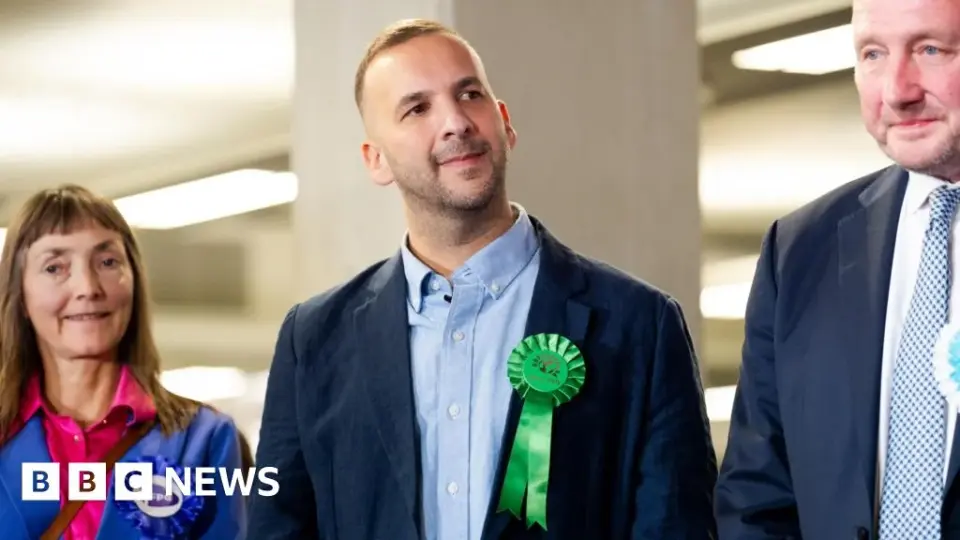
Green Party leader Zack Polanski told the BBC he would not have voted for the motion declaring Zionism racist, though he agreed with its core claim that Palestinian displacement is underpinned by racist ideology. The motion, which passed by 1,022 to 813 votes, defines Zionism as supporting an ethnonationalist state and calls for a single democratic Palestinian state. Polanski, who missed the vote to campaign in a by-election, faces intense criticism from party veterans, Jewish community leaders, and international allies. He insists he will remain leader despite losing the Holborn and St Pancras by-election to Labour, where the party’s majority shrank significantly. The controversy has triggered resignations, a ban on Polanski by Israel, and condemnation from the European Green Party, exposing deep rifts between the party’s new membership base and its elected MPs.
Key points
- Polanski stated he would have voted for an amended version of the motion but not the final text, specifically objecting to the clause calling for a single state in historic Palestine.
- The motion passed by 1,022 to 813 votes, with four of five Green MPs opposing it and the European Green Party condemning it as a rejection of the two-state solution.
- Polanski lost the Holborn and St Pancras by-election to Labour’s Sagal Abdi-Wali, reducing the Green majority from 11,572 to 3,364, yet vowed to stay as party leader.
- Israel banned Polanski from entering the country, while British Jewish leaders and former Green leader Caroline Lucas criticized the motion as antisemitic and a failure of leadership.
- Jewish Greens chair Vivien Lichtenstein is considering leaving the party, citing risks to Jewish members and the motion’s potential to alienate the broader Jewish community.
Background
The Green Party adopted the motion at its annual conference in Brighton on October 2, 2026, despite opposition from senior figures and MPs. Prior to this, the party had seen surging membership and breakthrough electoral successes earlier in the year. The motion’s passage followed weeks of internal debate, with some members joining specifically to support it. The controversy has intensified scrutiny of the party’s decentralized decision-making process, where less than 1% of members voted on the motion. Earlier archive reports noted legal challenges under the Equality Act 2010 and resignations from Welsh leadership, highlighting the motion’s divisive impact across the party’s structure.
How outlets are covering it
BBC reported Polanski’s nuanced stance, noting his agreement with the motion’s core claim about racist ideology but disagreement with its single-state solution. Al Jazeera’s opinion piece argued the motion reflects ignorance of Zionism’s historical roots and harms Palestinian self-determination by eliminating Israel. The Guardian’s Rafael Behr criticized Polanski for failing to show leadership, describing the motion as an extreme rejection of Israel’s legitimacy that alienates British Jews. JTA highlighted the internal rift, noting that while 81% of Jewish Greens surveyed did not identify as Zionist, 53% feared the motion would increase discrimination against Jews. The European Green Party condemned the motion as incompatible with its two-state solution stance, while Israeli officials called it antisemitic. Polanski’s supporters, including Greens for Palestine, argued the motion was a necessary response to Israeli actions in Gaza, though they faced criticism for potentially exploiting the issue for party growth.
Why it matters
The motion has destabilized the Green Party, threatening its electoral prospects and internal cohesion. It has drawn international condemnation, including from the European Green Party, and triggered a ban on Polanski by Israel. The controversy has exposed deep divisions between the party’s new, activist-driven membership and its elected MPs, raising questions about the party’s future direction. It has also intensified debates over antisemitism and Zionism in British politics, with Jewish community leaders warning that the motion could fuel discrimination against Jewish members. The by-election loss in Holborn and St Pancras, where the Green majority shrank significantly, suggests the motion may have cost the party support in key constituencies. Polanski’s decision to remain leader despite these setbacks will determine whether the party can recover or faces further fragmentation.
What to watch
Polanski is expected to address the party’s direction in the coming weeks, with pressure from MPs and veterans to reverse or amend the motion. The Jewish Greens will hold elections in November, where Lichtenstein’s decision to stay or leave may signal broader trends. The party faces potential legal challenges under the Equality Act 2010, and the European Green Party may take further action if the motion is not reversed. Polanski’s leadership will be tested by his ability to unify the party and restore its electoral appeal, particularly in light of the by-election loss. The motion’s impact on the party’s manifesto for the next general election remains uncertain, as it is not automatically included despite being adopted as policy.
- Burnham calls on Polanski to reverse Green Party's Zionism motion BBC
- Britain’s Greens are now a hard-left, antisemitic party The Economist
- UK Greens are wrong – Zionism is not racism Al Jazeera
- Zack Polanski had the chance to show real leadership. He blew it | Rafael Behr The Guardian
- In Britain, ‘Jewish Greens’ chief mulls quitting party after ‘Zionism is Racism’ motion passes Jewish Telegraphic Agency
Want the full story? Read the original reporting
Read on BBC