
Portadown Standoff: Orange Order March Blocked, Political Crisis Deepens
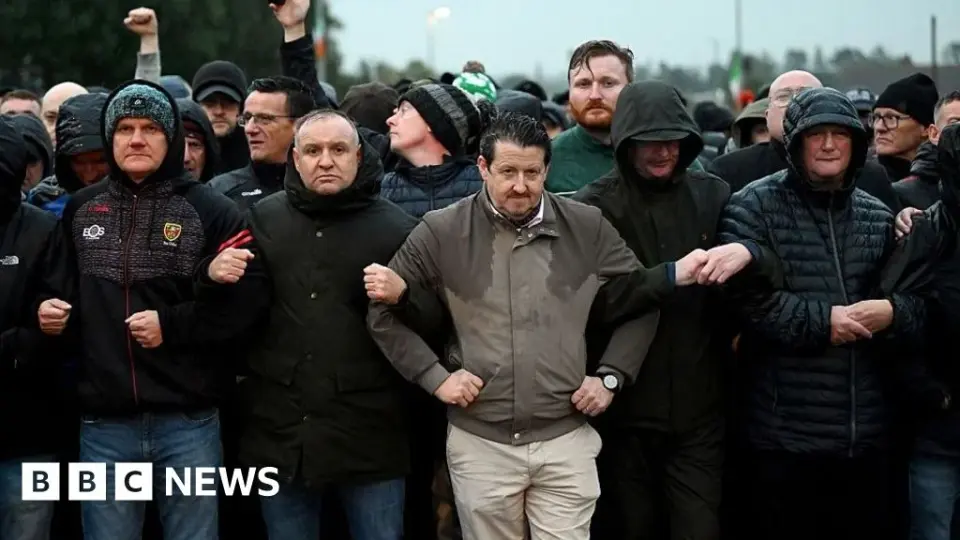
Hundreds of protesters blocked the Orange Order from marching down Garvaghy Road in Portadown, Northern Ireland, on Sunday, preventing the first such parade in 30 years. The standoff involved Sinn Féin leaders, including First Minister Michelle O'Neill, and unionist politicians, with police managing the situation without violence. The dispute has reignited deep-seated community divisions and raised concerns about the stability of Northern Ireland's political institutions.
Key points
- Protesters blocked the Orange Order from marching down Garvaghy Road in Portadown, preventing the first such parade in 30 years.
- Sinn Féin leaders, including First Minister Michelle O'Neill, joined the protesters, while unionist politicians, including DUP leader Gavin Robinson, demanded the rule of law be upheld.
- The dispute has reignited deep-seated community divisions and raised concerns about the stability of Northern Ireland's political institutions.
- Police managed the situation without violence, but the standoff continued into the early hours of Monday morning.
- The Northern Ireland Secretary, Sir Chris Bryant, called for calm and compromise, while the Prime Minister, Andy Burnham, appealed for calm on all sides.
Background
The Drumcree parade, which in the 1990s sparked some of the most serious disorder in Northern Ireland's history, was due to go ahead for the first time in 30 years after a series of legal challenges. The Orange Order is a Protestant pro-British organisation, while the area where it wants to walk - specifically along the Garvaghy Road - is largely Catholic and predominantly inhabited by pro-Irish nationalists. Many Catholics see the marches as sectarian and object to them passing through, or close to, Catholic or nationalist areas.
How outlets are covering it
BBC News NI reported that hundreds of protesters blocked the Orange Order from marching down Garvaghy Road in Portadown, with Sinn Féin leaders, including First Minister Michelle O'Neill, joining the protesters. The DUP leader, Gavin Robinson, criticized O'Neill for breaking the law by protesting. The Guardian reported that the DUP leader insisted the Orange Order could wait hours, days, and months to march down Garvaghy Road, while the Northern Ireland Secretary, Sir Chris Bryant, called for calm and compromise. The BBC also reported that the PSNI Chief Constable, Jon Boutcher, said the policing operation helped ensure there was no violence or disorder, while the Guardian reported that the SDLP MP, Colum Eastwood, called on Bryant to step in and end the crisis.
Why it matters
The dispute has reignited deep-seated community divisions and raised concerns about the stability of Northern Ireland's political institutions. The standoff has also highlighted the ongoing tensions between nationalist and unionist communities in Northern Ireland, with the potential for further disorder and political instability.
What to watch
The Orange Order intends to try and march again, while the Garvaghy Road Residents Coalition plans to meet with the PSNI chief constable and the Northern Ireland secretary to discuss how to avoid the conflict in the future. The Northern Ireland Secretary, Sir Chris Bryant, has said there are a few ideas around how to move forward, but there is no solution yet. The dispute is likely to continue to be a major issue in Northern Ireland politics for the foreseeable future.
- Protesters disperse after blocking contentious Orange Order parade bbc.com
- Standoff Rocks a Northern Irish Town Over Contentious Sectarian March The New York Times
- Protesters disperse after blocking contentious Northern Ireland parade yahoo.com
- As it happened: ‘Orange Order can wait for weeks,’ claims DUP leader as controversial march delayed amid huge protest The Guardian
- Drumcree: New policing project, Stormont and community relations all on the line bbc.com
Want the full story? Read the original reporting
Read on bbc.com