
Spain’s royal mourning and political fallout follow revised train crash toll
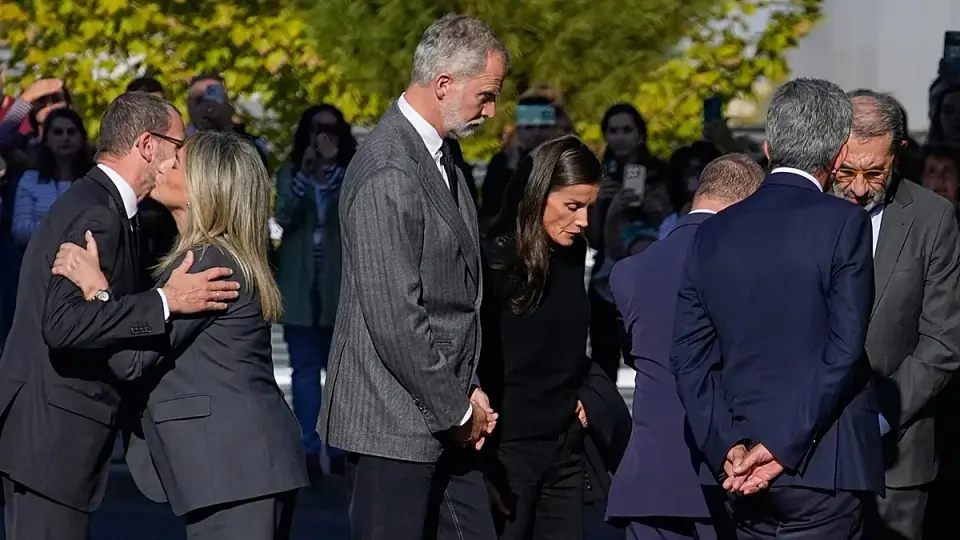
The death toll from the high-speed train collision near Urda, Toledo, has been revised to 69 by Spain’s Railway Accident Investigation Commission, down from the initial 74 reported by the transport ministry. King Felipe VI and Queen Letizia visited injured victims in Toledo, cancelling official engagements to observe three days of national mourning. The disaster has intensified political tensions ahead of a snap election, with opposition parties demanding accountability for systemic rail safety failures.
Key points
- Spain’s Railway Accident Investigation Commission confirmed 69 fatalities, correcting the transport ministry’s earlier figure of 74.
- King Felipe VI and Queen Letizia visited a hospital in Toledo to meet survivors and families, cancelling royal engagements for the coming days.
- The crash is the second major high-speed rail disaster in Spain in nine months, following a January incident that killed 46 people.
- Prime Minister Pedro Sánchez faces intensified scrutiny over rail infrastructure safety, complicating his campaign for a snap general election.
- Opposition parties, including Vox and the People’s Party, are demanding strict accountability, with Vox calling for criminal investigations into transport minister Óscar Puente.
Background
This incident follows a January 2026 crash on the same Madrid-Seville line that killed 46 people, establishing a pattern of recurring safety failures. Earlier reports indicated a signaling system failure allowed a Renfe train to proceed at 200 km/h despite a red signal, rear-ending a stationary Iryo train. Leaked audio from a control center has since emerged, suggesting an 'inexplicable' order to resume movement after the system failure, which investigators are examining as a potential cause of the collision.
How outlets are covering it
Euronews focuses on the official response, highlighting the revised death toll and the royal family’s direct engagement with victims, emphasizing national mourning and institutional solidarity. The Guardian frames the event as a pivotal political crisis, arguing the disaster undermines Prime Minister Pedro Sánchez’s electoral momentum by shifting focus from housing reforms to systemic infrastructure neglect. While Euronews notes the transport ministry’s initial higher casualty count, The Guardian emphasizes the political consequences, noting that the opposition is exploiting the tragedy to challenge the government’s competence, with Vox demanding criminal charges against transport minister Óscar Puente and the People’s Party calling for a complete overhaul of rail management.
Why it matters
The crash exposes deep structural issues in Spain’s high-speed rail network, which is a source of national pride and a critical transport artery for millions. The recurrence of fatal accidents within nine months has eroded public trust in government oversight and infrastructure maintenance. Politically, the disaster threatens to derail the snap election narrative, forcing the government to defend its record on public safety rather than social progress, potentially altering the outcome of the upcoming vote.
What to watch
Investigations into the signaling failure and control center decisions will continue, with potential legal proceedings against officials if negligence is confirmed. The national mourning period will conclude, but political pressure on the transport minister and government will likely intensify. The snap election campaign will now center on rail safety and infrastructure accountability, with opposition parties using the tragedy to challenge the government’s competence and demand systemic reforms.
- Death toll from Spain train crash revised to 69 as royals visit victims Euronews.com
- Battle lines redrawn in Spain’s snap election after latest train disaster The Guardian
- Spain’s latest deadly train crash puts human error and systemic failure under scrutiny The Boston Globe
- Why Does Spain Keep Having Deadly Rail Accidents? WSJ
- Spanish train crash death toll rises to 69 in grim search for victims Reuters
Want the full story? Read the original reporting
Read on Euronews.com