
Ukraine’s protest movement fractures as Fedorov’s wartime election call divides supporters
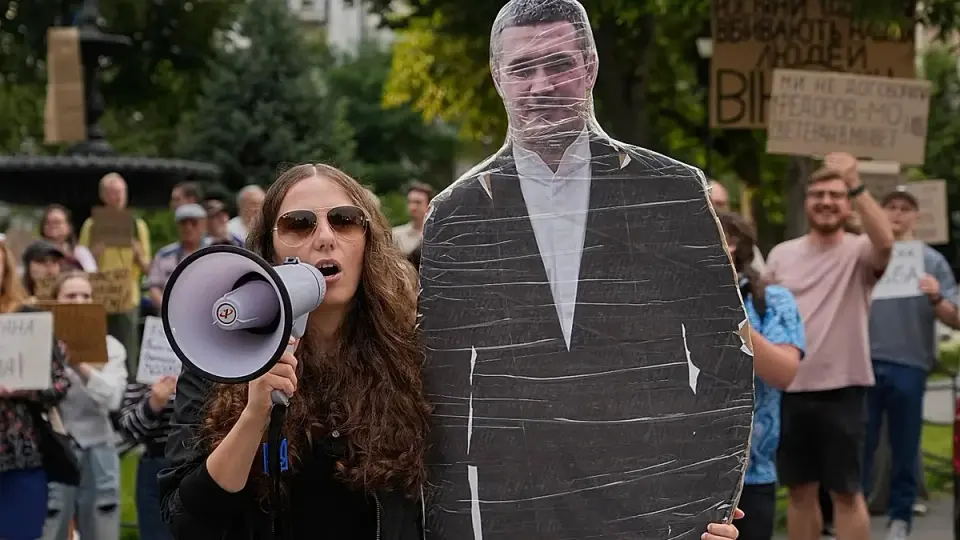
Former Ukrainian defense minister Mykhailo Fedorov’s call for wartime elections has fractured the protest movement that rallied behind him after his dismissal. Key organizers, including veteran Dmytro Koziatynskyi, rejected the idea, citing logistical impossibilities and the risk of division. The movement, which lasted a month, is now ending, with organizers supporting Fedorov’s replacement, Yevhen Khmara, and acknowledging tangible results like the dismissal of Army Commander Oleksandr Syrskyi.
Key points
- Fedorov’s video appeal for wartime elections was met with rejection from protest organizers who had campaigned for his return as defense minister.
- Organizer Dmytro Koziatynskyi stated that elections during wartime are negative and technically impossible for front-line soldiers, marking the end of daily demonstrations.
- The protest movement, focused on defense policy reforms rather than Fedorov’s personal future, achieved the dismissal of Army Commander Oleksandr Syrskyi and the appointment of Mykhailo Drapatyi.
- Zelenskyy’s administration, via adviser Dmytro Lytvyn, dismissed the election idea, citing ongoing Russian drone and missile strikes as a comprehensive answer.
- Fedorov’s call drew criticism from social media users and military personnel who questioned the timing and motives of his intervention after his dismissal.
- Experts, including University of Chicago professor Konstantin Sonin, argue that holding elections in wartime is highly unlikely due to logistical challenges and the risk of Russian interference.
Background
Fedorov was dismissed as defense minister in mid-July 2026 amid tensions with military leadership, sparking a month of daily protests across Ukraine. The protests were focused on defense policy reforms and anti-corruption efforts, not Fedorov’s personal political future. Zelenskyy has since nominated Yevhen Khmara as the new defense minister, formally ending Fedorov’s bid to return to the ministry. Elections in Ukraine have been suspended under martial law since Russia’s full-scale invasion in February 2022, with Zelenskyy’s five-year term scheduled to end in May 2024.
How outlets are covering it
Euronews emphasizes the rejection of Fedorov’s election call by protest organizers and the end of daily demonstrations, highlighting the movement’s focus on defense policy reforms rather than Fedorov’s personal future. CNN frames Fedorov’s call as a direct challenge to Zelenskyy’s authority, noting the pressure it places on the president amid ongoing war. Time Magazine focuses on the logistical and legal challenges of holding wartime elections, citing expert opinions and recent polling that suggests Zelenskyy could lose a runoff election. NBC News highlights the confrontation between Fedorov and Zelenskyy, describing Fedorov’s move as a 'bombshell' that has 'crossed the Rubicon' in their relationship.
Why it matters
The fracture in Ukraine’s protest movement over Fedorov’s wartime election call highlights the deep divisions within Ukrainian society regarding the balance between democratic processes and wartime necessity. The rejection of elections by key organizers and the military underscores the practical and political impossibility of holding elections during an active conflict. This event also signals a shift in Zelenskyy’s political standing, with recent polling suggesting he could lose a runoff election, and ongoing corruption probes adding to the pressure on his administration. The outcome of this debate will shape Ukraine’s democratic trajectory and its relationship with international partners, particularly the United States and Europe, who have been called upon to help ensure security for any potential elections.
What to watch
The protest movement is expected to wind down, with organizers supporting Yevhen Khmara as the new defense minister. Zelenskyy’s administration is likely to maintain its stance against wartime elections, citing ongoing Russian attacks. The political landscape may shift further if Zelenskyy’s approval rating continues to dip, and if corruption probes lead to additional dismissals. International partners may continue to press for a path to democratic renewal, but the logistical and security challenges of holding elections in wartime remain significant obstacles.
- After weeks of rallying behind Fedorov, protesters reject his call for wartime elections in Ukraine Euronews.com
- Analysis: Call for wartime elections in Ukraine piles pressure on Zelensky when he least needs it CNN
- Zelenskyy Faces Pressure to Hold Elections. What Stands in the Way? Time Magazine
- A rival’s bombshell and a new corruption probe heap untimely pressure on Ukraine’s Zelenskyy NBC News
- Ukraine's ousted defence minister calls for wartime elections Reuters
Want the full story? Read the original reporting
Read on Euronews.com