
Zelensky signs minority education law to unlock EU accession clusters
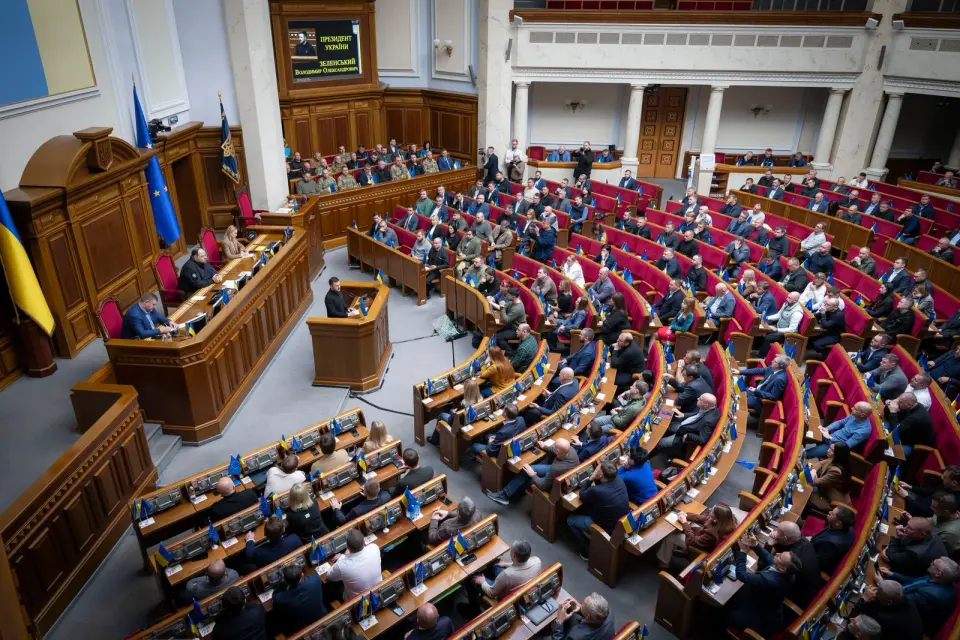
President Volodymyr Zelensky signed a bill on October 12 reinforcing educational rights for national minorities, a move demanded by Hungary to advance Ukraine’s EU accession talks. The legislation, passed by parliament with 266 votes, allows schools with over 50% minority-language pupils to gain special status and requires leadership proficiency in those languages. This action clears the path for the EU to open two additional accession clusters with Ukraine and Moldova on October 13, resolving a years-long diplomatic standoff.
Key points
- Zelensky signed the minority education bill on October 12, following its passage by the Verkhovna Rada with 266 votes.
- The law grants special status to schools where over 50% of students use a minority language, requiring heads or deputies to be proficient in that language.
- The bill covers official EU languages but excludes Russian, aligning with Kyiv’s efforts to reduce Russian influence in public spaces.
- Hungary’s Foreign Minister Anita Orban praised the step, while Ukrainian officials noted it formalizes existing rights without major practical changes.
- The legislation enables the EU to open two more accession clusters with Ukraine and Moldova at an Intergovernmental Conference in Luxembourg on October 13.
Background
Hungary’s previous government, led by Viktor Orban, blocked Ukraine’s EU accession talks from 2023 to 2026 over minority rights disputes. The election of pro-European Prime Minister Peter Magyar in April 2026 led to an 11-point action plan in June, lifting the veto on the first two accession clusters. However, Budapest conditioned further progress on Kyiv adopting specific educational reforms, a demand finally met with the October 12 bill.
How outlets are covering it
The Kyiv Independent emphasizes the bill’s role in appeasing Hungary to advance EU talks, noting Ukrainian officials view it as formalizing existing rights. Euronews highlights the diplomatic breakthrough, mentioning a potential meeting between Magyar and Zelensky in Brussels on October 14. Ukrainska Pravda focuses on the procedural details, noting 273 MPs voted in principle and 266 in full, and confirms all 27 EU member states agreed to open the next clusters. While all sources agree on the vote count and the October 13 cluster opening, Euronews adds the detail of a potential bilateral meeting not mentioned in the other two.
Why it matters
This legislative step removes a major obstacle in Ukraine’s EU integration process, potentially accelerating membership talks and strengthening diplomatic ties with Hungary. It also signals a shift in Budapest’s foreign policy under Magyar, moving away from the obstructionist stance of the previous government.
What to watch
The EU is expected to formally open two additional accession clusters with Ukraine and Moldova at an Intergovernmental Conference in Luxembourg on October 13. Ukraine aims to have all six clusters open by the end of 2026. A potential meeting between Magyar and Zelensky in Brussels on October 14 may further solidify the diplomatic thaw.
- Update: Zelensky signs minority schools bill to appease Hungary, advance EU talks The Kyiv Independent
- Ukraine says EU set to open next accession stages after Kyiv passes minority rights law Reuters
- Ukraine passes minority rights law to end Hungary’s EU veto Euronews.com
- Ukraine passes amendments to education law to secure Hungary's consent for EU accession clusters Українська правда
- EU expands accession talks with Ukraine and Moldova Yahoo
Want the full story? Read the original reporting
Read on The Kyiv Independent