
Albania Police Clash with Protesters on Independence Day
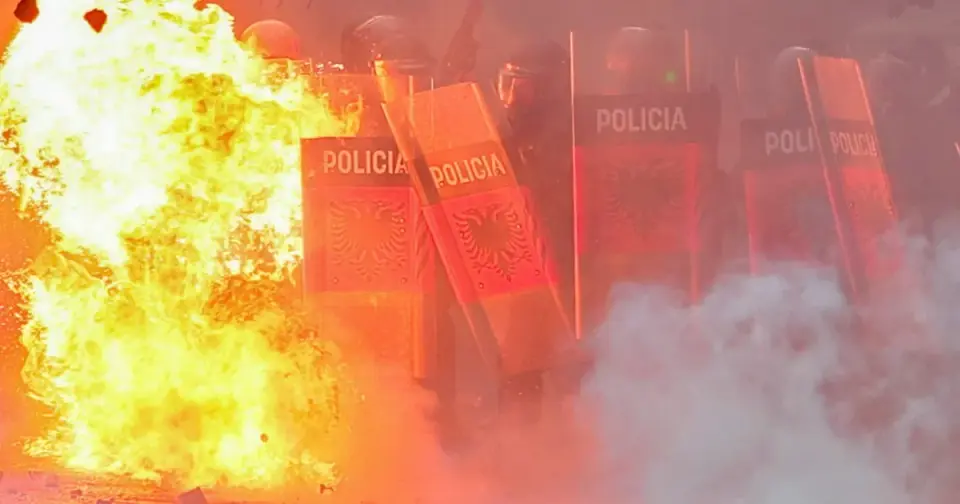
Thousands of protesters clashed with police in Tirana, Albania, on Saturday, November 28, 2026, during the country's Independence Day celebrations. Demonstrators, including students and opposition figures, demanded the resignation of Prime Minister Edi Rama. Police used tear gas and water cannons against protesters who threw stones and petrol bombs. The unrest is part of a broader movement known as the Flamingo Revolution, which began in May over a luxury hotel project linked to the Trump family and has since expanded to include demands for better healthcare, education, and an end to corruption.
Key points
- Clashes erupted between police and protesters in Tirana on Saturday, November 28, 2026, as thousands gathered to mark Albania's 114th Independence Day.
- Police deployed water cannons and tear gas to disperse demonstrators who threw stones, petrol bombs, and wooden sticks at government buildings and street cameras.
- The Albanian health ministry reported eight injuries, including a police officer and two journalists, during the clashes.
- The protest was called by students and opposition figures, continuing a series of anti-government demonstrations known as the Flamingo Revolution that began in May.
- Initial grievances centered on a luxury hotel project in a coastal nature reserve linked to Jared Kushner, son-in-law of U.S. President Donald Trump, but demands have since broadened to include Rama's resignation, better healthcare, and lower living costs.
- In late October, the Albanian government granted police powers to restrict gatherings near public institutions and impose fines on protesters who loot or conceal their identities, leading to smaller crowds in subsequent protests.
Background
Albania's anti-government protests, known as the Flamingo Revolution, began in May 2026 over a luxury hotel project in a coastal nature reserve linked to the Trump family. The movement escalated in October, with students clashing with police in Tirana for five consecutive days. Prime Minister Edi Rama, who has ruled since 2013, refused to resign, blaming foreign actors and the opposition for the unrest. Previous clashes in October resulted in hundreds of arrests and injuries, with police using tear gas, water cannons, and rubber bullets. The current protests on November 28, 2026, mark the 114th anniversary of Albania's declaration of independence, a day typically marked by national celebrations and a public holiday.
How outlets are covering it
Al Jazeera, AP News, and chronicleonline.com all report on the clashes between police and protesters in Tirana on November 28, 2026. Al Jazeera and AP News emphasize the use of tear gas and water cannons by police and the throwing of stones and petrol bombs by protesters. AP News notes that the protest began peacefully but turned violent when small groups of masked demonstrators broke away. Al Jazeera highlights the involvement of students and opposition figures, as well as the broader context of the Flamingo Revolution. chronicleonline.com provides limited additional details but confirms the clashes and the demand for Rama's resignation. All sources agree on the core events but differ in emphasis, with Al Jazeera and AP News providing more detailed accounts of the violence and the protesters' demands.
Why it matters
The clashes on Independence Day highlight the deepening political crisis in Albania, where Prime Minister Edi Rama faces his most significant challenge since taking office in 2013. The protests, which began over a luxury hotel project linked to the Trump family, have evolved into a broad movement demanding systemic change, including Rama's resignation, better healthcare, and an end to corruption. The unrest has drawn attention from the European Union, which has called for an investigation into police force and urged de-escalation. The protests also reflect broader economic and social grievances, with demonstrators citing high living costs and poor prospects for young people. The use of force by police and the injuries sustained by protesters and journalists raise concerns about civil liberties and the rule of law in Albania.
What to watch
The Albanian government is expected to maintain a strong police presence in Tirana and other major cities to prevent further clashes. The European Union may continue to monitor the situation and press for an investigation into police conduct. Prime Minister Edi Rama is likely to face increased pressure to address the protesters' demands, though he has so far refused to resign. The Flamingo Revolution may continue to evolve, with potential for further protests and clashes in the coming weeks. The government may also consider further restrictions on public gatherings to maintain order, though this could exacerbate tensions. The situation remains fluid, with the potential for escalation if the government does not engage with the protesters' demands.
- Albania police, protesters clash as thousands rally against the government Al Jazeera
- Student-led protest against government turns violent in Albania Reuters
- Clashes erupt in Tirana as protesters call for Prime Minister Edi Rama to resign AP News
- Anti-Government Protests Turn Violent in Albanian Capital Bloomberg.com
- Albania Protest chronicleonline.com
Want the full story? Read the original reporting
Read on Al Jazeera