
Lost Augustine Sermons Reframe Biblical Witch of Endor as Path to Redemption
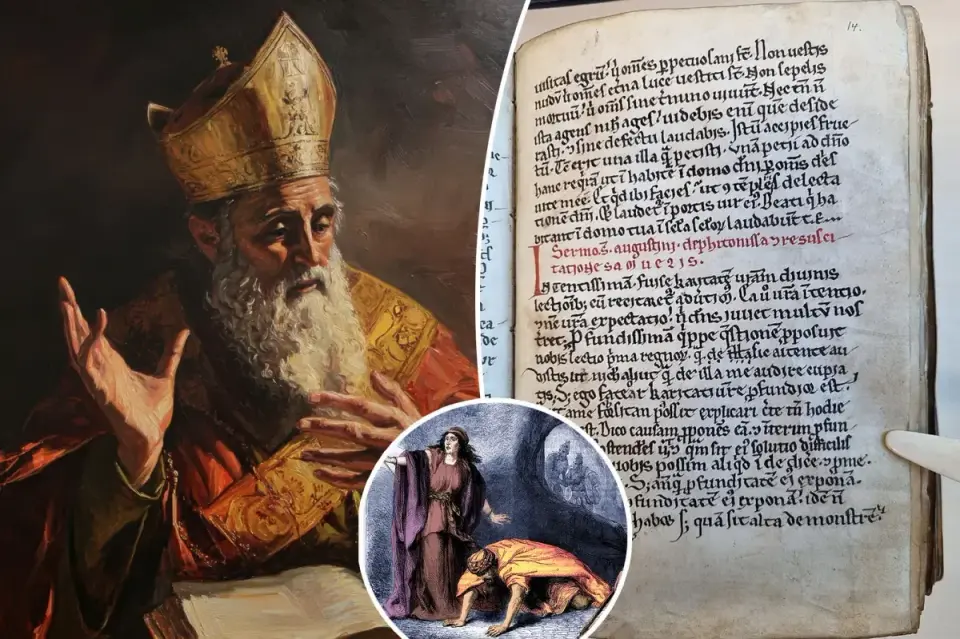
Christian Tornau, a Latin professor at the University of Würzburg, has authenticated two previously unknown sermons by St. Augustine, discovered within a 12th-century manuscript at Bad Doberan Abbey in Germany. After nearly two years of analysis, scholars confirmed the texts are genuine despite initial suspicions of medieval forgery, citing Augustine’s distinct humor and North African liturgical styles. The sermons offer a new theological interpretation of the Biblical Witch of Endor, suggesting her encounter with King Saul was not a curse but a divine opportunity for repentance and redemption before his death. This discovery challenges the traditional negative portrayal of Saul in ancient Christian thought and provides rare insight into Augustine’s views on occult practices versus divine judgment. The texts are currently being prepared for scholarly publication.
Key points
- Christian Tornau identified two new sermons by St. Augustine in a 12th-century manuscript at Bad Doberan Abbey, Germany.
- Initial doubts about authenticity were resolved by identifying Augustine’s unique humor and Late Antiquity prayer styles.
- The sermons reinterpret the Witch of Endor’s role, suggesting she offered King Saul a path to redemption rather than a curse.
- This perspective contradicts the standard negative view of Saul in ancient Christianity, proposing his encounter sparked genuine repentance.
- The discovery highlights Augustine’s complex view of the relationship between occult power and divine judgment.
Background
Our archive notes that this discovery was first reported on July 29, 2026, confirming the authentication process and the upcoming publication of the sermons. The finding adds to a broader trend of recovering lost historical texts that reshape understanding of early Christian theology and Biblical narratives.
Why it matters
This discovery reshapes the theological understanding of one of the Bible’s most debated anecdotes, offering a new lens on repentance and divine mercy in early Christianity. It also demonstrates how careful manuscript analysis can recover lost voices from Late Antiquity, challenging long-held scholarly assumptions about St. Augustine’s views on witchcraft and kingship.
What to watch
The sermons are currently being prepared for formal scholarly publication, which will allow broader academic access and debate. Researchers expect this to spark renewed discussion on the intersection of occult practices and divine judgment in early Christian thought, potentially influencing future interpretations of Biblical narratives involving King Saul.
Want the full story? Read the original reporting
Read on New York Post