
NYC DOT Warns of 20 Gridlock Days as UN Assembly and Protests Clog Midtown
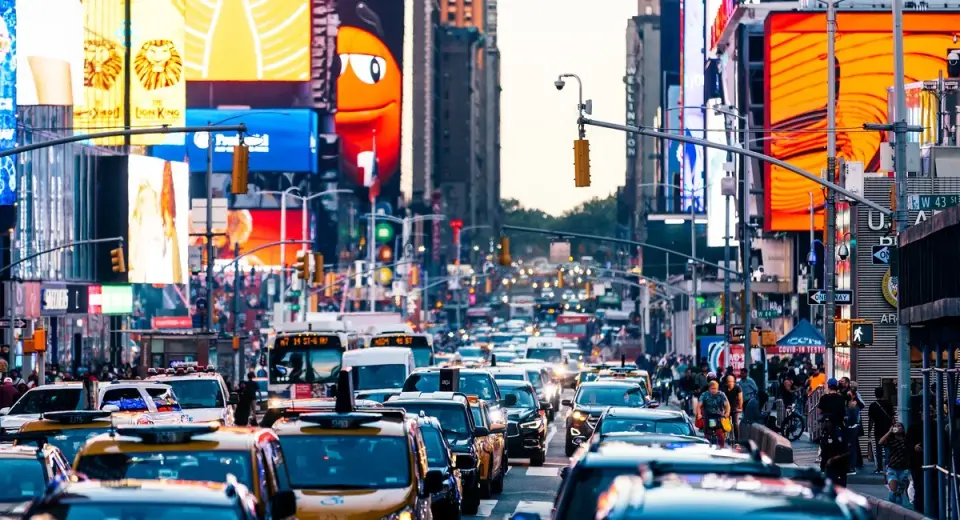
The New York City Department of Transportation has designated 20 specific dates as 'gridlock days' for the remainder of 2026, beginning with the current week. This designation coincides with the United Nations General Assembly, which is expected to reduce Midtown traffic speeds to below 4 mph due to heavy police presence and rolling street closures. Large protests are scheduled daily during the assembly, including on the day of Israeli Prime Minister Benjamin Netanyahu's address. The DOT advises drivers to use public transit, bicycles, or walking, highlighting the First Avenue Tunnel protected bike lane as a key alternative route.
Key points
- The NYC DOT has identified 20 gridlock days from September 21 through December 23, 2026.
- More than half of these designated days fall in December, with additional congestion expected around Thanksgiving.
- Traffic speeds in Midtown are estimated to drop below 4 mph during the UN General Assembly, compared to the usual 4-6 mph.
- The DOT is using variable message boards to warn drivers of delays and is promoting the First Avenue Tunnel bike lane as a bypass for vehicle traffic.
- The First Avenue Tunnel, made permanent in 2024, is the first US tunnel repurposed to allow bike traffic while maintaining vehicle travel.
Background
This surge in traffic management follows a period of significant infrastructure changes in New York City, including the permanent installation of the First Avenue Tunnel protected bike lane in 2024. While recent local news has focused on unrelated incidents such as vehicle crashes in Maryland and Koreatown, the current gridlock warnings represent a planned, large-scale logistical challenge distinct from accidental traffic disruptions. The UN General Assembly is a recurring annual event that historically causes severe congestion, but the 2026 schedule is compounded by additional protest activities.
How outlets are covering it
Gothamist focuses on the practical impact on drivers, emphasizing the specific dates of gridlock and the city's recommendation to avoid driving. The outlet highlights the severity of the slowdown, noting speeds below 4 mph, and points to the First Avenue Tunnel bike lane as a mitigating factor. In contrast, news.un.org provides a high-level diplomatic perspective, focusing on the UN General Assembly President's goals for restoring trust and addressing global issues like AI and the Rohingya crisis. While Gothamist views the assembly through the lens of local infrastructure strain, the UN source frames the event as a critical opportunity for international cooperation and norm-setting, with no mention of local traffic impacts.
Why it matters
The designation of 20 gridlock days signals a sustained period of reduced mobility in New York City, affecting commuters, logistics, and emergency response times. The combination of international diplomatic activity and large-scale protests creates a unique congestion profile that requires proactive mitigation strategies from both the city and residents. The emphasis on alternative transportation modes, particularly the newly permanent bike infrastructure, reflects a broader shift in urban planning aimed at reducing reliance on private vehicles during peak congestion events.
What to watch
Drivers should expect continued congestion through December 23, 2026, with specific peak days listed by the DOT. The city will continue to use variable message boards to provide real-time delay warnings. Residents are encouraged to utilize public transit and the First Avenue Tunnel bike lane to bypass Midtown intersections. The UN General Assembly will continue its high-level week, with world leaders addressing topics ranging from AI regulation to conflict resolution, potentially influencing future international policy discussions.
- Sorry, NYC drivers. Traffic is about to get even worse than usual. Gothamist
- World leaders return to UN amid wars in Middle East and Ukraine Reuters
- U.N. General Assembly Set to Snarl Traffic, N.Y.C. Leaders Say The New York Times
- ‘Violence will only defer a problem’: UN Assembly President on trust, AI and lessons from the Rohingya crisis news.un.org
- U.N. General Assembly Season Should Be ‘World’s Fair,’ Not A Gridlock Grind Streetsblog New York City
Want the full story? Read the original reporting
Read on Gothamist