
Amsterdam 'Red Line' March Draws 200,000 as Pro-Hamas Voices Clash with Organizers
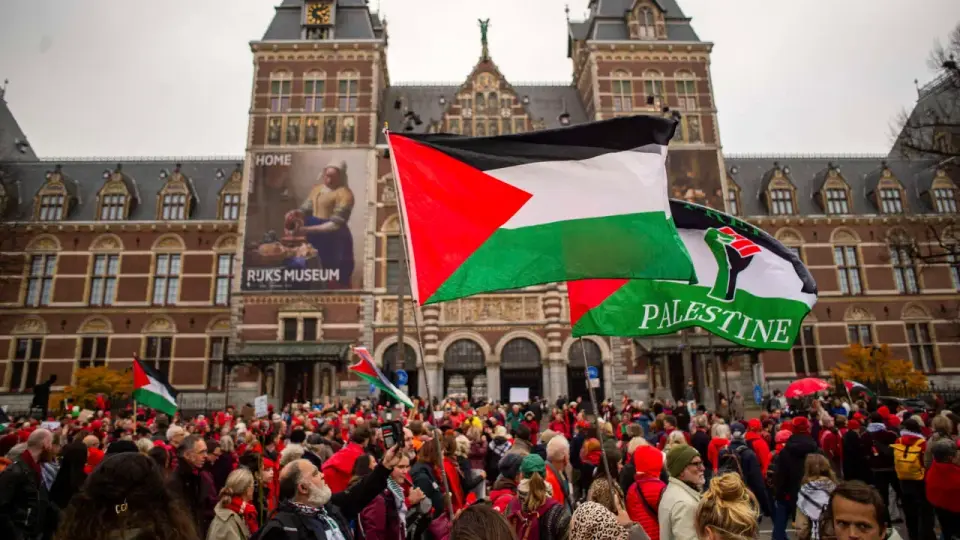
Over 200,000 people marched in Amsterdam on November 8, 2026, demanding stricter sanctions and a halt to arms sales to Israel. While organizers distanced themselves from pro-Hamas slogans seen at the event, Prime Minister Rob Jetten defended the government's diplomatic efforts. The demonstration marked the fourth major 'Red Line' protest in the Netherlands since May 2025.
Key points
- The fourth 'Red Line' demonstration in Amsterdam drew an estimated 200,000 participants, many wearing red, to protest Dutch policy toward Israel.
- Organizers, including Amnesty International and Oxfam Novib, called for trade sanctions, a halt to arms sales, and official recognition of genocide in Gaza.
- Some participants displayed pro-Hamas signs, a sentiment explicitly rejected by protest organizers and the wider crowd, according to Dutch broadcaster NOS.
- Prime Minister Rob Jetten defended the government's actions, stating it is applying diplomatic pressure on Israel while also pressuring Hamas.
- The protest follows a series of similar demonstrations since May 2025, with the previous one in October 2025 drawing an estimated 250,000 people.
Background
The 'Red Line' movement began in May 2025, organized by Dutch NGO Oxfam Novib, with the first protest drawing around 100,000 participants. The movement has grown significantly, with the October 2025 demonstration attracting an estimated 250,000 people. These protests are part of a broader context of strained relations between the Netherlands and Israel, which escalated after the Dutch foreign minister resigned in 2025 over failed sanctions efforts. A new minority coalition government took power in February 2026 and introduced an import ban on products from Israeli settlements, a move that provoked a diplomatic spat with Israel. The current protests occur amid an ongoing ceasefire in Gaza that began in October 2025, though Israeli attacks and casualties have continued since then.
How outlets are covering it
The Jerusalem Post highlighted the presence of pro-Hamas activists at the protest, noting that while organizers distanced themselves from these views, some participants displayed supportive signs. AP News and Al Jazeera focused on the scale of the protest and the specific demands for trade sanctions and a halt to arms sales, emphasizing the criticism of the Dutch government's inaction. All sources agreed on the large turnout and the core demands of the demonstrators, but differed in emphasis: The Jerusalem Post focused on the ideological tensions within the crowd, while AP and Al Jazeera focused on the political demands and government response. The Dutch government, through Prime Minister Jetten, defended its actions as sufficient, while protesters argued it was doing nothing.
Why it matters
The protest underscores deepening public frustration in the Netherlands with the government's handling of the Gaza conflict and its relationship with Israel. The large turnout and specific demands for sanctions and arms embargoes indicate significant public pressure on the Dutch government to take more decisive action. The presence of pro-Hamas voices, despite organizer rejection, highlights the complex and polarized nature of the protest movement. The event also reflects the broader diplomatic tensions between the Netherlands and Israel, which have escalated since 2025, and the ongoing humanitarian crisis in Gaza, which has killed tens of thousands since October 2023.
What to watch
The Dutch government is expected to continue its diplomatic pressure on Israel, as stated by Prime Minister Jetten. The 'Red Line' movement may continue to organize further protests, given its growing momentum. The outcome of the import ban on Israeli settlement products and any potential new sanctions or arms embargoes will be closely watched. The ongoing situation in Gaza, including the ceasefire and continued casualties, will likely influence future protests and diplomatic relations.
- ‘We Support Hamas’ sign seen in Amsterdam as 200,000 protest against Dutch Israel policy The Jerusalem Post
- Tens of thousands march in Amsterdam, pressing the Dutch government on Gaza and Israel AP News
- Hundreds of thousands join Amsterdam’s ‘Red Line’ protest against Israel Al Jazeera
- Hundreds of Thousands March in Amsterdam Demanding Action to Stop Gaza Genocide Democracy Now!
- Amsterdam readies for fourth Red Line protest as organizers expect tens of thousands NL Times
Want the full story? Read the original reporting
Read on The Jerusalem Post