
St. Mary's, Canada, finally removes 110 vats of 20-year-old rotten fish sauce
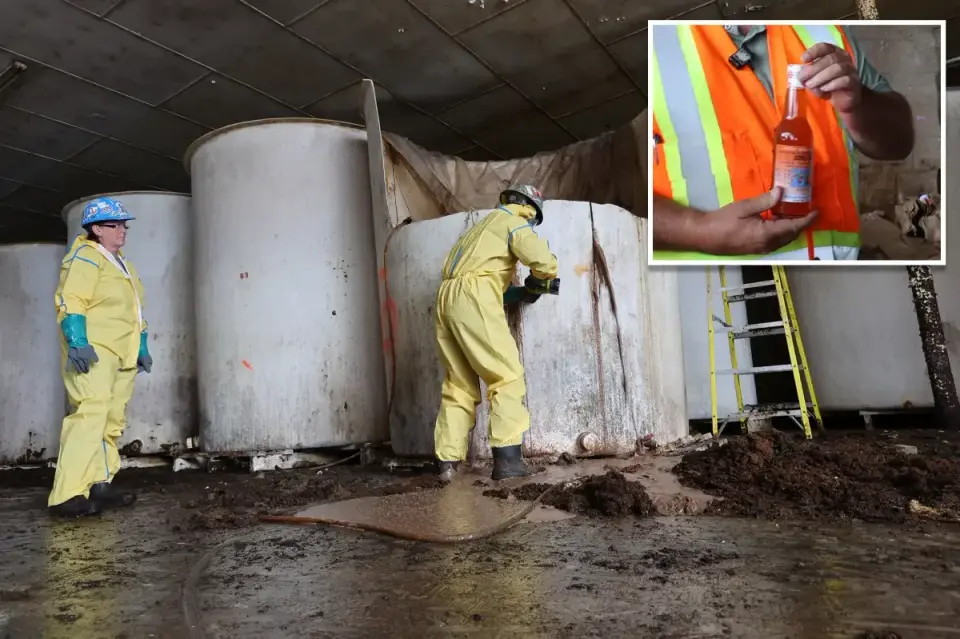
After two decades of foul odors, St. Mary’s, Newfoundland and Labrador, has begun removing 110 tanks of abandoned fish sauce. The $1.2 million cleanup involves draining the vats, mixing the sludge with peat moss, and burying it in a lined landfill. The project, which residents fought for years to secure, is expected to end the town’s persistent smell problem.
Key points
- The Atlantic Seafood Sauce Company closed in 2001, leaving 110 tanks of fermenting fish sauce in St. Mary’s.
- The cleanup costs 1.7 million Canadian dollars ($1.21 million), funded by the provincial government.
- Residents took out a 198,000 Canadian dollar loan to cover their share, which they will be reimbursed for later.
- The waste is being mixed with peat moss to absorb liquid, then hauled to a polyethylene-lined pit for burial.
- Mayor Steve Ryan described the smell as 'the worst rotted fish you ever smelled in your lifetime, times 100.'
Background
St. Mary’s, a town of approximately 300 people in Newfoundland and Labrador, has struggled with the odor from the abandoned Atlantic Seafood Sauce Company since 2001. The facility, which produced fish sauce from capelin, was left to ruin, with a blown-off roof and broken walls. Residents previously described boarding up their homes in summer to block the stench. An earlier archive note confirms the volume of waste is approximately 900,000 liters, and that the cleanup was delayed by legal disputes and funding disagreements.
How outlets are covering it
The New York Post and AP News emphasize the community’s frustration with government neglect, quoting Mayor Steve Ryan’s description of a 'crusade' for funding. Defector adds a scientific angle, with food scientist Bryan Quoc Le explaining that the 20-year fermentation likely produced complex, rancid compounds due to Maillard reactions and amine breakdown, though he noted the high salt content likely prevents pathogen growth. KOMO highlights the procedural details, noting the waste is being mixed with peat moss and buried in a lined landfill. All sources agree on the $1.2 million cost and the 110-tank volume, but Defector uniquely explores the potential, albeit unlikely, culinary curiosity of the aged sauce.
Why it matters
The cleanup resolves a long-standing environmental and quality-of-life issue for a small Canadian community. It highlights the challenges of waste management for non-standard industrial byproducts and the importance of local advocacy in securing provincial funding for infrastructure and environmental projects.
What to watch
Workers will continue draining the vats over the coming months. The mixed waste will be transported in approximately 200 truckloads to a nearby landfill. The site will be sealed with topsoil, and the town expects the smell to dissipate once the project is complete in October.
- 110 tanks of ‘the worst rotten fish you ever smelled’ finally removed from Canadian town after 20 years New York Post
- Let Me And A Food Scientist Sample The Abandoned Fish Sauce Terrorizing A Small Canadian Town Defector
- Town addresses thousands of gallons of spoiled fish sauce that left foul odor for decades KOMO
- Rotten fish sauce that has long stunk up a small Canadian town is finally being removed AP News
- A Canadian Town Will No Longer Reek of Fish Sauce The New York Times
Want the full story? Read the original reporting
Read on New York Post