
Emergency Landing in Dusseldorf After Norovirus Suspected on Eurowings Flight from Rhodes
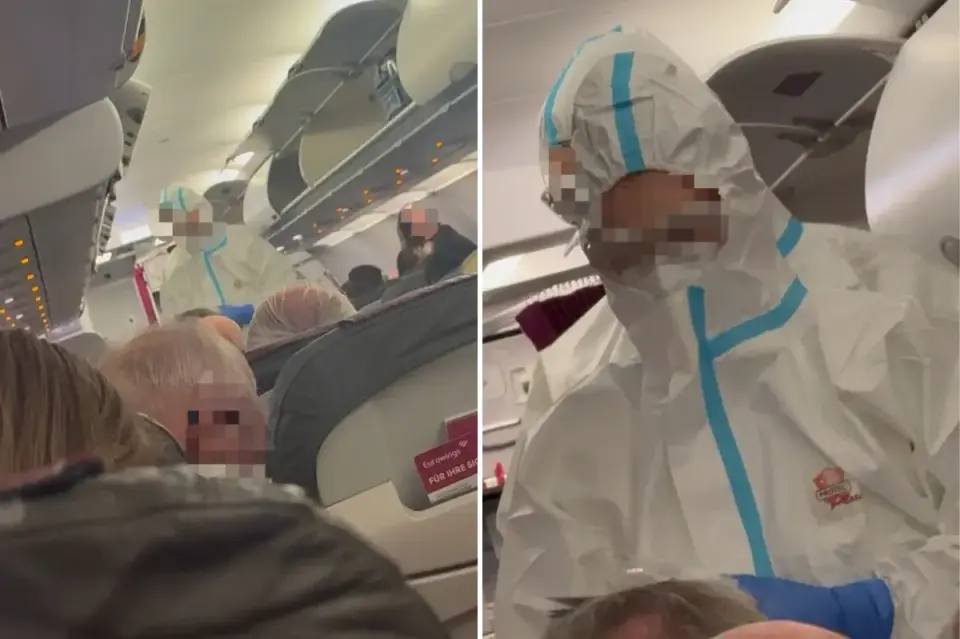
Eurowings Flight 9631 made an emergency landing at Dusseldorf Airport on October 18 after multiple passengers vomited mid-flight. Medics in hazmat suits boarded the aircraft, and three passengers were hospitalized. The incident is linked to a norovirus outbreak on the Greek island of Rhodes, which has seen over 1,400 hospital cases since August.
Key points
- Eurowings Flight 9631, traveling from Rhodes to Dusseldorf, requested a priority landing on October 18 after passengers began vomiting shortly after takeoff.
- Emergency medical personnel in protective gear boarded the plane at Dusseldorf Airport, where three passengers were examined and subsequently hospitalized.
- Passenger Nathalie Gombik reported that approximately six individuals showed symptoms, though only three were confirmed as affected by the airline.
- The incident is suspected to be linked to a norovirus outbreak on Rhodes, where over 1,400 patients were treated at the local hospital since August 10.
- Eurowings confirmed 212 passengers and seven crew members were on board, stating the cause of the symptoms is under investigation.
Background
Norovirus is a highly contagious virus that causes severe vomiting and diarrhea, often leading to rapid outbreaks in confined spaces like schools or aircraft. Recent local reports, such as the outbreak at Bentwood Elementary in Kansas, highlight the virus's potential to cause significant absenteeism and require enhanced sanitation protocols. While the current incident involves international travel, the rapid spread within a flight cabin mirrors the transmission dynamics seen in other closed environments.
How outlets are covering it
The New York Post emphasizes the dramatic nature of the response, highlighting the use of hazmat suits and the 'mass casualty' declaration, while also noting the delayed onset of symptoms in some passengers days after the flight. In contrast, Eurowings' official statement, cited by both outlets, downplays the severity by stating the cause is unclear and that all other passengers continued their journeys normally. The secondary source, PYOK, focuses on the hospitalization of three passengers and the mystery illness aspect, aligning with the airline's cautious language but omitting the specific details of the hazmat response and the broader context of the Rhodes outbreak provided by the New York Post.
Why it matters
This incident underscores the risks of airborne and contact transmission of norovirus in enclosed spaces like aircraft, particularly when originating from areas with active outbreaks. It highlights the importance of rapid emergency response protocols in aviation and the potential for delayed symptom onset to complicate public health tracking. The connection to a known outbreak on Rhodes suggests a need for enhanced health monitoring for travelers returning from affected regions.
What to watch
Health authorities are likely to investigate the link between the Rhodes outbreak and the flight incident to determine if additional cases will emerge. Eurowings may face scrutiny over its handling of the emergency and the communication with passengers. Travelers returning from Rhodes or other affected areas may be advised to monitor for symptoms, and airlines may review their emergency response protocols for similar incidents.
- Medics in hazmat suits board plane as suspected norovirus leaves passengers violently sick on flight New York Post
- 3 Hospitalized: Suspected Norovirus Outbreak Sparks Panic On Eurowings Flight Simple Flying
- Düsseldorf Airport mass casualty event as 'norovirus outbreak' erupts on flight Daily Mirror
- Three Passengers Taken to Hospital After Multiple People On Eurowings Flight Succumb to Mystery Illness PYOK
- 'Medics in hazmat suits' board flight after 'several' passengers 'felt very unwell' AOL.co.uk
Want the full story? Read the original reporting
Read on New York Post