
Indonesia’s Free Meal Scheme Faces Backlash as 2,000 Fall Ill
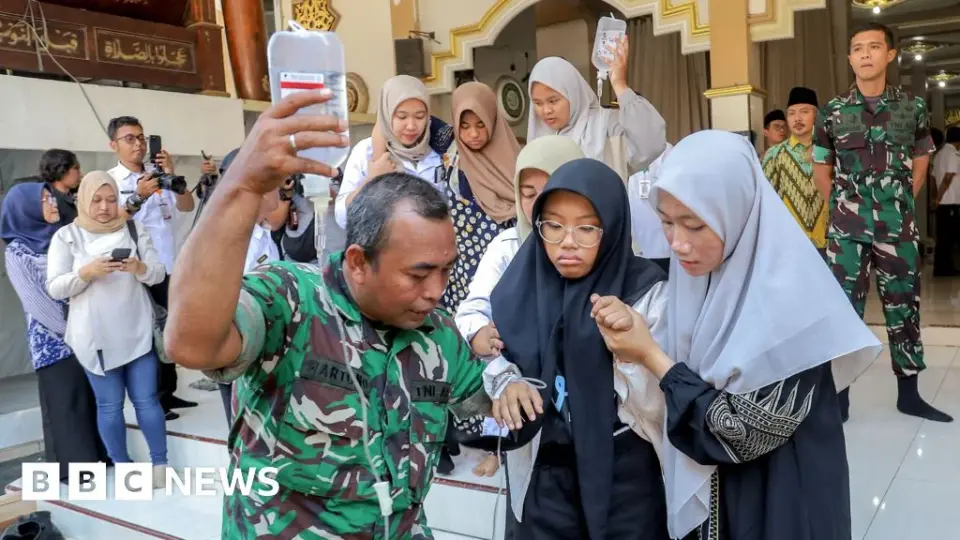
Approximately 2,000 students and teachers across Indonesia have suffered from food poisoning linked to the government's free school meal program over the past three days. The latest incident in Central Java affected 777 individuals, causing symptoms like diarrhea and nausea. While the program aims to improve nutrition, it faces criticism over cost, corruption, and safety failures, prompting local authorities to investigate contamination sources.
Key points
- 777 people fell ill at a high school in Lasem, Central Java, after eating meals from the Makan Bergizi Gratis program.
- Symptoms included diarrhea, dizziness, and nausea, with some students requiring hospital treatment or wheelchair transport due to weakness.
- The outbreak follows a previous incident in East Java where 730 people fell ill, and cases in South Sulawesi.
- Local distributors have apologized and pledged to cover medical costs, while authorities are testing food samples for contamination.
- The program is a signature policy of President Prabowo Subianto but faces allegations of corruption and high costs.
Background
This incident is part of a broader series of food safety concerns regarding Indonesia's national nutrition initiatives. While unrelated to recent global issues like microplastic exposure or specific bacterial outbreaks in the US, it highlights the challenges of implementing large-scale public health policies. The program aims to address malnutrition but has struggled with logistical and quality control issues.
How outlets are covering it
The BBC reports on the immediate health crisis and the response from local distributors and government agencies, emphasizing the scale of the illness and the official apologies. The Jakarta Globe source was inaccessible due to a server error, so no additional perspective could be synthesized from it. The BBC notes that while the program is a key policy for President Prabowo, it is also criticized for its cost and potential corruption, adding a layer of political scrutiny to the health emergency.
Why it matters
The failure of a major government nutrition program to ensure food safety undermines public trust and highlights risks in large-scale policy implementation. It raises questions about oversight, budget allocation, and the long-term viability of the program, which is central to the current administration's agenda.
What to watch
Local authorities are investigating the cause of the outbreaks by testing food samples. The food distribution unit in Lasem plans a comprehensive evaluation of its operations. If negligence or criminal elements are found, the National Nutrition Agency has indicated potential accountability measures.
- Indonesia: Around 2,000 fall ill after eating free school meals BBC
- Indonesian officials say government-supplied meals tested after more than 500 students fall ill CNA
- Indonesia: Thousands fall sick from free school meals dw.com
- 567 Students Fall Ill in Suspected MBG Food Poisoning Case in E. Java Jakarta Globe
- Indonesian officials suspect food poisoning from free school meal after more than 500 fall ill Reuters
Want the full story? Read the original reporting
Read on BBC