
Turkey’s 'My Family is Safe' Campaign Escalates with Court Protests and EU Condemnation
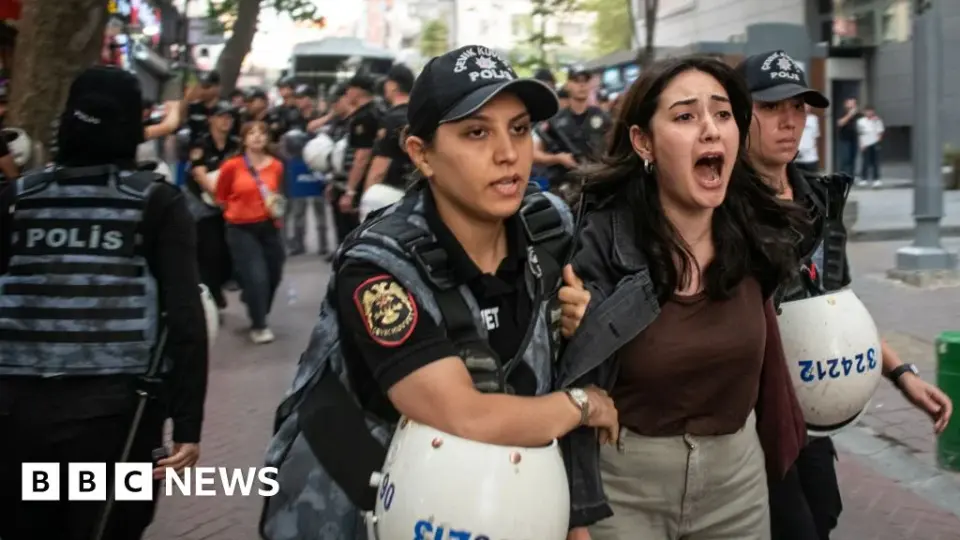
Turkish authorities have intensified a crackdown on the LGBTQ+ community, resulting in dozens of arrests during raids on gay bars and activist homes. The government labels this effort 'My Family is Safe' to protect traditional values, while rights groups and the EU condemn the actions as discriminatory. Protests in Istanbul have led to further detentions, and digital censorship against LGBTQ+ organizations has expanded across multiple provinces.
Key points
- Turkish police arrested at least 60 people during weekend raids on gay bars and the homes of activists across 12 provinces, including Istanbul and Ankara.
- The government frames the operation as the 'My Family is Safe' campaign, aiming to protect family values, though critics view it as a targeted suppression of LGBTQ+ civil society.
- Protesters gathered outside Istanbul’s main courthouse on Tuesday to demand the release of detained activists, chanting slogans and displaying banners stating that being LGBTQ is not a crime.
- Police arrested several demonstrators during the Tuesday protest, with some unfurling a banner that read 'Being LGBTQ is not a crime.'
- The European Commission expressed concern over the arrests and the blocking of social media accounts for LGBTQ+ organizations, urging Ankara to respect human rights and non-discrimination principles.
Background
This escalation follows earlier reports in September 2026 where Turkish police detained 47 individuals in similar raids, seizing drugs and digital equipment. The current actions represent a broadening of the 'My Family is Safe' initiative, which has previously led to the blocking of websites and social media accounts for dozens of LGBTQ+ and rights organizations. President Recep Tayyip Erdogan has historically described the LGBTQ+ community as a 'deviant movement,' contributing to a climate of widespread homophobia despite same-sex relations not being criminalized in Turkey.
How outlets are covering it
BBC and Le Monde both report on the arrests and the government's 'My Family is Safe' justification, but they emphasize different aspects of the response. BBC focuses on the immediate street-level reaction, highlighting the Tuesday protests in Istanbul and the specific arrests of demonstrators who chanted 'Long live the struggle for freedom.' Le Monde, in contrast, centers on the international diplomatic response, detailing the European Commission's statement by spokesman Christian Wigand, who criticized the arrests and the blocking of LGBTQ+ accounts on X as contrary to EU values. While BBC notes the blocking of websites via Human Rights Watch, Le Monde explicitly links the digital censorship to the EU's concerns about civil society funding and rights. Both sources agree on the scale of the crackdown but diverge in their primary lens: domestic civil unrest versus international institutional condemnation.
Why it matters
The crackdown signals a significant shift in Turkey's domestic policy toward LGBTQ+ individuals, moving from social stigma to active state repression. The involvement of the European Commission highlights the tension between Turkey's current government and its historical aspirations for EU membership, as Brussels insists that discrimination contradicts the values required for union integration. For the LGBTQ+ community in Turkey, this represents a deepening of state-sponsored hostility, with legal actions and digital censorship creating a chilling effect on civil society organizations and individual expression.
What to watch
The immediate focus will be on the legal proceedings for the dozens of arrested activists and the outcome of the Tuesday protest detentions. International observers will monitor whether the European Commission's statements lead to any formal diplomatic consequences or sanctions. Domestically, the government is likely to continue the 'My Family is Safe' campaign, potentially expanding legal actions against LGBTQ+ organizations and further restricting digital access to their platforms. Rights groups may escalate their advocacy efforts, potentially seeking international legal support or further public demonstrations to counter the state's narrative.
- Turkey arrests dozens in crackdown on LGBTQ+ activists BBC
- Turkish authorities detain at least 150 at protest over LGBTQ+ arrests CNN
- EU 'concerned' about Turkey anti-LGBTQ raids Le Monde.fr
- Police detain dozens at an Istanbul courthouse protest over LGBTQ+ crackdown AP News
- Turkey: 162 arrested in LGBTQ+ raids DW.com
Want the full story? Read the original reporting
Read on BBC