
Spain Train Crash Claims 69, Including 4 Americans and Cambridge Scientist
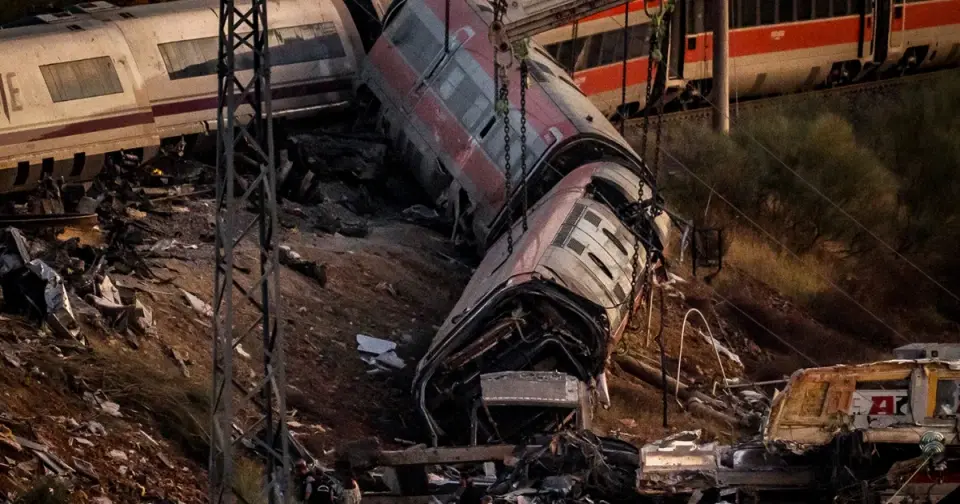
A high-speed train collision in central Spain has killed 69 people, including four Americans and one Canadian, marking the second major rail disaster on the Madrid-Seville line this year. The crash, which occurred on October 28 near Urda in the province of Toledo, involved a moving state-operated Renfe train striking a stationary Iryo train. While authorities have identified 66 of the deceased, three individuals remain missing. The incident has triggered a national mourning period and intensified scrutiny of Spain’s rail safety infrastructure ahead of a general election on November 29.
Key points
- The collision occurred on October 28 near Urda, Toledo, when a Renfe high-speed train hit the rear of a stopped Iryo train, killing 69 people and injuring 58.
- Among the identified victims are four Americans, one Canadian, and citizens from France, Japan, Argentina, Mexico, Tunisia, and the Czech Republic; 54 Spaniards have also been confirmed dead.
- Three victims remain unidentified: two Australians and one Japanese citizen, with families awaiting arrival in Spain for in-person identification.
- Dr. Marta Shahbazi, a prominent cell biologist at the University of Cambridge, was among the dead; she was traveling to collect a scientific award in Andalusia.
- Transport Minister Óscar Puente blamed a traffic controller’s judgment, while railway unions cited understaffing and deteriorating working conditions as root causes.
- The crash is the second major incident on the Madrid-Seville line this year, following a January collision that killed 46 people, and has shaken confidence in Spain’s high-speed rail network.
Background
Spain’s high-speed rail network, the world’s second-largest after China’s, had recorded no fatal crashes since entering service over three decades ago. The October 28 crash is the second major disaster on the Madrid-Seville line this year, following a January incident in Andalusia that killed 46 people. The current crash has intensified public scrutiny of rail safety and infrastructure investments under Prime Minister Pedro Sánchez’s government, particularly as it occurs one month before a general election on November 29. Sánchez is seeking to extend his eight-year premiership but now faces heightened questions about the safety of the rail system, which carried approximately 45 million travelers last year.
How outlets are covering it
NBC News and CBS News emphasize the international dimension of the tragedy, highlighting the four American and one Canadian victims among the 69 dead. The Guardian focuses on the forensic identification process, noting that 66 of the dead have been identified and that families are traveling to Spain for in-person confirmation. BBC News centers on the personal story of Dr. Marta Shahbazi, a Cambridge scientist killed while traveling to collect an award, underscoring the human impact of the disaster. All sources agree on the core facts but differ in emphasis: NBC and CBS stress the geopolitical implications and victim nationalities, The Guardian highlights the identification challenges, and BBC focuses on the loss of a prominent academic. CBS News also notes the dispute between Transport Minister Óscar Puente, who blamed a controller’s judgment, and railway unions, who cited understaffing and obsolete safety systems.
Why it matters
The crash has exposed deep concerns about the safety of Spain’s high-speed rail network, which had been regarded as a model of safety and efficiency. The incident has shifted the focus of the upcoming November 29 general election from housing policy to infrastructure safety and government competence. Prime Minister Pedro Sánchez has pledged an investigation and improvements to restore public trust, but the disaster has intensified scrutiny of his eight-year premiership and the investments made in Spanish infrastructure. The crash also raises broader questions about the reliability of automatic safety systems and the adequacy of staffing in critical transport sectors.
What to watch
Authorities are awaiting the arrival of families from Australia and Japan to complete the identification of the three remaining missing victims. An independent investigation is underway to determine the root causes of the crash, including the failure of an automatic safety system that halted all trains on a 63km stretch of track. Prime Minister Pedro Sánchez has pledged to implement improvements to restore trust in the rail network, while Transport Minister Óscar Puente faces pressure to address the systemic issues cited by railway unions. The outcome of the investigation and the government’s response will likely influence the November 29 general election, as voters assess the competence of the current administration in managing critical infrastructure.
- Four Americans and 1 Canadian among the 69 dead in Spain’s train crash NBC News
- Spain train crash: US, Japan and Canada citizens among dead, authorities say The Guardian
- Cambridge scientist dies in Spanish train crash BBC
- 4 Americans among 69 people killed in train crash in Spain, officials say CBS News
- 2 Cal Poly students injured in deadly Spain train crash KSBY News
Want the full story? Read the original reporting
Read on NBC News