An analysis of the Unite the Kingdom march argues it signals the rise of a cohesive right-wing cause in Britain, examining working-class sentiment, media framing, and political risk, while reader comments reflect a polarized debate about the movement’s legitimacy and implications.
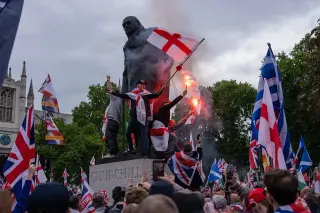
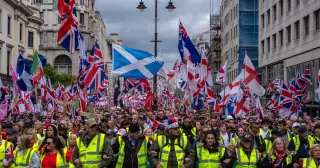
Thousands joined Tommy Robinson’s Unite the Kingdom rally in central London, but arrests were made as police deployed about 4,000 officers, drones and live facial-recognition cameras; banners carried anti-immigrant, Islamophobic and antisemitic messages, with flags including Israeli and Iranian monarchist symbols. Robinson urged supporters to engage in politics, while Amnesty International condemned the gathering as promoting racism and fear. Ahead of the rally, 11 foreign far-right agitators were barred from entering the UK.
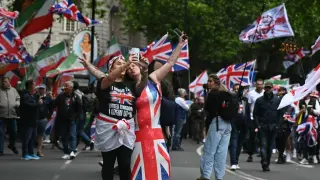
Tens of thousands gathered in central London for the 'Unite the Kingdom' march organized by far-right activist Tommy Robinson, with police estimating about 60,000 attendees — one of the largest recent right-wing demonstrations in Britain. The crowd waved flags and Christian imagery, chanted against Prime Minister Keir Starmer, and heard Robinson urge political engagement while praising Elon Musk. The protest ran alongside a pro-Palestinian Nakba Day march, prompting a major policing operation and around 31 arrests across both events, costing roughly £4.5 million. Starmer condemned the rally as peddling hatred and division amid broader debates over national identity, public services, and antisemitism in the UK.