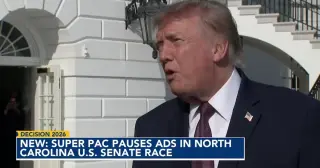
Texas Attorney General Ken Paxton defeated incumbent Sen. John Cornyn in the Republican Senate runoff and will face Democrat James Talarico in November; the race featured heavy spending and a Trump endorsement backing Paxton.
Polls mostly closed in Texas for the Republican U.S. Senate runoff between Ken Paxton, backed by Donald Trump, and incumbent John Cornyn; the winner will face Democrat James Talarico in November. Polls closed by 7 p.m. local time, with some western counties remaining open for another hour due to Texas’s two time zones, as results begin to roll in across the Central and Mountain zones.
Texans are voting in a Republican U.S. Senate runoff between Attorney General Ken Paxton and incumbent John Cornyn, a contest intensified by Donald Trump’s late endorsement of Paxton and a costly ad war. The winner advances to the November race against Democrat James Talarico, while the day’s runoff also decides Democratic U.S. House nominees in Dallas, Houston and a San Antonio-area district.
Texas Republicans head to a Senate runoff between John Cornyn and Ken Paxton, with Paxton riding Trump’s endorsement and Cornyn seeking to hold the GOP line; the winner will face Democrat James Talarico in November as loyalty to Trump becomes a central theme. The AP also summarizes poll closures, who can vote in runoffs, early/absentee voting, turnout history, and recount rules, alongside other state runoff contests.
Senate Republicans are poised to drop a $1 billion plan to fund security upgrades for Trump’s White House ballroom from a larger roughly $70 billion ICE/border funding package after backlash from fellow Republicans. Democrats vow to oppose the provision and force votes, while GOP leaders work to push the bill through before a Memorial Day recess. Trump has promoted the project amid mixed public opinions and ongoing litigation, and opponents warn the funding would distract from voters’ cost-of-living concerns.
Georgia’s GOP governor primary heads to a June runoff between Lt. Gov. Burt Jones and Rick Jackson, with Raffensperger finishing third; the GOP contest to challenge Sen. Jon Ossoff remains unsettled as Mike Collins advances to a June runoff to face Derek Dooley. Democrat Keisha Lance Bottoms won the governor nomination outright. Two Georgia Supreme Court justices were re-elected in nonpartisan races, amid the heartbeat abortion ban debate. Ossoff begins with strong fundraising as Georgia’s open governor race underscores the state’s swing-state status.
U.S. Rep. Andy Barr won Kentucky's Republican primary for the U.S. Senate seat being vacated by Mitch McConnell, aided by a Trump endorsement and outsized fundraising over rival Daniel Cameron; Cameron conceded after Barr led as polls closed, setting Barr up to face the Democrat in November.
Incumbent Republican Sen. Bill Cassidy was ousted in Louisiana’s GOP primary as Trump-aligned Julia Letlow and John Fleming advanced to a June 27 runoff for the Senate seat; Letlow led the field but didn’t hit 50%, forcing a head-to-head with Fleming. On the Democratic side, Jamie Davis will face Gary Crockett in a runoff after Crockett narrowly edged Nick Albares. Cassidy’s defeat follows his impeachment vote against Trump and reflected the presidential endorsement and state GOP efforts to reshape the race under Gov. Jeff Landry’s semi-closed primary reform.
Live Louisiana 2026 primary results show GOP Senate front-runner Julia Letlow leading early with about 45% (19% reporting), followed by John Fleming at ~28.8% and incumbent Bill Cassidy at ~23.9%. In the Democratic U.S. Senate contest, Jamie Davis leads with ~46.4% (12% reporting). Ballot measures and several local races are also included; results are from the Associated Press and are initial updates as votes continue to be tallied.
Pete Ricketts won Nebraska's U.S. Senate Republican primary with about 81.7% of 165,715 votes, defeating Todd Knobel and Debb Axtell Schultz; Cindy Burbank captured the Democratic primary with about 89.2% of 102,122 votes. The AP called both races, and The Cook Political Report still lists the general-election race as Likely Republican.
Nebraska’s state primaries center a contentious U.S. Senate race where two Democrats, Cindy Burbank and Bill Forbes, spar over who is a genuine candidate, with the party backing Burbank in the primary and Osborn in the general election. Forbes’ late entry and Burbank’s reinstatement after a court ruling underscore intra-party tensions as Republican incumbent Pete Ricketts pursues a full term, potentially facing independent Osborn in November. The slate also includes governor, U.S. House in the 2nd District, and 11 state legislature primaries, with voting rules, early voting patterns, and AP-only declarations of winners guiding coverage.
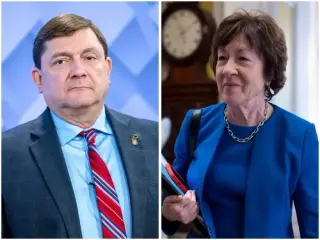
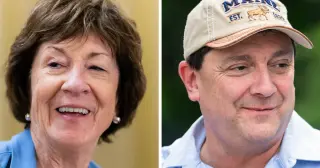
Sen. Susan Collins disclosed a decades-long benign essential tremor that causes tremors in her hands and head but says it has no impact on her ability to perform her duties; she has not missed a vote in 30 years and remains confident in serving another term amid a competitive Maine race.
Democrat Sherrod Brown and Republican Jon Husted won Ohio’s primaries, advancing to a high-profile November Senate race to fill the remainder of the term left by JD Vance. Husted ran unopposed; Brown faced a single challenger. The contest is expected to attract substantial outside spending as Democrats aim to flip seats and expand their Senate presence, with Ohio also featuring a key gubernatorial race and a vulnerable Rep. Marcy Kaptur race.
Trump asked Nate Morris to bow out of the Kentucky U.S. Senate race to take an ambassador role, with Morris agreeing to serve in an unspecified position and endorsing Andy Barr for the seat; Trump’s backing is seen as influential in Kentucky politics.
The Senate unanimously voted to ban its members and Senate staff from participating in prediction markets amid scrutiny of insider-trading concerns tied to bets on elections and other events. Introduced by Sen. Bernie Moreno, the ban targets platforms like Kalshi and Polymarket and aims to address ethics in Congress; the House is not included in the ban.