
Five Practical Four-Door Vehicles Outperform the Base C8 Corvette
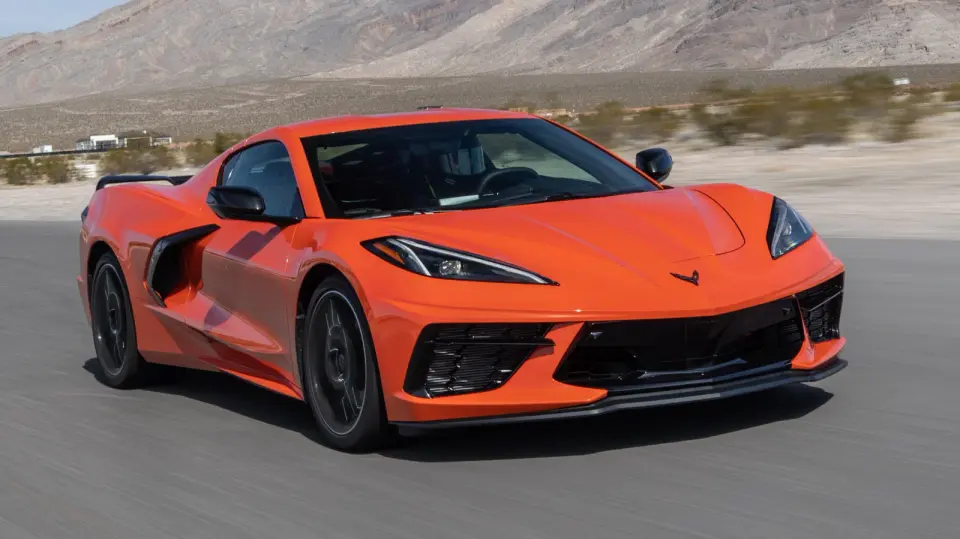
Five four-door family vehicles, including the Hyundai Ioniq 5 N, Rivian R1T, BMW M3 Competition xDrive, Porsche Cayenne Turbo Electric, and Tesla Model 3 Performance, match or exceed the acceleration of the base C8 Corvette Stingray. While the Corvette remains a benchmark for speed, these practical alternatives offer comparable 0-60 mph times and quarter-mile results, with the electric Porsche Cayenne Turbo Electric significantly outperforming the sports car. The list highlights how modern electric and hybrid technology has closed the performance gap between family haulers and supercars, offering buyers practicality without sacrificing speed.
Key points
- The base C8 Corvette Stingray achieves 0-60 mph in 2.8 seconds and a quarter-mile time of 11.2 seconds at 122 mph, serving as the performance benchmark for this comparison.
- The Hyundai Ioniq 5 N matches the Corvette's 0-60 time at 2.8 seconds and beats it in the quarter-mile with an 11.0-second time at 124.9 mph, priced near the Corvette's base cost.
- The Rivian R1T electric pickup truck edges out the Corvette in both metrics, with the quad-motor version achieving 0-60 mph in 2.6 seconds and a quarter-mile time of 10.6 seconds at 128 mph.
- The BMW M3 Competition xDrive is the only internal combustion engine option on the list, tying the Corvette at 2.8 seconds for 0-60 mph and beating it in the quarter-mile at 11.0 seconds, despite a higher starting price.
- The Porsche Cayenne Turbo Electric dominates the list with 1,139 horsepower, achieving 0-60 mph in 2.1 seconds and a quarter-mile time of 9.5 seconds, significantly outperforming the Corvette.
- The Tesla Model 3 Performance offers the most affordable option at approximately $55,000, tying the Corvette at 2.8 seconds for 0-60 mph and beating it in the quarter-mile at 11.0 seconds.
Background
This story follows a broader trend in the automotive market where practical four-door vehicles are increasingly matching or exceeding the performance of traditional sports cars. In August 2026, several sedans, including the BMW M5 and Lucid Air Sapphire, were noted for their supercar-beating capabilities, highlighting a renaissance in performance sedans. Additionally, Ford's teased four-door Mustang Mach 4 for 2029 signals renewed interest in practical yet fast sedans. The current list expands this narrative to include SUVs and pickup trucks, demonstrating that electric and hybrid powertrains are now the primary drivers of this performance convergence, allowing family vehicles to outpace iconic sports cars like the Corvette.
Why it matters
The ability of family-friendly vehicles to match or exceed the performance of a C8 Corvette signifies a fundamental shift in automotive performance metrics. It indicates that electric and hybrid powertrains are no longer just about efficiency but are now the primary source of peak acceleration. For consumers, this means the trade-off between practicality and speed is diminishing, as buyers can now choose vehicles that serve daily family needs while still delivering supercar-level performance. This trend also pressures traditional sports car manufacturers to differentiate their offerings through driving experience and brand heritage rather than raw acceleration numbers alone.
What to watch
The 2027 Corvette Stingray is expected to feature a larger 6.7-liter V8 engine, which will likely improve its 0-60 mph and quarter-mile times, potentially narrowing the gap with some of the electric competitors. However, the rapid advancement of electric vehicle technology suggests that new family vehicles will continue to close or exceed this performance gap. Buyers should expect more four-door options with supercar-level acceleration in the coming years, particularly as manufacturers like Ford and others expand their performance sedan and SUV lineups.
Want the full story? Read the original reporting
Read on SlashGear