
Real-World Tests Reveal Rivian R2 Uses 26% More Energy Than Model Y Despite Identical EPA Ratings
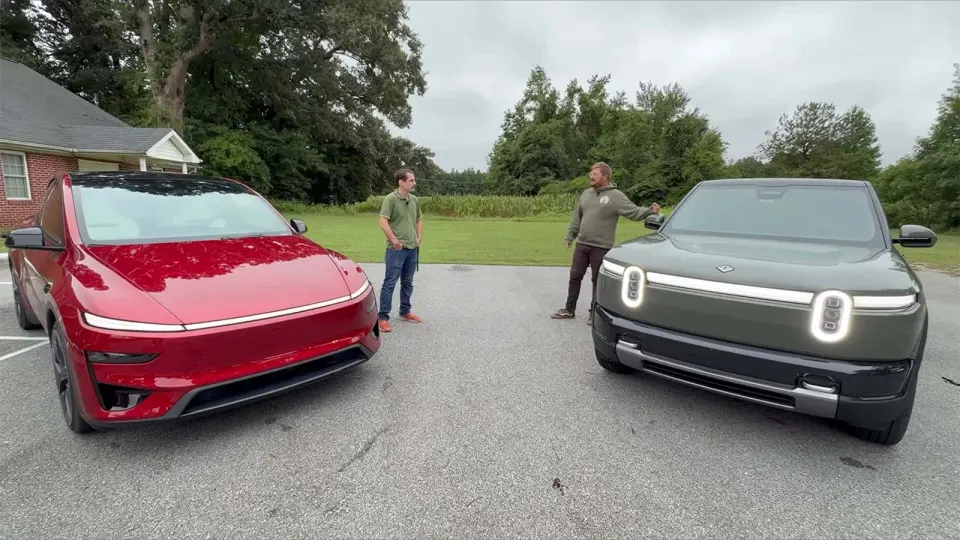
Independent testing shows the Rivian R2 Performance consumes 18% to 26% more energy than the Tesla Model Y Performance across various speeds, contradicting their identical EPA efficiency ratings. The discrepancy is attributed to different EPA testing procedures and the R2's larger, boxier design, though the R2 offers superior charging speeds and off-road utility.
Key points
- Out of Spec Reviews and RivianTrackr found the R2 Performance used 18.4% to 26.5% more energy than the Model Y Performance at speeds between 50 and 80 mph.
- Both vehicles share an identical EPA combined efficiency rating of 105 MPGe, yet the R2 is heavier and has a higher drag coefficient.
- The R2 consumed 25% more energy in a low-speed city simulation, despite its ability to disconnect the front motor for efficiency.
- The R2 demonstrated superior charging performance, reaching 229 kW peak power, while the Model Y showed better real-world energy efficiency.
- Experts suggest the EPA rating disparity arises from different testing methodologies, with the R2 undergoing a full five-cycle test and the Model Y using derived data.
Background
Rivian CEO RJ Scaringe previously claimed the R2 matches the Model Y's efficiency, a statement supported by identical EPA ratings released in May 2026. The R2 was designed with an adventure-focused, boxy silhouette, contrasting with the Model Y's aerodynamic profile. Recent sales data indicates the Model Y remains the dominant seller, while the R2 is ramping up production to meet annual targets.
How outlets are covering it
InsideEVs and Electrek highlight the contradiction between official EPA ratings and real-world performance, noting that the R2's boxy shape and weight disadvantage it in efficiency despite its mechanical advantages. Eletric-vehicles.com emphasizes the commercial implications, noting that the R2's efficiency claim is central to its competitive positioning against the Model Y. All sources agree that the R2 is not inefficient in absolute terms but is less efficient than the Model Y in direct comparison. The discrepancy is attributed to EPA's flexible testing procedures, which allow different correction factors for different vehicles.
Why it matters
This testing challenges the reliability of EPA efficiency ratings as a direct comparison tool for consumers. It highlights that real-world driving conditions, such as aerodynamics and weight, significantly impact energy consumption, which can affect range and charging frequency. For buyers, this means that official ratings may not reflect actual performance, particularly for vehicles with distinct design philosophies.
What to watch
Rivian may need to address the efficiency gap in future marketing or software updates. Tesla may leverage the Model Y's efficiency advantage in sales. Further independent testing may provide more data on real-world performance, and EPA may review its testing procedures to ensure consistency across manufacturers.
- Something Doesn’t Add Up About The Rivian R2’s EPA Efficiency Rating InsideEVs
- Rivian R2 Uses Up to 26.5% More Energy Than Tesla Model Y, New Test Finds eletric-vehicles.com
- 2027 Rivian R2 First-Take Review And Test Drive Forbes
- Rivian R2 vs Tesla Model Y: The Smaller SUV Has A Big Advantage Autoblog
- Rivian R2 uses up to 26% more energy than Model Y in real-world test Electrek
Want the full story? Read the original reporting
Read on InsideEVs