
Tesla Semi Enters Volume Production After Seven-Year Delay
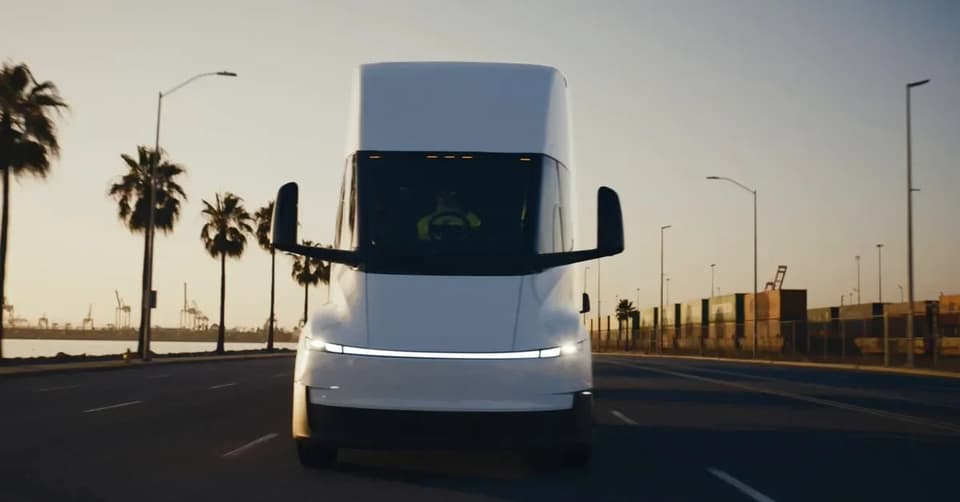
Tesla has officially launched high-volume production of its electric Semi truck at a new dedicated facility in Sparks, Nevada, seven years after its initial unveiling. The 1.8 million-square-foot plant is designed to build 50,000 units annually, featuring vertical integration for batteries and drivetrains. The production model now uses 4680 cells and electric steering, with a 500-mile range for the long-range variant. Major orders, including a 2,500-unit deal from the ZET SCALE alliance, signal growing commercial interest, though charging infrastructure remains concentrated in California and Texas.
Key points
- Tesla launched volume production at a new 1.8 million-square-foot factory in Sparks, Nevada, capable of building 50,000 trucks per year.
- The production Semi uses 4680 battery cells, a steel-caged rotor shared with the Cybertruck, and electric steering, replacing hydraulic systems.
- The long-range variant offers 500 miles of range, while the standard version provides 325 miles, with 60% charging in 30 minutes via Megachargers.
- The ZET SCALE alliance ordered 2,500 trucks, nearly doubling the number of electric Class 8 vehicles on US roads, with deliveries starting this year.
- Tesla quotes approximately $290,000 for the long-range model, which is about $145,000 less than the average electric Class 8 truck price.
Background
Tesla unveiled the Semi concept in 2017, promising production by 2019. Initial hand-built units were delivered to PepsiCo in late 2022, but volume production faced significant delays. Recent archive coverage noted that while the launch event highlighted major customer rosters and engineering improvements, Tesla withheld specific pricing and total order numbers, leaving financial details unclear. Analysts previously estimated deliveries of 5,000 to 15,000 units for the year, well below the plant's maximum capacity.
How outlets are covering it
Electrek emphasizes the engineering redesign, noting the shift to 4680 cells and electric steering as key cost and reliability improvements, while highlighting the economic advantage of electricity over diesel at current prices. MotorTrend focuses on the driving experience, describing the Semi as surprisingly easy to handle with a tight turning radius and smooth acceleration, validated by a professional trucker who noted the lack of perceived weight when towing. WIRED contextualizes the launch within broader market challenges, noting that while diesel prices have hit record highs, the US lacks a nationwide megawatt charging network, and federal support for EVs has decreased. WIRED also notes that Full Self-Driving is not yet available on the Semi, despite promises made in 2017.
Why it matters
The launch marks a critical milestone for electric heavy-duty trucks in the US, potentially shifting commercial fleets away from diesel due to rising fuel costs. The 2,500-unit order from the ZET SCALE alliance indicates significant commercial adoption, but the success of the Semi depends on expanding charging infrastructure beyond California and Texas and achieving production volumes that justify the new factory's capacity.
What to watch
Tesla will begin deliveries immediately, with the ZET SCALE order to be fulfilled over the next 18 months. The company plans to open 30 Megacharger sites by the end of the year to support long-haul routes. Future updates will focus on delivery numbers, the rollout of Full Self-Driving for the Semi, and the expansion of charging networks in the Mountain West and Plains regions.
- Tesla Semi finally enters volume production, 7 years behind schedule Electrek
- Tesla is beginning Semi electric truck deliveries Reuters
- I Just Drove the New Tesla Semi, and It Was Several Tons of Fun MotorTrend
- Tesla Semi Hits The Road As $6 Diesel Prices Bite Trucking Industry Investor's Business Daily
- Nearly a Decade Later, the Electric Tesla Semi Is Here WIRED
Want the full story? Read the original reporting
Read on Electrek