
Black box data reveals erratic throttle inputs before Amazon cargo jet kills five in Miami
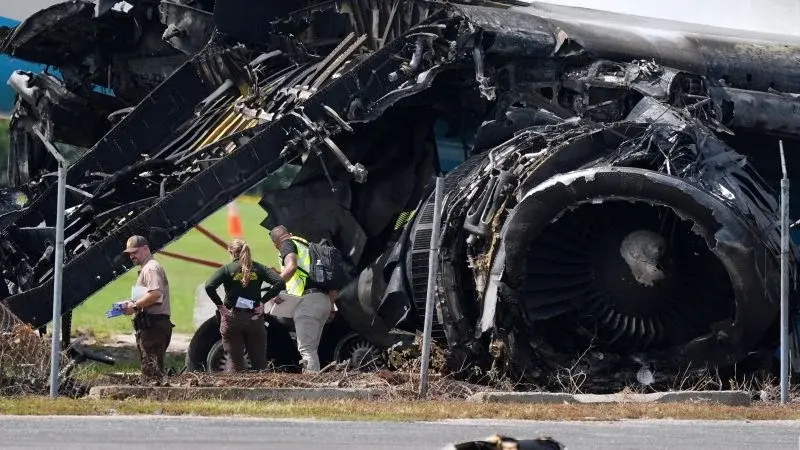
The NTSB has released initial flight data from the Amazon cargo jet that killed five people in Miami, revealing a confusing sequence of control inputs before the crash. Investigators are now interviewing pilots to understand why the aircraft failed to stop.
Key points
- The NTSB recovered the black boxes from the crashed Boeing 767-300 and analyzed over 400 data streams.
- Data shows the plane touched down unevenly, with the nose and right rear gear landing nine seconds before the left rear gear.
- Fifteen seconds before the recording ended, brakes were released and throttles pushed to full take-off power before being returned to idle.
- The NTSB is interviewing the pilots and 21 Air’s assistant chief pilot to clarify these actions.
- The five victims were identified as employees of a contract cleaning company, Professional Ocean Service Corp.
Background
The crash occurred on September 7, 2026, at Miami International Airport. The aircraft, operated by 21 Air for Amazon, was carrying approximately 32,000 pounds of cargo, mostly contact lenses. Previous reports noted that the airport lacks a specific safety system designed to slow planes that overrun runways. The flight was the third leg of the day, having traveled from Cincinnati to Miami to San Juan, Puerto Rico.
How outlets are covering it
CNN and the NTSB focus on the technical anomalies in the flight data, specifically the delayed landing of the left rear gear and the brief application of full take-off power. CBS News highlights a pattern of safety complaints against 21 Air, citing former employees who alleged the company suppressed safety reports and pressured pilots to fly without adequate rest. NBC 6 South Florida provides witness accounts, including video of a pilot escaping the burning wreckage, and emphasizes the shock of the event for nearby families. While CNN and CBS present the technical and historical safety concerns, NBC 6 focuses on the immediate human impact and visual evidence of the crash.
Why it matters
The incident raises significant questions about the safety culture of 21 Air and the operational standards of Amazon’s cargo network. The erratic control inputs recorded in the black box suggest a potential loss of control or a failed aborted landing, which could indicate deeper issues with pilot training or aircraft maintenance. The NTSB’s investigation will determine if these factors contributed to the fatal crash.
What to watch
The NTSB plans to interview the pilots and 21 Air’s assistant chief pilot on Wednesday. Investigators will continue to collect evidence from the crash site and the aircraft, including debris from a nearby parking lot. The NTSB has not yet released details from the cockpit voice recorder, pending the pilot interviews.
- Amazon plane’s black box reveals strange sequence of events just before cargo jet skidded off runway, killing 5 CNN
- Amazon Cargo Jet Pilots Appeared to Try Aborting Landing, N.T.S.B. Investigation Indicates The New York Times
- Cargo jet tried to abort unsteady landing before Miami crash, flight data indicates NPR
- Video shows pilot escape from Amazon cargo jet after fiery crash at MIA NBC 6 South Florida
- 21 Air, operator of plane in Miami crash, had prior safety complaints by former employees cbsnews.com
Want the full story? Read the original reporting
Read on CNN