
Lufthansa Retires Final A340-600, Marking End of an Era for Four-Engine Giants
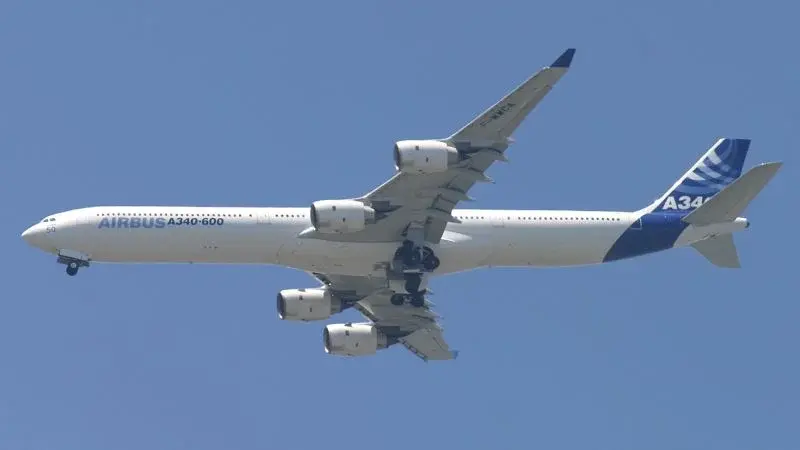
Lufthansa has officially retired its last Airbus A340-600, ending 23 years of service for the world’s former longest passenger aircraft. The final flight, LH419, arrived in Frankfurt from Washington, D.C., on October 19, 2026, carrying 267 to 275 passengers and 15 crew. While the aircraft was a commercial disappointment due to high fuel consumption and competition from twin-engine rivals like the Boeing 777, it remains a cultural icon among aviation enthusiasts. Lufthansa is replacing the A340-600 with more efficient Airbus A350-1000s and Boeing 777-9s as part of a broader fleet renewal strategy aimed at reducing costs and emissions. Other airlines, including Swiss and Edelweiss, continue to operate smaller A340 variants, but the four-engine long-haul era is largely concluding.
Key points
- Lufthansa’s final A340-600 flight, LH419, landed in Frankfurt on October 19, 2026, after an 8-hour, 5-minute journey from Washington, D.C.
- The aircraft, registered D-AIHW, was the world’s longest passenger plane at its 2002 debut, measuring 75.3 to 75.4 meters in length.
- The A340-600 was a commercial failure, selling only 67 units globally, as airlines preferred more fuel-efficient twin-engine competitors like the Boeing 777-300ER.
- Lufthansa will replace the A340-600 with Airbus A350-1000s and Boeing 777-9s, aiming for 70% of its long-haul fleet to be next-generation aircraft by 2028.
- Aviation enthusiasts gathered at Washington Dulles and Frankfurt to celebrate the final flight, highlighting the aircraft’s cult following despite its commercial shortcomings.
Background
The Airbus A340-600 debuted in 2002 as a response to demand for large, long-range jets, but it struggled against Boeing’s twin-engine 777 series. While the A340 family helped Airbus develop technologies for the A380 superjumbo, the A340-600 itself was seen as an uneconomical design. Other airlines, including China Eastern, Iberia, and Virgin Atlantic, retired their A340-600s between 2015 and 2021. Lufthansa’s retirement of the type is part of a wider industry shift toward twin-engine aircraft, which offer lower operating costs and better fuel efficiency. The archive notes no direct background on the A340, but the current trend reflects a broader move away from four-engine long-haul aircraft due to rising kerosene prices and environmental concerns.
How outlets are covering it
CNN emphasizes the cultural significance of the A340-600, noting its 'risqué' reputation and the emotional farewell from aviation enthusiasts. It highlights the aircraft’s commercial failure but its role in Airbus’s development. Il Sole 24 Ore focuses on the economic and technical reasons for the retirement, citing high fuel consumption and the rise of twin-engine aircraft. It notes that Lufthansa will retain smaller A340-300s and that other airlines like Swiss and Edelweiss still operate A340 variants. Aero-News Network provides a factual summary of the final flight and Lufthansa’s fleet renewal plans, emphasizing the aircraft’s legacy in transporting 40 million passengers and its use in climate research and the 2014 World Cup. All sources agree on the aircraft’s commercial failure but differ in emphasis: CNN on cultural impact, Il Sole 24 Ore on economic factors, and Aero-News on operational details.
Why it matters
The retirement of the A340-600 marks a symbolic end to the four-engine long-haul era, as airlines prioritize fuel efficiency and lower operating costs. Lufthansa’s fleet renewal, including the A350-1000 and 777-9, reflects a broader industry shift toward twin-engine aircraft, which are more economical and environmentally friendly. The event also highlights the cultural significance of aircraft beyond their commercial viability, as seen in the enthusiastic farewells from aviation enthusiasts. For the industry, it underscores the importance of adapting to changing market demands and technological advancements, ensuring sustainability and efficiency in long-haul operations.
What to watch
Lufthansa expects to receive its first Airbus A350-1000 in December 2026 and the Boeing 777-9 in 2027. By 2028, the airline aims for 70% of its long-haul fleet to consist of next-generation aircraft. The retired A340-600s may be sold to charter airlines or scrapped. Other airlines, including Swiss and Edelweiss, will continue to operate smaller A340 variants, but the four-engine long-haul era is expected to conclude as twin-engine aircraft dominate the market. The industry will continue to focus on reducing emissions and improving fuel efficiency, with new aircraft featuring advanced comfort and noise reduction technologies.
Want the full story? Read the original reporting
Read on CNN