
Qantas 787 Returns to Melbourne After Runway Debris Discovery
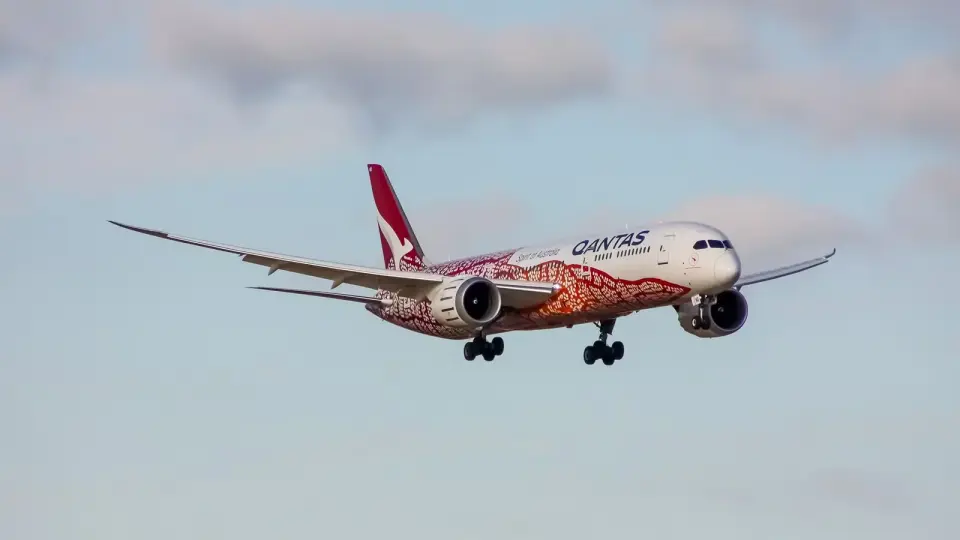
A Qantas Boeing 787-9 bound for Dallas spent 8.5 hours in the air before returning to Melbourne after debris was found on the runway. The aircraft, registration VH-ZNI, departed at 12:00 PM AEDT on November 28 and landed back in Melbourne at 8:54 PM AEDT. Passengers were rebooked on a replacement flight, QF7021, which departed on November 29. The aircraft remains grounded for inspection, and Qantas has not disclosed the nature of the debris.
Key points
- Qantas flight QF21, a Boeing 787-9 (VH-ZNI), departed Melbourne Airport at 12:00 PM AEDT on November 28, 2026, bound for Dallas/Fort Worth.
- An airside safety vehicle found debris on the runway shortly after takeoff. CCTV footage confirmed the debris originated from the departing aircraft.
- The flight continued for approximately four hours, reaching an altitude of 35,000 feet near Fiji, before an emergency was declared and the aircraft turned back.
- The aircraft returned to Melbourne and landed at 8:54 PM AEDT, spending 8 hours and 32 minutes in the air.
- Passengers were provided with accommodation, transport, and meal vouchers, and were rebooked on replacement flight QF7021, which departed Melbourne at 12:47 PM AEDT on November 29, 2026.
- The aircraft VH-ZNI remains grounded pending engineering inspection. Qantas described the incident as a 'mechanical issue' but did not specify the type of debris.
Background
Qantas operates 14 Boeing 787-9 Dreamliners, with the affected aircraft, VH-ZNI, delivered in October 2019. The airline recently announced plans to retire its Airbus A380 fleet by 2028, accelerating the need for widebody capacity. Foreign object debris (FOD) is a significant safety concern in aviation; a 2023 FAA study estimated global FOD costs at up to $22.7 billion annually. The 2000 Air France Concorde crash, caused by debris from a preceding aircraft, remains a key reference point for FOD risks.
How outlets are covering it
Simple Flying and AirLive agree on the timeline and the 8.5-hour duration of the flight to nowhere. AirLive notes that the crew flew back to Melbourne rather than diverting to a closer airport in the South Pacific, a decision not explained in the reports. Nacionale emphasizes the dual hazard of FOD: risk to the aircraft that lost the part and risk to other aircraft using the runway. Metro.co.uk highlights the four-hour delay before the crew was informed. All sources confirm the replacement flight QF7021 departed on November 29, but Simple Flying and Nacionale provide more detail on the aircraft registration (VH-ZNE) and passenger compensation.
Why it matters
The incident highlights the operational and safety implications of foreign object debris (FOD) in aviation. While no injuries were reported, the turnback disrupted travel for passengers and grounded a key aircraft in Qantas's fleet. The incident underscores the importance of runway surveillance and emergency protocols in preventing potential hazards to other aircraft. The grounding of VH-ZNI may impact Qantas's schedule, particularly as the airline prepares to retire its A380 fleet and expand its 787 operations.
What to watch
Qantas engineering teams are expected to inspect VH-ZNI to determine the source of the debris and assess any damage before returning it to service. No timeline for the aircraft's return to service has been announced. It is unclear whether Australia's transport safety bureau will investigate the incident. Passengers on the replacement flight QF7021 are expected to arrive in Dallas/Fort Worth on November 29, 2026.
- Dallas-Bound Qantas Boeing 787 Flies 8.5 Hours To Nowhere After Shedding Debris On Takeoff Simple Flying
- Qantas Boeing 787 returned to Melbourne after 8.5-hour flight to nowhere following runway debris discovery airlive
- Why would a plane turn back over debris on the runway? What the Qantas QF21 return shows Nacionale
- Plane flew for 4 hours 'before realising that part of jet had fallen off' Metro.co.uk
- Qantas Cancels Dallas Flight After Runway Debris Alert Limapagi
Want the full story? Read the original reporting
Read on Simple Flying