
Carney’s Toronto Summit Pivots Canada’s Pitch from US Access to Global Resilience
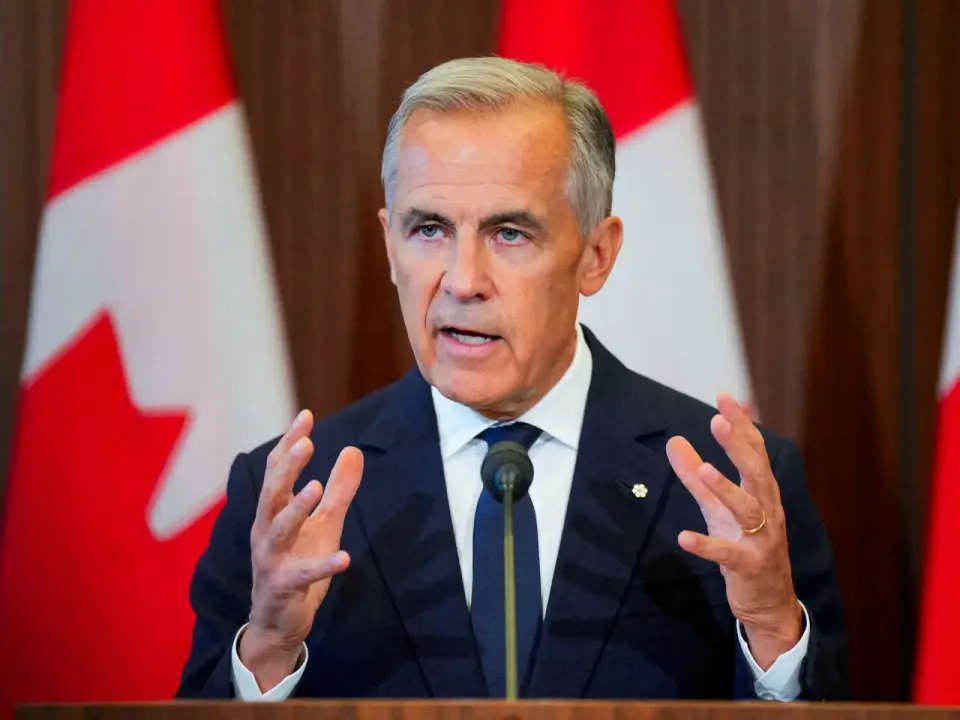
Prime Minister Mark Carney is hosting a two-day investment summit in Toronto to attract $1 trillion in capital over five years, shifting Canada’s pitch from US market access to domestic stability. The event, attended by roughly 300 global investors, highlights 167 projects in energy, mining, and infrastructure. While the summit aims to diversify Canada’s economy amid a US trade war, critics and analysts warn that lengthy regulatory approvals and the risk of privatizing public assets may hinder long-term success.
Key points
- The Canada Investment Summit in Toronto brings together approximately 300 major global investors, including representatives from sovereign wealth funds and asset managers like BlackRock and Blackstone, for a two-day event.
- Carney is seeking to catalyze $1 trillion in investment over the next five years, supported by $280 billion in public investment and government incentives, to build a more resilient economy independent of the US.
- A leaked prospectus lists 167 potential projects, with nearly 70% focused on energy, power infrastructure, and critical minerals, reflecting a shift away from manufacturing tied to the North American market.
- The summit occurs amid a severe trade war with the US, where Washington has imposed 50% tariffs on $20 billion worth of Canadian goods, prompting Ottawa to retaliate with tariffs of 15 to 50% on US imports.
- Critics, including NDP leader Avi Lewis and protesters, argue the summit prioritizes foreign corporate interests over domestic needs, potentially privatizing public assets like ports and airports without guaranteed benefits for Canadians.
- Analysts note that while the summit opens doors, execution is the challenge; Canada faces lengthy federal and provincial approval processes that may deter investors, though a new Major Projects Office aims to streamline these reviews.
Background
This summit follows months of escalating tensions between Canada and the US, including collapsed trade talks and Trump’s rhetoric referring to Canada as the '51st state.' Earlier coverage noted Carney’s efforts to deepen ties with the EU and other nations to diversify trade dependencies. The event marks a strategic pivot from traditional pitches emphasizing proximity to the US market to highlighting Canada’s own resources and stability.
How outlets are covering it
Al Jazeera emphasizes the strategic shift in Canada’s investment pitch, noting that while the trade war creates uncertainty, it also positions Canada as a stable, rules-based jurisdiction for investors wary of US volatility. CBC highlights the significant public backlash, with over 1,000 protesters in Toronto opposing the privatization of public resources and the influence of foreign CEOs on Canada’s economic future. BBC focuses on Carney’s personal leverage, noting his deep ties to global finance and the skepticism that the summit will yield immediate major deals due to Canada’s regulatory hurdles and the ongoing US trade rift. All sources agree that the summit is a critical test for Canada’s ability to diversify its economy, but they differ on the likelihood of success and the social costs of such a pivot.
Why it matters
The summit represents a fundamental restructuring of Canada’s economic strategy, moving away from reliance on the US market to a model based on global resource exports and infrastructure. Success could insulate Canada from US trade policies, but failure or public backlash could exacerbate domestic political divisions and economic instability. The outcome will determine whether Canada can attract the capital needed to build a resilient economy or if it faces a 'valley of death' in the interim period of trade disruption.
What to watch
Investors and analysts will monitor the summit for memorandums of understanding and initial commitments, with significant deals expected to materialize over the next 12 to 18 months. The Canadian government will need to demonstrate the effectiveness of its new Major Projects Office in streamlining approvals. Meanwhile, public opposition may intensify, potentially influencing policy decisions on privatization and environmental assessments. Carney is also expected to continue his global tour to secure trade ties with Europe and other nations.
- Mark Carney pitches Canada to global investors amid US trade war Al Jazeera
- Over 1,000 protesters demonstrate against Carney's investment summit in Toronto CBC
- Carney Pitches Canada as a Stable Investment in a Chaotic World The New York Times
- How Carney plans to sell Canada to the world's biggest investors BBC
- Carney, locked in US trade war, pitches Canada to global investment titans Reuters
Want the full story? Read the original reporting
Read on Al Jazeera