Tag

Business And Economy

All articles tagged with #business and economy

US Suspends Tech Giants from Green Card Program, Citing Wage Suppression
business-and-economy4 days ago

US Suspends Tech Giants from Green Card Program, Citing Wage Suppression

The US government has suspended major technology firms from the Permanent Labour Certification (PERM) program, blocking their ability to sponsor foreign workers for permanent residency. Vice President JD Vance accused these companies of using the system to replace American jobs with lower-paid foreign labor, labeling the practice as 'indentured servitude.' The move impacts thousands of skilled workers, particularly Indian nationals, who face prolonged delays in obtaining green cards due to existing backlogs and new restrictions.
Carney’s Toronto Summit Pivots Canada’s Pitch from US Access to Global Resilience
business-and-economy28 days ago

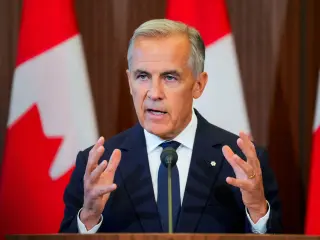
Carney’s Toronto Summit Pivots Canada’s Pitch from US Access to Global Resilience

Prime Minister Mark Carney is hosting a two-day investment summit in Toronto to attract $1 trillion in capital over five years, shifting Canada’s pitch from US market access to domestic stability. The event, attended by roughly 300 global investors, highlights 167 projects in energy, mining, and infrastructure. While the summit aims to diversify Canada’s economy amid a US trade war, critics and analysts warn that lengthy regulatory approvals and the risk of privatizing public assets may hinder long-term success.

Canadians Double Down on Local Goods as US Tariffs Loom
business-and-economy1 month ago

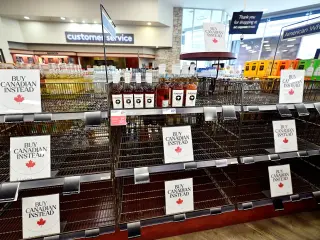
Canadians Double Down on Local Goods as US Tariffs Loom

Canadians, especially in Toronto, are increasingly choosing Canadian-made products as US tariffs and threats heighten trade tensions; while direct price hikes are currently limited, spillovers through packaging costs and supply chains could raise prices over time, with retailers and workers potentially bearing some burden even as many shoppers say they’ll pay more to support domestic products.

Oil spikes past $109 as Gulf disruptions lift inflation risks and Fed-rate bets
business-and-economy1 month ago

Oil spikes past $109 as Gulf disruptions lift inflation risks and Fed-rate bets

Oil prices surged to around $109 a barrel as attacks on Gulf shipping escalate amid the US-Israel war on Iran, with Brent at $109.20 and WTI above $102, fueling bets that the Federal Reserve will raise rates next week as supply concerns persist and China's recovering demand adds an uncertain hinge on how long the rally lasts.

Kenya Moves to Reserve Small Retail for Kenyans Amid Foreign-Trader Crackdown
business-and-economy1 month ago

Kenya Moves to Reserve Small Retail for Kenyans Amid Foreign-Trader Crackdown

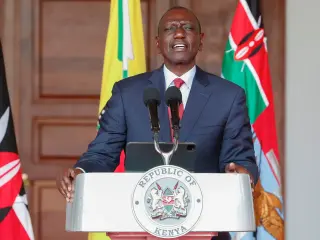
Kenya’s President William Ruto ordered a crackdown on foreign nationals running small retail shops and hawking, effective Sept. 7, to reserve such activities for Kenyans while welcoming foreign investment in capital-intensive ventures. The government also pushes the Local Content Bill 2025 to boost local sourcing and employment, with Parliament urged to accelerate its passage; foreigners with valid work permits remain legally protected, though applicability of the directive to current permit holders remains unclear. Analysts say foreign investment should complement Kenyan enterprise, but its impact hinges on implementation. The Tata Chemicals dispute is separate from this directive.

July US jobs slip as participation sinks to five-year low
business-and-economy2 months ago

July US jobs slip as participation sinks to five-year low

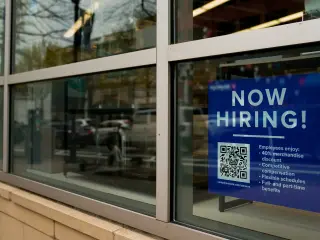
July payrolls fell by 23,000 as education, government and retail cut jobs, while the unemployment rate eased to 4.1% and labor-force participation dipped to 61.4% — the lowest in five years, with about 264,000 people leaving the labor force. Retail lost 19,000 jobs (big-box retailers hardest hit), leisure and hospitality shed 40,000, and local education dropped 49,000, though healthcare added 22,000. June’s gains were revised down to +20,000. With wage growth lagging inflation and Fed rate expectations shifting little, the report underscoring a sluggish economy helped push modest stock gains in trading.

States sue over Trump’s new global tariffs, alleging overreach and pretext
business-and-economy2 months ago

States sue over Trump’s new global tariffs, alleging overreach and pretext

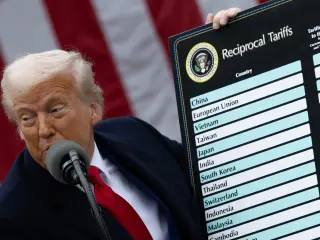
A group of 25 Democratic-led states filed a lawsuit in the U.S. Court of International Trade challenging the Trump administration’s new double-digit tariffs on about 60 trading partners, arguing the levies use a forced-labor pretext to reimpose tariffs previously ruled illegal by the Supreme Court. The White House defends the measures as a legal response to unfair practices, while critics say the authority under IEEPA/Section 301 does not justify the new tariffs, which followed expired temporary tariffs and affect a broad swath of imports.

US economy cools in Q2, growth slips to 1.5% amid inflation and trade gaps
business-and-economy2 months ago

US economy cools in Q2, growth slips to 1.5% amid inflation and trade gaps

US GDP rose 1.5% in Q2 2026, down from 2.1% in Q1 as consumer spending was boosted by tax refunds and higher fuel costs while a widening trade deficit and elevated energy prices weighed on momentum. Inflation (PCE) stood at 3.7% year over year in June, the Fed held rates at 3.5–3.75%, and markets rose on the data as AI/tech investment remains a growth driver.

Spain's mass regularisation draws over a million migrants into legal status
business-and-economy3 months ago

Spain's mass regularisation draws over a million migrants into legal status

Spain's first large-scale regularisation since 2005 drew 1,174,978 applications from migrants seeking legal status; about 608,000 are in processing with provisional residency and work permits, and 159,097 have registered with Social Security, while roughly 11,000 have received final approval. The plan, backed by civil society and churches, aims to formalise work—especially in care—amid an ageing population, but critics say it exposes how many live without rights and that processing will take time and face systemic challenges.

Germany rolls out sweeping reforms to revive growth and curb far-right pressure
business-and-economy3 months ago

Germany rolls out sweeping reforms to revive growth and curb far-right pressure

Germany’s ruling CDU/CSU–SPD coalition unveiled a broad reform package called the Programme for Revival and Employment, including about €10 billion in annual income tax relief for low- and middle-income earners from 2027, a major pension overhaul linked to life expectancy after 2031 (potentially reaching 70 by the 2090s), tighter sick-leave rules, longer fixed-term contracts, and reduced bureaucracy. The plan is funded mainly by shifting more tax burden onto top earners and aims to boost growth while countering far-right pressure, but still requires Bundestag and Bundesrat approval. Analysts say it could improve sentiment and lift growth later in the year.

EU tightens China stance to shield European industry
business-and-economy3 months ago

EU tightens China stance to shield European industry

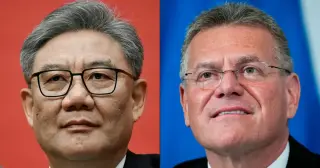
EU trade commissioner Maros Sefcovic pressed China’s Wang Wentao, warning that Europe’s market share in China is shrinking as Chinese exports to the bloc rise, and backing tougher measures such as overhauling the Cyber Security Act, an Industrial Accelerator Act prioritising EU-made goods, and sourcing-diversification rules for sensitive sectors; with July 1 duties on steel and a small-parcel customs charge looming, the bloc seeks to avoid a full-blown trade war while carmakers face job cuts amid EV competition, and Sefcovic and Wang outlined four workstreams and a joint trade-monitoring mechanism to pursue meaningful concessions.

Cuba Bets on Market Reforms in Unprecedented Emergency Package
business-and-economy3 months ago

Cuba Bets on Market Reforms in Unprecedented Emergency Package

Cuba's Communist Party approved an emergency package with unprecedented free-market measures to expand private enterprise, permit private banks, enable private real estate development and private-sector shares in state firms, and attract foreign investment (including from Cubans abroad), signaling a major economic shift amid intensified U.S. pressure and EU sanctions; President Diaz-Canel acknowledged domestic obstacles but said reforms cannot be postponed, with Raul Castro backing the plan despite expected hardline opposition.