
South Korea’s Finance Minister Defends Chip Boom Amid Market Volatility and Concentration Risks
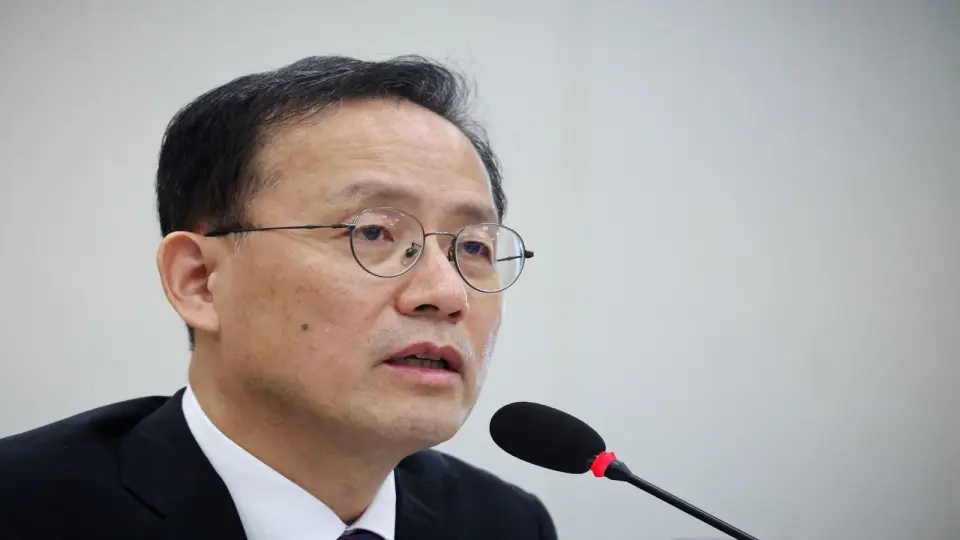
South Korean Finance Minister Lee Hyoung-Il asserts that the semiconductor boom will persist through 2027, citing a persistent gap between demand and supply. This optimism contrasts with a recent sharp market sell-off driven by fears of rising interest rates and Chinese competition. While the chip sector has boosted tax revenues and potential growth rates, critics warn that the economy’s heavy reliance on semiconductors exposes national pension funds and regional economies to significant cyclical risks.
Key points
- Finance Minister Lee Hyoung-Il stated that the semiconductor boom will last at least through 2027 due to a wide gap between demand and expanding supply.
- South Korean chip stocks, including SK Hynix and Samsung Electronics, experienced a severe sell-off this week, triggering a circuit breaker in the KOSPI index.
- The IMF forecasts South Korea’s potential growth rate to rise to 2.14% in 2026 and 2.20% in 2027, driven by semiconductor and AI investments.
- Critics argue that the National Pension Service has increased its domestic stock allocation to 20.8%, compounding risks by concentrating retirement funds in the volatile semiconductor sector.
- The government expects corporate tax revenue to exceed 217 trillion won next year, a figure heavily dependent on the continued success of the chip industry.
Background
Recent weeks have seen a dramatic decline in South Korea’s stock market, with the KOSPI index hitting a six-month low on October 15, 2026, dropping 7.57% to 5,554.22. This volatility followed a broader global chip sell-off triggered by concerns over AI investment sustainability, rising US interest rates, and intensifying competition from Chinese memory chipmakers. Prior to this crash, the semiconductor sector had been a primary driver of economic optimism, with the IMF noting a rebound in South Korea’s potential growth rate for the first time in 40 years.
How outlets are covering it
CNBC highlights the official government stance, with Finance Minister Lee Hyoung-Il emphasizing that the demand-supply gap ensures the boom will continue through 2027 and that the economy remains solid despite market swings. In contrast, Chosun Ilbo and Maeil Business Newspaper present a critical view, warning that the economy is overly concentrated in semiconductors. Chosun Ilbo notes that the National Pension Service’s valuation dropped by 182 trillion won since June, with 72% of the loss coming from Samsung and SK Hynix, and criticizes the government for failing to diversify risks. Maeil Business Newspaper points out that while the IMF forecasts a rise in potential growth, the benefits are concentrated in large export companies, leaving self-employed and low-income citizens with a 'cold wind' of economic stagnation. The outlets disagree on the sustainability of the boom, with CNBC citing official confidence and the Korean publications citing structural vulnerabilities and cyclical risks.
Why it matters
The sustainability of the semiconductor boom is critical for South Korea’s fiscal health, as the government expects corporate tax revenue to double next year. However, the heavy weighting of chip stocks in the KOSPI and the National Pension Service creates systemic risks. If the boom slows, the resulting market volatility could trigger a broader economic downturn, affecting retirement funds, regional development, and employment, particularly for youth and small businesses that have not benefited from the chip-driven growth.
What to watch
Investors and policymakers will monitor the impact of US interest rate decisions and Chinese competition on memory chip prices. The government is expected to continue its 'March 4·5 Economic Leap' initiative to reach a 3% potential growth rate, while the National Pension Service faces pressure to rebalance its portfolio away from concentrated semiconductor holdings. The outcome of the 2027 semiconductor cycle will determine whether South Korea’s fiscal surplus and growth targets are met or if a correction leads to a broader economic slowdown.
- Semiconductor market to remain solid ‘at least through next year,’ South Korea finance minister says CNBC
- Is SK Hynix (KOSE:A000660) Set For A Longer Chip Boom Through 2027? Yahoo Finance
- When the State Goes All-In on Semiconductors 조선일보
- Will the Memory Market Face a 'Red Ocean' by 2029? South Korean Finance Minister States Semiconductor Boom to Last at Least Until Next Year Moomoo
- The basic foundation of the Korean economy, which has been on the decline for a long time, is showin.. 매일경제
Want the full story? Read the original reporting
Read on CNBC