
Billions in Tariff Refunds Flow to Corporations, Leaving Consumers to Absorb the Cost
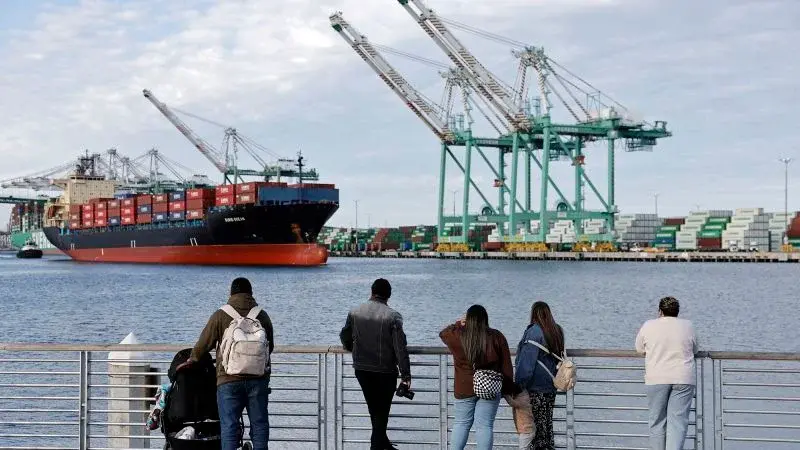
Following a Supreme Court ruling that declared global tariffs illegal, the US government has refunded approximately $100 billion to importers. While major corporations like Walmart, Target, and Apple have received hundreds of millions in payouts, most are not passing these funds back to consumers. Instead, companies are using the money to offset rising energy costs or boost profits, leaving shoppers to bear the burden of higher prices paid during the tariff period.
Key points
- The US Customs and Border Protection has issued $100 billion in refunds from the $168 billion collected from 330,000 importers since the Supreme Court voided the tariffs.
- Major retailers received significant payouts: Walmart got $2.9 billion, Target received $994 million, Apple got $2.2 billion, and Ford received $1.3 billion.
- Most large companies are not refunding consumers directly; instead, they are using the funds to lower prices slightly or offset other rising costs like energy, rather than returning the full amount paid by shoppers.
- Shipping companies like FedEx and UPS are exceptions, as they collected tariffs from customers and have set up portals to return those specific amounts, though processing is slow.
- Small businesses face a harder reality; many could not raise prices to cover tariffs and are using refunds to pay off debt or survive, rather than recouping lost revenue.
- Treasury Secretary Scott Bessent criticized the refund process as a 'corporate bonanza,' while the administration plans a new legal workaround to recapture tariff revenue.
Background
This development follows the Supreme Court's ruling that the Trump administration's global tariffs were illegal. Previous coverage indicated that while some companies like Amazon pledged to pass refunds to shoppers, others like Nintendo fought class-action claims, arguing customers voluntarily paid posted prices. The current situation highlights the gap between corporate windfalls and consumer relief, with estimates suggesting only 15% to 20% of the extra costs paid by households will be returned.
How outlets are covering it
CNN and MS NOW agree that large corporations are retaining most of the refund money, with CNN emphasizing that pricing decisions are complex and not solely driven by tariffs. MS NOW highlights the political tension, noting Treasury Secretary Scott Bessent's anger over the 'corporate bonanza' and the administration's plan to recapture revenue. Both outlets note that while Walmart and Target claim to be lowering prices, analysts argue these cuts are likely due to soft sales rather than the refunds. Baton Rouge Business Report focuses on the broader economic uncertainty, noting that the state now holds stakes in 37 companies, creating a volatile environment for businesses. All sources agree that consumers are largely left footing the bill, with only shipping carriers directly refunding individual buyers.
Why it matters
The distribution of tariff refunds reveals a disconnect between corporate financial recovery and consumer relief. While businesses benefit from billions in refunds, households that paid an estimated $1,700 more in 2025 and 2026 due to tariffs are unlikely to see a full return. This dynamic exacerbates economic inequality, as small businesses struggle to survive while large corporations absorb the costs, and the government seeks to recapture revenue through new legal mechanisms.
What to watch
The administration is developing a new legal workaround to replace previous import taxes and recapture tariff revenue. Meanwhile, consumers may see limited price reductions, but direct refunds are unlikely for most goods. Small businesses will continue to use refunds to stabilize operations, and legal challenges regarding the new tariffs may lead to additional refunds if successful.
- Tariffs raised prices you paid. But most businesses won’t be passing tariffs refunds back to you CNN
- Top Retailers Report More Than $5 Billion In Tariff Refunds. They’re Mostly Keeping The Money. Forbes
- 'Damage from the chaotic tariff regime cannot be refunded': The $100 billion in refunds have wiped out revenue the import taxes brought in since May Fortune
- Opinion | American consumers are still footing the bill for Trump's tariffs MS NOW
- The tariff math turns negative as refunds outpace revenue Baton Rouge Business Report
Want the full story? Read the original reporting
Read on CNN