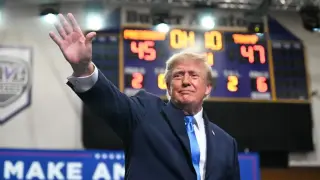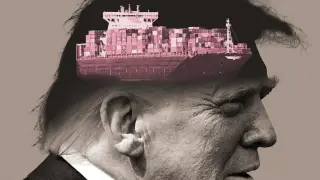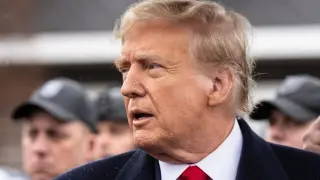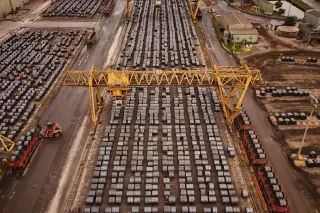
Amid broader US-Canada trade tensions, President Trump floated renaming Lake Ontario to 'Lake America,' but Canada’s Industry Minister Mélanie Joly dismissed the idea, reaffirming the lake’s name and Canada’s sovereignty as tariffs rise on both sides.
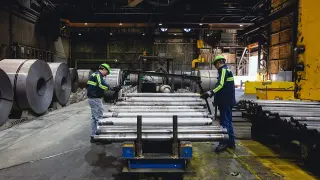
With President Trump promising up to 50% tariffs on autos and auto parts from Canada if a deal isn’t reached by Jan. 1, automakers are lobbying cautiously to avoid destabilizing a highly integrated North American supply chain. Industry officials stress the need to protect cross-border manufacturing while pressuring for a favorable resolution, as talks stall and the U.S. and Canada navigate renegotiations underUSMCA framework. The dispute also draws comments from unions like the UAW, which opposes tariff escalation.
Barry Ritholtz argues the bond market is unsettled by a tangle of forces: inflation driven by tariffs, energy prices, and geopolitical tensions; a Federal Reserve whose leadership and policy signals (including data choices and forward guidance) have unsettled markets; ongoing Treasury debt buybacks; and a ballooning national debt that raises borrowing costs. With inflation sticky and rate cuts unlikely, yields stay higher for longer. For investors, the takeaway is to pursue higher-yielding options like munis and TIPs, chosen to fit age, income, tax bracket, and residence.
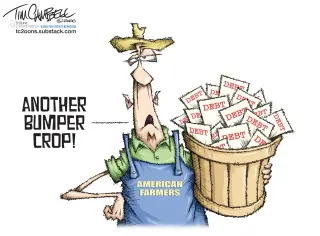
President Donald Trump signed a 90‑day proclamation to dramatically boost lean beef imports (300,000 metric tons) with the aim of lowering ground beef prices by roughly 25% below current levels; if prices don’t fall, he may end the action. The White House is also weighing related policy tweaks (potential country-of-origin labeling) that would require Congress. The plan has provoked backlash from major cattle groups and several Republican lawmakers who warn it could depress markets and hinder long‑term herd rebuilding, and it does not specify which countries will supply the meat. The first import tranche is set to start Sept. 1 as part of a broader affordability push ahead of the midterms.
U.S. inflation remained above the Fed’s 2% target in July, with the PCE price index up 3.7% year over year and core PCE at 3.3%, while spending cooled modestly and incomes rose faster than prices. BEA data showed durable goods orders rebound and corporate profits surge, and second-quarter GDP growth was left at 1.5% but with consumption revised up to 3.4% and private sales strengthening to 4.2%, signaling stronger private demand and a possible ~3% pace for Q3. The mixed signals keep the Fed focused on inflation, with markets pricing about a 40% chance of a rate hike in September as tariffs and geopolitical tensions continue to influence price pressures ahead of Jackson Hole.
Mark Carney’s approach in Canada’s clash with the US under Trump offers a blueprint for leaders facing a more powerful partner: establish nonnegotiables grounded in values, stay composed to prevent emotional contagion, update assumptions when a partner stops behaving as expected, and build allied strength to counter leverage. The article cites Carney’s walkaway from unfair talks, Canada’s tariff retaliation, and Nintendo’s pushback against Amazon to illustrate disciplined negotiation and the value of alliances. For CEOs, the takeaway is to focus on what you can control and influence, maintain unity with partners, and recognize that outcomes in leverage-driven disputes remain uncertain.
Facing renewed US trade tensions and threatened tariffs, Canada plans a deeper economic and security partnership with the EU, with talks this fall and potential collaboration on critical minerals, energy, and defence. Brussels wants diversification away from the US, but both sides acknowledge limits: a full membership remains unlikely, and any closer link may resemble Norway-style single-market access rather than membership, with the 2016 trade deal not fully ratified yet.
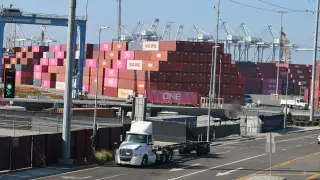
Trump claimed the US doesn’t need Canada, but Canada remains a major energy and trade partner, supplying much of US electricity and key resources like potash, aluminum, and auto parts. He floated 50% tariffs on Canadian cars and auto parts starting in 2027, a move Canadian leaders warned could backfire economically. Alberta and Ontario officials highlighted Canada’s leverage while cautioning against export taxes that could hurt both countries. Canada also plans to expand its electrical grid by 2050 to meet rising demand, including for AI-powered growth.
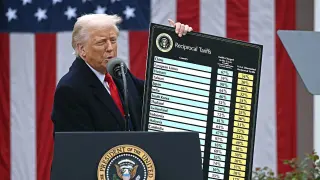
With 10 weeks until Election Day, Republican lawmakers publicly rebuke President Trump for reviving tariffs—on Canada and a plan to temporarily boost beef imports—arguing the moves raise prices and harm ranchers. Several swing-state senators urged dialing back the hard line, warning the policy could complicate GOP hopes in key contests, while the White House defends the moves as long-term fixes despite short-term pain.
Trump’s renewed tariff push against Canada—most notably a 50% levy on $20 billion of goods—reinforces cost-of-living concerns and unsettles Republican candidates in battleground states such as Maine, Michigan, Iowa, North Carolina, and Alaska, complicating the party’s midterm messaging and Senate strategy.
Despite an escalating US-Canada tariff fight, borders remain open and travel costs aren’t expected to rise directly since tariffs target goods rather than services; visa rules stay the same for stays under 180 days. However, sentiment around travel has cooled and Canadian tourism to the U.S. has fallen (about 6.5 million Canadian arrivals through May, down 9.3% year over year; 4.2 million fewer arrivals in 2025, a 20.9% drop), while U.S. outbound trips to Canada fell 4.7% in 2025 to 13.4 million.
Ontario Premier Doug Ford fired back at Donald Trump after Trump mocked him on Truth Social, as the U.S.-Canada tariff dispute worsens with 50% tariffs on certain Canadian goods and threats to extend to autos; Ford’s hard line mirrors a broader bilateral stalemate that could raise consumer costs and reshape North American trade.
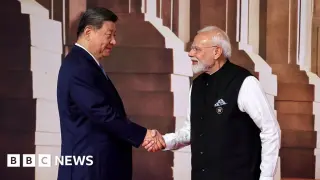
Beijing positions itself as a champion of free trade while the U.S. and Canada escalate tariff tensions, signaling a strategic realignment that could boost China’s influence in global markets and reshape North American trade dynamics.
Nvidia heads into earnings after the bell with lofty expectations tied to AI growth, while investors weigh its reliance on hyperscalers; broader markets see oil slide due to Hormuz talks, the Trump-Saudi nuclear agreement moving to Congress, Canada’s retaliatory tariffs on U.S. goods, and a closing 'And Finally' item reporting Dolly Parton’s death.
Canadian politicians say President Trump can rename Lake Ontario on the map if he wants to — it won't change what Canadians call the lake; they plan to keep using Lake Ontario and focus on economic and strategic responses amid escalating U.S.–Canada tariffs.