
Vienna's Hidden Globe Museum Charts Human Imagination and Colonial Bias
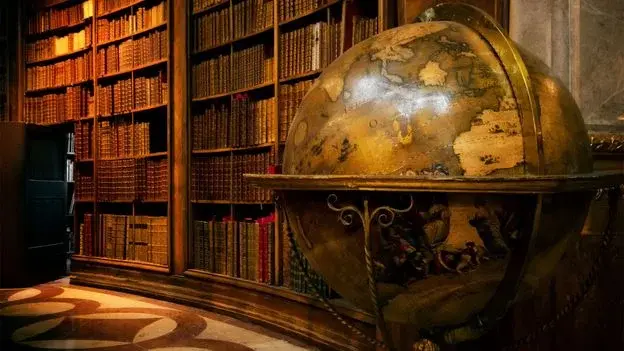
Vienna's Globe Museum, the world's only public institution dedicated solely to globes, houses over 220 antique spheres that reveal how humanity has mapped and imagined the Earth. Located in the 17th-century Palais Mollard, the quiet museum offers a stark contrast to the crowded tourist sites nearby. Its collection, featuring items from the mid-1500s to 1961, illustrates the evolution of geographical knowledge, scientific understanding, and cultural prejudices. Director Nikolaus Schobesberger highlights how these objects serve as records of both known facts and unknown beliefs, including colonial-era depictions and mythological creatures. A new exhibition starting in September 2026 will explore the globe's transition from a luxury status symbol to a common household item and its presence in pop culture.
Key points
- The Globe Museum in Vienna is the only public museum in the world dedicated exclusively to globes, housing over 220 rare and antique spheres, most created before 1850.
- Located in the 17th-century Palais Mollard, the museum is often quiet and less crowded than nearby major attractions like the Austrian National Library.
- The collection includes a replica of the 1492 Behaim Globe, which depicts a world without the Americas, and a 1961 lunar globe with a blank back side representing the unseen far side of the Moon.
- Director Nikolaus Schobesberger notes that globes reveal colonial-era prejudices, such as depicting Indigenous people as cannibals or marking African coastlines with Spanish and Portuguese flags to indicate ownership.
- A new exhibition, 'Globes in Everyday Life, Art and Culture,' begins on 24 September 2026, exploring how globes evolved from aristocratic luxury items to common household objects and their role in pop culture.
- The museum's collection includes telluriums and armillary spheres that illustrate Earth's orbit and celestial movements, alongside terrestrial and celestial globes from the mid-1500s.
Background
This story highlights the cultural and historical significance of cartography and global imagination, contrasting with recent high-profile museum thefts in Europe, such as the 2026 heists in Vienna and Spain, which underscore the vulnerability of cultural artifacts. The Globe Museum offers a peaceful, educational alternative to the crowded tourist sites in Vienna, providing insight into how historical perspectives on the world have evolved over centuries.
Why it matters
The Globe Museum provides a tangible record of human curiosity, scientific progress, and historical biases, offering visitors a unique perspective on how the world has been understood and imagined over time. It serves as an educational resource that bridges the gap between historical artifacts and modern understanding, highlighting the impact of colonialism and exploration on global knowledge.
What to watch
The museum will launch its new exhibition, 'Globes in Everyday Life, Art and Culture,' on 24 September 2026, which will explore the globe's evolution from a status symbol to a common household item and its presence in pop culture. The exhibition will also feature a virtual map of approximately 50 globes located on rooftops and facades across Vienna, encouraging visitors to engage with the city's hidden cartographic history.
Want the full story? Read the original reporting
Read on BBC