A BBC Archive clip from 1986 shows an email being sent over Telecom Gold, BT’s pre‑Internet business service, using an acoustic coupler on a plane, illustrating how email worked long before the web and exposing the era's quirky hardware.
A curated, image-driven compilation of more than 30 historical photographs capturing some of the world’s darkest moments—from wars and genocides to racial injustice, disasters, and mass violence—each with brief captions. The piece emphasizes the graphic nature of the images and the importance of remembering these events, spanning events like the Tenerife air disaster, Nagasaki aftermath, Bloody Sunday, Selma, internment of Japanese Americans, Jonestown, the Vietnam napalm photo, and many others, ending with a call for reflection and resources for those affected by cruelty and trauma.
Archaeologists in Paderborn unearthed an exceptionally well-preserved 700–800-year-old leather notebook from a latrine. The tiny book uses wax-coated pages that could be etched and erased, making it a reusable record-keeping tool likely owned by a privileged 13th–14th-century individual, perhaps a merchant. The find came with silk scraps thought to be toilet paper, and researchers plan noninvasive scans to read its Latin contents, which promise insights into medieval life and writing practices.
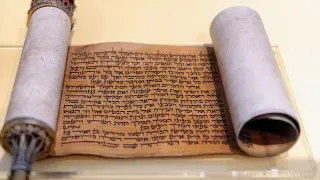
Trinity College Dublin scholars discovered Caedmon’s Hymn, the oldest known Old English poem, embedded in a ninth-century Latin copy of Bede’s Ecclesiastical History in Rome’s National Central Library. Copied around 800–830 AD at Nonantola Abbey, this manuscript places the vernacular poem at the core of the narrative, unlike earlier copies that hid it in margins. The find, made possible by digitization of the Nonantola collection, highlights cross-European manuscript transmission and could lead to further discoveries.
A playful tour of cereal lore reveals 11 surprising myths and secrets—from Cap'n Crunch’s misidentified rank and Froot Loops’ flavor illusion to Corn Flakes’ moral origins, Grape-Nuts’ naming mystery, imitation blueberries, Trix shape-shifting, Lucky Charms’ Circus Peanut muse, the Nintendo Cereal System double-box, Sugar Smacks’ naming saga, the Wheaties curse, and Rice Krispies’ Pow—showing that the history of breakfast cereal is stranger, funnier, and more revealing than most headlines suggest.
Nature’s News & Views threads a 1920s defense of drawing as a fundamental form of expression with Darwin’s 1876 observation of a squirrel nibbling cherry blossoms, using archival insight to explore how art, observation, and natural history enrich our understanding of the natural world.
The article traces why the United States has long sought to shape Cuba—from 19th-century doctrine and early 20th‑century interventions to today’s tensions—arguing that Cubans’ insistence on sovereignty clashes with Washington’s impulse to control. It highlights shifts like Obama’s 2014 outreach and Trump’s return to a neo‑colonial stance, emphasizing that Cuba’s independence remains non‑negotiable and calling for a policy that truly respects Cuban self‑determination.
Portland’s WNBA revival uses the Fire name to reconnect with a forgotten chapter of the league’s history, reviving the original 2000–2002 franchise’s archives for a new generation while honoring players like Sylvia Crawley who first touched the ball for the team. The revived Fire, now under new ownership, blends nostalgia with a fresh identity, showing fans and former players that their stories aren’t lost even as the league evolves. The effort highlights ongoing continuity challenges in women’s basketball but also creates a bridge between past and present as fans pack arenas for Throwback nights and new merch.
Thirty years after its 1997 launch, the WNBA is moving beyond just surviving toward sustainable growth, aided by NBA backing, increasing visibility, and a legacy of early pioneers like Rebecca Lobo guiding the league’s evolving identity.
Baltimore’s Flower Mart, a century-old Mount Vernon festival started by the Women’s Civic League, nearly collapsed in the 1970s after violent unrest and repeated organizational turmoil, including a 1971 riot and venue shifts. Civic leaders helped revive it, moving venues and retooling management, with the festival returning to Mount Vernon in 1981 and later being sustained by nonprofit stewardship, ensuring the beloved city celebration endures today.
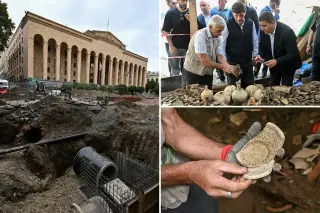
Durham archaeologists recovered a late-medieval to modern Christian hoard from the River Wear, including a bronze crucifix, Russian icon, Vatican II medals, and other devotional items, found in distinct clusters beneath Prebends Bridge. The cache is linked to Michael Ramsey, Archbishop of Canterbury (1961–1974), through diaries and the Ramsey family; his wife Joan Ramsey and housekeeper reportedly disposed of the objects after being distressed by the prospect of keeping them. The items appear deliberately deposited, not randomly scattered, fueling speculation they could not be sold or given away. The find adds a new dimension to Ramsey’s era and illustrates a long-running pattern of river dumping of religious objects.
A photo retrospective highlights decades of British royal visits to the United States, featuring standout moments from 1939 through 2015 as King Charles III begins a U.S. state visit with Queen Camilla.
Rose Dugdale, born into privilege in 1941, rejected her aristocratic upbringing to join the IRA; in 1974 she helped lead one of the era’s largest art heists at the Beit family’s Russborough estate, ripping valuable paintings— including a Vermeer— from their frames before fleeing; she later became involved in IRA arms activities, was jailed, and died in March 2024 at age 83.
BuzzFeed’s 31-item explainer argues that many widely cited American beliefs—about trickle-down economics, Reaganomics, welfare fraud, immigration scapegoating, and Vietnam War narratives—are propaganda or distortions propelled by government and corporate interests, illustrating a long-standing pattern of misinformation used to shape public opinion and policy and urging readers to question these narratives rather than take them at face value.
John W S Clark argues that trying to reopen the Strait of Hormuz by naval force would risk major casualties and failure, drawing a century‑old parallel with the 1915 Dardanelles campaign where mines and fortifications sank several battleships; the piece suggests passages through Hormuz cannot be cleared by sea alone and urges a cautious, non‑purely naval approach to Iran rather than a large-scale sea confrontation.