
Navy Tests Robotic Sea Refueling for Drone Boats, But Human Steering Remains
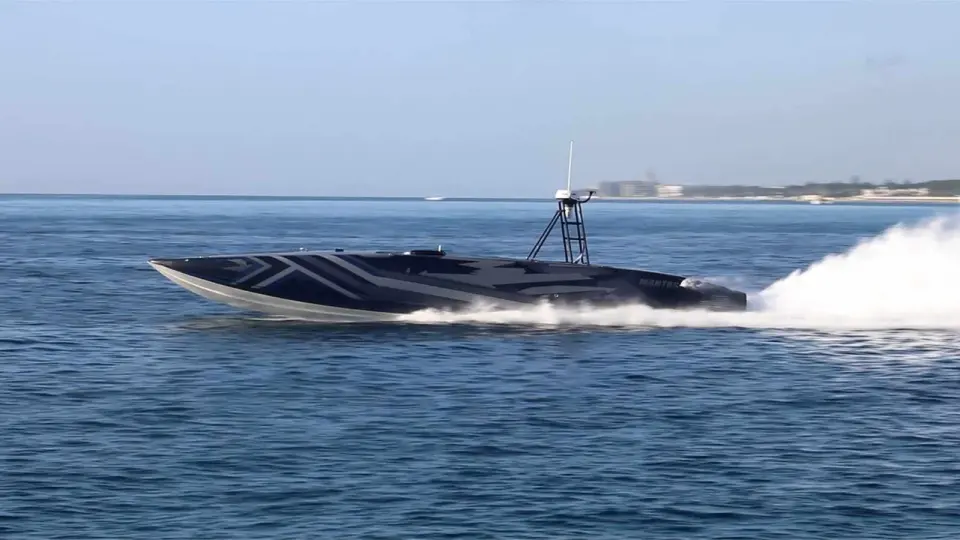
The U.S. Navy successfully demonstrated a robotic system to refuel an unmanned surface vessel at sea, transferring 400 gallons of fuel across roughly 100 connection cycles. While the hardware proved effective, the operation required human operators to steer the drone boat, highlighting the gap between current capabilities and future fully autonomous missions.
Key points
- On August 11, 2026, the Naval Air Warfare Center Weapons Division conducted a refueling demonstration off Joint Expeditionary Base Little Creek-Fort Story, Virginia.
- The exercise utilized the T38 unmanned surface vessel, built by Maritime Tactical Systems, and a towable capture and connection device (TCCD) developed by the Israeli firm Sealartec.
- The USNS Vindicator towed the TCCD while the T38 approached, connected, and received fuel, completing dozens of cycles at sea and alongside the pier.
- The entire process, from concept to on-water testing, took only seven months, facilitated by rapid contracting through the Littoral Combat Ship Mission Modules Program Office.
- Despite the robotic connector, the T38 was remotely controlled by a human operator during the trials, as confirmed by program director Spencer Holloway.
- The Navy aims to achieve fully autonomous refueling in the next phase, which requires reducing command-and-control latency and integrating advanced local positioning systems.
Background
This development follows previous Navy efforts to extend the endurance of unmanned maritime platforms. In April 2026, the Navy conducted an astern replenishment with the larger uncrewed Seahawk vessel off Southern California. Additionally, DARPA has tested similar line-passing capabilities with its uncrewed Defiant vessel. The current test addresses a critical limitation in the Blue Water Instrumentation program, where unmanned vessels must currently return to port for fuel, interrupting long-range weapons testing missions.
How outlets are covering it
While all sources agree on the technical success of the 400-gallon transfer, they differ in emphasis. AutoNotion highlights the critical distinction that the boat was not fully autonomous, noting that a human was steering the probe. Naval News and Interesting Engineering focus on the strategic benefit of keeping unmanned vessels on station for hypersonic testing and reducing reliance on crewed support ships. The U.S. Department of War confirms the event as a showcase of unmanned refueling capabilities but provides less detail on the operational limitations. Sealartec’s CEO, Amitai Peleg, emphasizes the rapid seven-month development timeline and the roadmap toward removing human dependency from the refueling loop.
Why it matters
The ability to refuel unmanned vessels at sea without human intervention is a pivotal step toward persistent maritime surveillance and long-range weapons testing. By eliminating the need to return to port for fuel, the Navy can maintain continuous sensor coverage in remote areas, enhancing its ability to test hypersonic and precision long-range fires. This capability also reduces the risk to crewed personnel by allowing unmanned vessels to operate in higher-threat environments, potentially reshaping future naval logistics and force structure.
What to watch
The next milestone for the Blue Water Instrumentation program is an end-to-end autonomous refueling demonstration. This will involve the vessel independently finding the refueling device, capturing it, transferring fuel, and disconnecting without human intervention. To achieve this, the Navy is working on reducing command-and-control latency and integrating next-generation local positioning systems to improve maneuvering precision.
- A 38-foot drone boat that once spent 192 hours alone at sea came up behind a float towed by a Navy ship off Virginia, pushed a fuel probe into it, took on 400 gallons over dozens of hookups and let go each time, and somebody was steering the probe on ever Autonocion.com
- U.S. Navy Demonstrates USV Refueling At Sea Using Robotic Towed Connector navalnews.com
- Naval Warfare Center Showcases Unmanned Refueling at Sea U.S. Department of War (.gov)
- US Navy refuels drone boat at sea using robotic connector in 100 trials Interesting Engineering
- Refueling the Mesh: What a Robotic Connector Off Virginia Tells Us About the Autonomous Fleet’s Missing Link SLDinfo.com
Want the full story? Read the original reporting
Read on Autonocion.com