
Carney’s Toronto Summit Aims to Diversify Canada’s Capital Amid US Trade Fracture
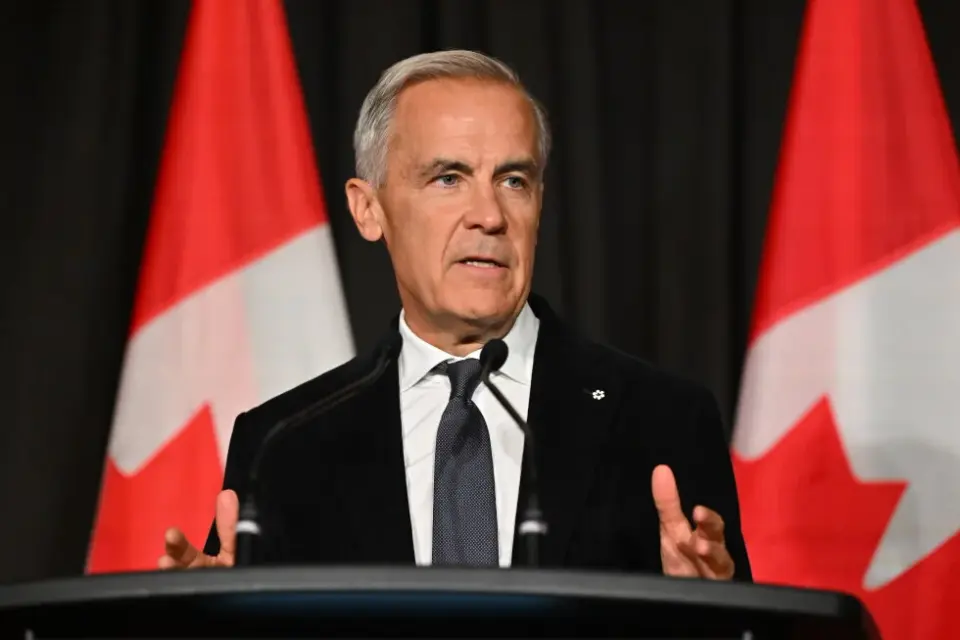
Prime Minister Mark Carney is hosting a high-profile investment summit in Toronto to attract global capital into Canadian infrastructure and energy projects. The event seeks to pivot Canada’s economic reliance away from the United States amid an escalating trade war, though experts warn that recent foreign investment trends are dominated by US acquisitions rather than new productive capital.
Key points
- Carney is pitching Canada as a stable, rule-of-law jurisdiction to over 100 global investors, including BlackRock’s Larry Fink and sovereign wealth fund managers from Norway and the UAE.
- The summit aims to catalyze $1 trillion in investments over five years, focusing on 167 projects in energy, mining, and advanced manufacturing, with private meetings tailored to investor portfolios.
- Critics note that recent foreign direct investment (FDI) is largely driven by US mergers and acquisitions, which do not boost domestic productivity, while Canada’s capital stock per worker remains low compared to peers.
- Challenges include lengthy regulatory approvals, provincial and Indigenous consent requirements, and the risk that investors may not commit to long-term projects without a stable US-Canada trade relationship.
- Carney will follow the summit with a trip to Europe to address the European Parliament, seeking a broader strategic partnership to further diversify Canada’s economic ties.
Background
This summit follows months of escalating tensions between Canada and the US, including tariff disputes and rhetoric regarding Canadian sovereignty. Previous coverage highlighted Carney’s efforts to forge a unique partnership with the EU and his focus on leveraging his finance background to secure global capital. The current event represents a strategic pivot to reduce dependence on the US market, which accounts for 20% of Canada’s GDP.
How outlets are covering it
AP News emphasizes Carney’s personal network and the pitch of Canada’s reliability and rule of law as key selling points. BBC highlights the geopolitical context, noting that the summit is a response to the US trade war and that Canada’s previous pitch of US market access is no longer viable. CBC focuses on the specific 167 projects and the skepticism regarding regulatory hurdles and Indigenous consent. The Globe and Mail provides a critical economic analysis, arguing that recent FDI is dominated by US acquisitions rather than new investment, and that Canada’s low capital stock per worker indicates a deeper productivity crisis that the summit may not resolve. Outlets differ on the immediate success of the summit, with some seeing it as a necessary step toward resilience and others viewing it as a symbolic gesture that may not yield immediate deals.
Why it matters
The outcome of this summit could determine Canada’s ability to build a more resilient, independent economy in the face of US trade pressures. Success could lead to a decade-long investment 'supercycle,' boosting productivity and GDP, while failure may leave Canada vulnerable to economic shocks and dependent on a volatile US relationship. The event also signals a shift in Canada’s economic strategy from proximity to the US to global diversification.
What to watch
Carney will travel to Europe to address the European Parliament, seeking a broader strategic partnership with the EU. The summit’s private meetings may lead to long-term negotiations, but no major announcements are expected immediately. Canada will continue to monitor FDI trends to ensure they align with productivity goals, and the government may adjust regulatory frameworks to address investor concerns about permitting timelines.
- Carney pitches Canada to global investors as Trump tries to pull investment south AP News
- How Carney plans to sell Canada to the world's biggest investors bbc.com
- As investors arrive for Carney's summit, what's on the table and what will it take for them to buy in? CBC
- Foreign money is flooding into Canada. But a closer look reveals much of it is coming from the U.S. The Globe and Mail
- Canada seeks $1tn from investors looking for a haven from Donald Trump Financial Times
Want the full story? Read the original reporting
Read on AP News