Tag

Economy

All articles tagged with #economy

business48 minutes ago

The Economy’s Shape Shift: Is It Still K, or Has It Turned to C or E?

Economists and policymakers are debating whether the U.S. economy remains in a K-shaped recovery or has shifted toward C- or E-shaped divergence, citing wage gains for lower earners, tax policy shifts, weak consumer sentiment, energy costs, and near-record credit-card debt as factors shaping the debate; some executives see middle-class gains while others warn the structure may be stabilizing without fully closing gaps.

Global pressures set the stage for bigger grocery bills
economy2 hours ago

Global pressures set the stage for bigger grocery bills

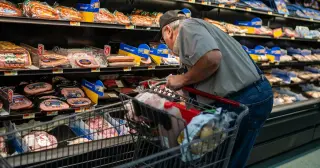
Rising diesel and fertilizer costs, along with surging grain prices and weather and war-driven disruptions, are pushing grocery costs higher as corn and wheat climb and supply chains stay strained. Staples like coffee, tomatoes, beef and apples are already up, while farmers themselves are not shielded from costs. JPMorgan warns global food inflation could reach about 5% in the first half of 2027, suggesting price pressures will widen and persist through 2027.

Six Months Into the War, Iran Faces Harder Days for Ordinary People
world3 hours ago

Six Months Into the War, Iran Faces Harder Days for Ordinary People

Six months after the US-Israel strikes began, ordinary Iranians report a sharp decline in living standards as sanctions bite and inflation soars (about 89% year-on-year, with food inflation over 127%), the rial collapses, and fuel/electricity shortages threaten winter. The economy remains in a ‘no war, no peace’ trap with limited oil sales, while political factions differ over diplomacy versus continued conflict. Crackdowns, executions, and tightened social controls persist, and many residents express fatigue and a desire for stability despite the country’s ongoing tensions.

Iranian President Says U.S. Sanctions Put Tehran in War-Time Economy
world21 hours ago

Iranian President Says U.S. Sanctions Put Tehran in War-Time Economy

Iranian President Masoud Pezeshkian acknowledged that U.S. sanctions and a naval blockade have battered Tehran’s economy, saying “we are in a war situation” as exports and imports fall about 25–35% and inflation spikes toward roughly 66%. He indicated Tehran may raise fuel prices to offset losses while focusing on inflation control, jobs, and domestic production, and reiterated the regime’s stance against retreat in the confrontation with Washington. The United States has framed the effort as economic pressure—Operation Economic Outcast—seeking to choke Iran’s revenue streams, including sanctions on Banque Misr UAE.

Cheap Food's Hidden Price: Climate Shocks Scramble Inflation and Markets
economy22 hours ago

Cheap Food's Hidden Price: Climate Shocks Scramble Inflation and Markets

Despite cheap food in developed countries, climate crises and rising farming costs could lift global food inflation by 0.9–3.2 percentage points by 2035, according to researchers and UBS. Extreme weather, El Niño, and higher fuel and fertiliser prices threaten harvests and profits, potentially pushing monetary policy as well as wages. The result could be broad economic impacts and a shift toward climate-aware investing, with winners and losers across sectors as investors re-price food-related risk.

Icelanders weigh restarting EU accession talks in a close vote
world1 day ago

Icelanders weigh restarting EU accession talks in a close vote

Icelanders voted on whether to reopen negotiations to join the European Union, a razor-thin referendum framed by concerns over inflation, high interest rates and fishing waters. A “Yes” would open talks and likely lead to a second referendum later, with accession discussions potentially starting by late 2026 and lasting 18–24 months, all while a general election is due by 2028.

Iran confronts war-induced economic pain, pledges diplomacy and defense
world1 day ago

Iran confronts war-induced economic pain, pledges diplomacy and defense

Iran’s leadership acknowledged the economic damage from six months of conflict and sanctions, with exports and imports down about 35% and inflation around 66%, and pledged to pursue diplomacy while strengthening defense and maintaining control of the Strait of Hormuz. The government said its focus is stabilizing the economy, creating jobs, and reducing dollar dependence, noting roughly 90 million barrels of oil sold under a June MoU with the United States as they stress unity amid hardship and warn of potential “surprises” for adversaries.

Iran’s trade slumps under sanctions as oil shipments collapse
world1 day ago

Iran’s trade slumps under sanctions as oil shipments collapse

Iran reports a 25-35% drop in trade as U.S. sanctions and a naval blockade bite, with imports plunging more than exports; August crude loadings fell to about 260,000 barrels per day, over 80% below August 2025. President Pezeshkian highlighted sanctions' impact, while Supreme Leader Khamenei urged reducing dependence on the dollar and boosting domestic production. The U.S. has launched Operation Economic Outcast and targeted Banque Misr UAE to sever Iran-linked financial flows, and Tehran says it still has enough oil revenue to fund its 2026-27 budget despite the blockades.

Fed puts AI at center stage, weighing growth gains against inflation risks
economy1 day ago

Fed puts AI at center stage, weighing growth gains against inflation risks

Fed officials, led by Chair Kevin Warsh, have moved AI from a niche topic to a central policy question, debating whether AI will boost productivity and jobs without fueling inflation or instead add price pressures. Minutes show AI references rising since 2023–24, with Warsh posing questions about AI’s effect on living standards and employment while offering no definitive answers, and markets pricing in rate action as inflation remains the priority.

Jackson Hole: Fed officials warn inflation remains stubborn as symposium opens
economy1 day ago

Jackson Hole: Fed officials warn inflation remains stubborn as symposium opens

As the Jackson Hole economic symposium opens, three Federal Reserve officials warn that inflation remains stubborn and above target, signaling that policy action could still be on the table. KC Fed president Jeffrey Schmid questions how restrictive current rates are, Cleveland Fed president Beth Hammack says now is the time to act to restore credibility, and Chicago Fed president Austan Goolsbee warns inflation could reaccelerate if data don’t improve. With the July PCE price index around 3% and markets weighing potential moves later in 2026, officials highlight data dependence and vigilance on returning inflation to 2%.

Warsh Signals Possible Rate Hikes If Inflation Sticks Around
business1 day ago

Warsh Signals Possible Rate Hikes If Inflation Sticks Around

Fed Chair Warsh warned that inflation remains stubborn and could necessitate higher interest rates, though he declined to provide forward guidance on policy. He argued that the Fed’s main tool is the short-term rate and that inflation remains above target, even as the labor market shows strength. Markets are treating a Sept. 15–16 meeting as a near-even chance for a rate hike, reflecting the ongoing tug-of-war between cooling inflation and robust demand. The wider backdrop includes political pressure from Trump and a rise in longer-term yields driven by deficits and tech-sector borrowing for AI infrastructure.

Depression-Era Tariffs Reignite US-Canada Trade Tensions Ahead of the Midterms
economy2 days ago

Depression-Era Tariffs Reignite US-Canada Trade Tensions Ahead of the Midterms

The US and Canada, long-time allies, have escalated their trade dispute after talks collapsed and Trump invoked Section 338 of Smoot-Hawley to impose 50% tariffs on about $20 billion in Canadian exports, provoking a retaliatory Canadian tariff plan on US goods. The move threatens higher prices for consumers, risks broader cost pressures for border-state industries like autos and seafood, and could sway swing-state voters in the upcoming midterms. Economists warn that reviving Depression-era protectionism undermines decades of global trade liberalization, with the ultimate outcome likely shaped by political changes after the elections.

Warsh Faces Jackson Hole Test as Markets Seek Monetary Clarity
economy2 days ago

Warsh Faces Jackson Hole Test as Markets Seek Monetary Clarity

Fed Chair Kevin Warsh will deliver the Jackson Hole keynote amid uncertainty over how concrete his rate-path guidance will be, as markets seek clarity on inflation channels and the Fed’s reaction function. Warsh has set up five task forces to reframe Fed functions and has favored market signals over explicit guidance, a stance that could spark volatility if not paired with clear policy signals. The backdrop includes Treasury’s plan to double buybacks of off-the-run debt, complicating the policy mix ahead of the symposium on Financial Innovation: Implications for Payments and Policy.

Yield moves signal growth optimism, not credibility concerns
economy2 days ago

Yield moves signal growth optimism, not credibility concerns

An FT opinion argues that the rise in long-dated US Treasuries does not indicate worries about debt sustainability or Fed credibility. Inflation expectations remain anchored near the 2% target, while the real rate and term premium stay largely stable; higher yields mainly reflect higher expected long-run overnight rates. Investors are pricing in faster potential growth from AI, deregulation and tax policy, which could improve the fiscal path as revenues grow faster than outlays. Tariff revenue has been volatile, but as refunds fade and growth accelerates, deficits should decline, with easing energy shocks helping to bring inflation and rates down. The piece supports liquidity provision and regular, shorter-term debt issuance to maintain market stability while deficits shrink.

US-Canada tariff clash could reshape fertilizer use for years
economy2 days ago

US-Canada tariff clash could reshape fertilizer use for years

A new US-Canada tariff dispute could raise fertilizer costs and create price uncertainty, prompting farmers to reduce potassium and phosphorus applications and potentially yield smaller harvests in coming seasons, with Canada’s role as a major potash supplier and related supply disruptions potentially pushing food prices higher even if tariffs are lifted later.