
economy21.53 min read
U.S. AI Strategy Faces Reality Check: Dependence on Chinese Hardware and Models
4 hours ago•Source: The Washington Post

The latest economy stories, each synthesized from multiple sources with added background and context.

U.S. mortgage rates have surged to a three-year high, reaching approximately 7.5%, driven by rising bond yields, geopolitical tensions, and strong economic growth. This spike is suppressing home sales and refinancing activity, with experts warning that rates could climb to 8% if inflation remains elevated.


A recent analysis suggests that Americans earning $100,000 are facing financial difficulties due to rising living costs. The breakdown indicates that these households are adopting shopping habits similar to those of lower-income groups, highlighting the impact of inflation on middle-class budgets.

A new McKinsey Global Institute report predicts that AI and automation will reduce demand for 36 million US jobs by 2035, forcing 11 million workers to switch occupations. While the economy is expected to create 40 million new roles, the transition will be difficult for many, with nearly half facing 'unpaved' pathways requiring significant reskilling or geographic relocation. Critics argue that massive AI infrastructure spending crowds out other investments, potentially suppressing wages and labor demand more than current models suggest.

A Council of Economic Advisers report attributes 72,000 new manufacturing jobs in 2026 to the One Big Beautiful Bill Act and tariffs, claiming a reversal of previous losses. While the report highlights wage gains and major investments, it faces criticism regarding data center job quality and ignores recent plant closures in Ohio.

U.S. diesel prices have surged to a national average of $6.32 per gallon, up 70% from last year, driven by the Iran war and supply disruptions. This spike has triggered a wave of 16 trucking bankruptcies in late August and September, forcing companies to cut routes and smaller operators to face insolvency. While the administration cites G7 reserve releases and executive orders to lower costs, drivers report that rates have not kept pace with fuel expenses, threatening a 'domino effect' on consumer prices.

Trump Accounts were a good idea, but the administration's decision to allow wealthy donors to contribute individual company stocks has made it 'icky,' according to The Bulwark. Frank Bisignano defends the legality of these stock donations despite concerns about concentration risk. The program, which began auto-enrolling children under 18 in tax-advantaged investment accounts, now allows wealthy donors to contribute individual company stocks, a shift that critics warn ties long-term financial security to single companies.

US diesel prices remain near record highs at $6.28 per gallon, up 70% since the US-Israel war with Iran began. Despite two major administrative moves to boost supply, prices have not fallen significantly. The first move was pressuring G7 allies to release 100 million barrels of oil reserves. The second was an executive order allowing tax-exempt 'red-dye' diesel on public roads. Industry experts argue these measures offer only temporary relief, as the root cause is a global supply crunch driven by conflicts in the Middle East and Ukraine. With the November 3 midterm elections approaching, high fuel costs are pressuring Republican constituencies, including farmers and truckers, and contributing to President Trump's record-low 32% approval rating.
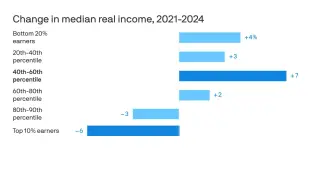
The Federal Reserve's 2025 Survey of Consumer Finances shows a sharp drop in income inequality as top earners' real incomes fell 14% while median family income rose 7% from 2021 to 2024. However, wealth inequality widened significantly, with the top 10% seeing net worth jump 31% while the bottom 40% saw slight declines. Simultaneously, debt distress hit a 15-year high, with nearly 20% of families behind on payments, a level not seen since the Great Recession.

Despite the reopening of the Strait of Hormuz, gasoline and diesel prices remain near record highs due to a global refining crisis. While crude oil flows have recovered, the cost of transporting fuel has skyrocketed, and refinery capacity has dropped by up to 10% due to war damage, drone attacks, and export restrictions. Depleted global stockpiles and elevated insurance costs are keeping prices elevated, with analysts warning that normalcy may take years to return.

US consumer sentiment fell to 46.3 in October, nearing a record low, as the Middle East conflict raised energy costs and inflation expectations. While lower-income households face severe strain, spending remains driven by the wealthy, creating a 'K-shaped' economy. The Federal Reserve raised rates in September, with further hikes expected in December.

New Federal Reserve data shows a stark divergence in U.S. financial health: households headed by those 75 or older recorded the highest median net worth ($504,000) and largest income gains, while nearly 20% of all households are now behind on debt payments, a level not seen since the Great Recession.