
Seoul’s KOSPI Erases 40% of Gains as Leveraged ETFs Fuel Historic Sell-off
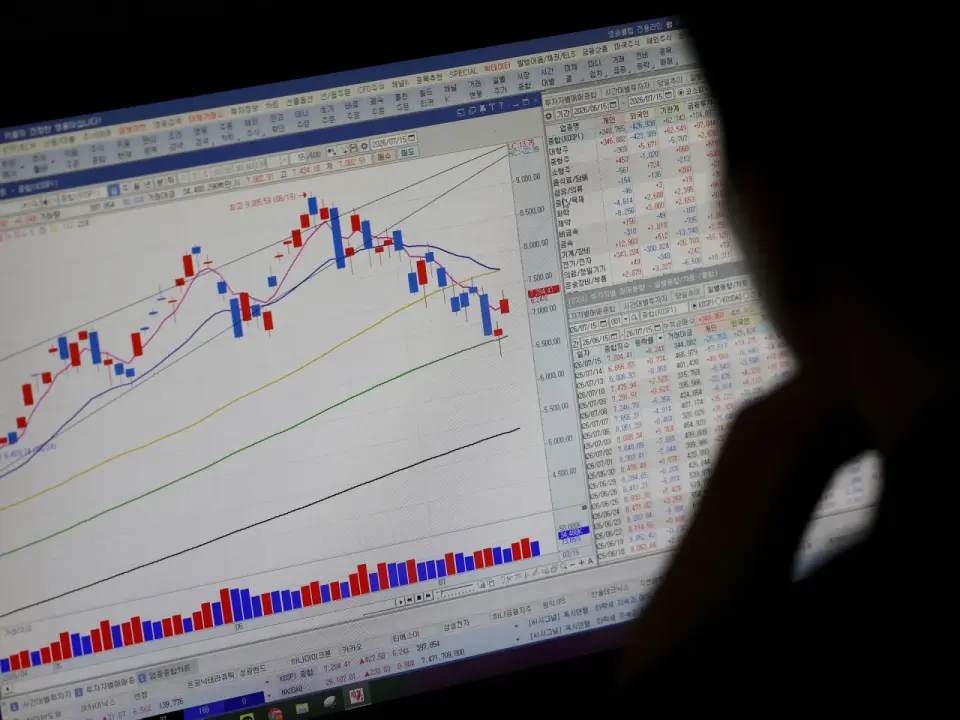
South Korea’s stock market has suffered its steepest monthly drop on record, losing approximately $2.18 trillion in value over two sessions. The KOSPI index fell 6% on Wednesday, extending a near-11% plunge from Tuesday, erasing nearly 40% of its value from a peak reached just one month ago. The sell-off, driven by fading AI investment enthusiasm and heavy leverage in chipmakers, prompted Finance Minister Koo Yun-cheol to apologize for the introduction of single-stock leveraged ETFs. The government is now moving to impose strict caps on these funds and raise trading costs to stabilize the market.
Key points
- The KOSPI index dropped 6% on Wednesday, following a near-11% decline on Tuesday, marking the steepest monthly drop in its history.
- The market lost about $2.18 trillion in value, with the index erasing nearly 40% of its gains from a peak reached less than a month prior.
- Finance Minister Koo Yun-cheol apologized to lawmakers for the introduction of single-stock leveraged ETFs, admitting they were not sufficiently vetted.
- The Ministry of Finance announced immediate curbs on leveraged products, including potential investment caps of 20% of total portfolios and higher trading costs.
- Despite the recent crash, the KOSPI remains up 41.5% year-to-date in U.S. dollar terms, making it the best-performing major market this year.
- Regulators met on Wednesday to discuss emergency stabilization measures, following a previous meeting on July 16 that introduced tighter ETF regulations.
Background
This crisis follows a series of AI-driven market corrections in South Korea. In late June, the KOSPI fell 10% as global tech sell-offs and fears of overvalued AI assets triggered circuit breakers. On July 16, the Bank of Korea raised interest rates for the first time in three years to 2.75% to combat inflation driven by the semiconductor boom, causing another 6% drop. Just days ago, on July 28, Asian markets slid again as chipmakers like Samsung and SK Hynix slumped, with analysts warning of potential oversupply in memory chips. The current plunge represents the culmination of these volatile swings, exacerbated by the rapid rise of leveraged trading instruments.
Why it matters
The collapse highlights the systemic risks posed by leveraged trading products in emerging markets. The government’s swift move to impose strict caps and higher costs signals a shift from passive monitoring to active intervention to prevent further contagion. While the KOSPI remains the top-performing market of 2024, the rapid reversal underscores how quickly AI-driven valuations can unwind, potentially affecting global tech sentiment and investor confidence in Asian equities.
What to watch
The Ministry of Finance is preparing a legal basis for emergency market-stabilization steps. Investors should expect immediate implementation of new limits on single-stock leveraged ETFs, including individual investment caps and simulated trading requirements. Regulators will likely monitor the market closely for signs of forced unwinds, while analysts watch for potential rebounds in heavily shorted names like Nintendo and Sony, which have rallied as pain compounds in the broader tech sector.
- South Korea’s stock market plunges as AI-driven boom fades Al Jazeera
- South Korea $2 trillion stock rout breaks records as SK Hynix results disappoint Reuters
- Korean Stocks Decline After Samsung Results, New ETF Curbs Bloomberg
- When the Chips Are Down Paul Krugman | Substack
- Korean Stocks’ Record Rout Fails to Tempt Global Investors Bloomberg
Want the full story? Read the original reporting
Read on Al Jazeera