
Treasury mandates automatic enrollment for 60 million Trump Accounts starting October 1
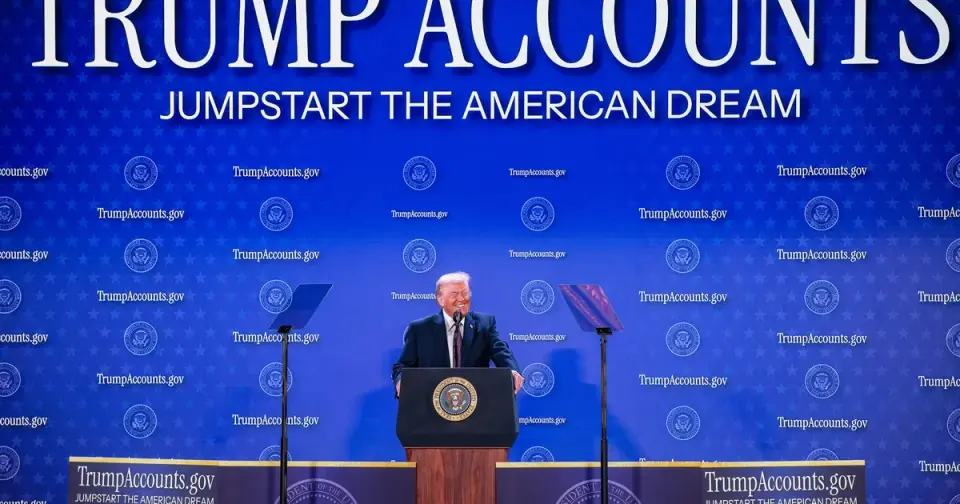
The U.S. Treasury Department has published temporary regulations requiring the automatic creation of up to 60 million Trump Accounts for eligible children, effective October 1, 2026. This shift from a voluntary opt-in system aims to boost participation from approximately 7 million to 70 million accounts. The tax-deferred investment accounts, established under the One Big Beautiful Bill, offer a $1,000 seed contribution for children born between 2025 and 2028, with investments restricted to low-cost U.S. equity index funds.
Key points
- Automatic enrollment begins October 1, 2026, replacing the previous requirement for parents to file IRS Form 4547.
- The Treasury expects the change to add approximately 2 million accounts per birth-year cohort, reaching 70 million total enrollments within a month.
- Accounts are tax-deferred 530A IRAs with a $1,000 government seed for children born between January 1, 2025, and December 31, 2028.
- Investments are limited to low-cost, broad-market U.S. equity index funds, with the State Street SPDR Portfolio S&P 500 ETF (SPYM) as the initial default option.
- Annual contributions from family, friends, and employers are capped at $5,000, with employer contributions limited to $2,500.
Background
Trump Accounts were launched on July 4, 2026, as part of the One Big Beautiful Bill tax and spending package. Initial participation was low, with only 7 to 8 million accounts opened, largely due to the complexity of the opt-in process. Previous guidance in August 2026 established investment rules, restricting options to low-cost index funds to maximize long-term compound growth for children. The new automatic enrollment regulation addresses concerns that many families, particularly those with limited resources, were unable to complete the manual enrollment process.
How outlets are covering it
CBS News highlights the Treasury's goal to ensure contributions reach all children, not just those whose parents are aware of the program, noting that automatic enrollment could increase donor contributions by billions annually. CNBC emphasizes the potential impact on lower-income families, noting that only 5% of low- and moderate-income families had opened accounts prior to the change, and cites Treasury Secretary Scott Bessent's projection of reaching 70 million accounts within a month. Yahoo Finance provides technical details on the investment restrictions, clarifying that only passive, low-cost U.S. equity funds are permitted, and that the default investment is the SPYM ETF, with additional options like IVV and VTI planned for future release. While all sources agree on the automatic enrollment mechanism, they differ in emphasis: CBS focuses on the scale of donor contributions, CNBC on equity for low-income families, and Yahoo Finance on the specific investment constraints and tax implications.
Why it matters
The shift to automatic enrollment significantly expands the reach of a major federal child savings program, potentially providing a financial foundation for tens of millions of American children. By removing the barrier of manual enrollment, the policy aims to ensure that the $1,000 seed contribution and subsequent donor gifts are distributed more equitably, particularly to families who might otherwise miss out due to lack of awareness or administrative hurdles. This move also signals a broader government strategy to promote long-term wealth accumulation through tax-advantaged, low-cost index investing for the next generation.
What to watch
Automatic enrollment will commence on October 1, 2026, with the Treasury expecting to process millions of accounts in the coming months. The government plans to introduce additional pre-approved ETFs for parents and guardians to allocate funds, moving beyond the initial SPYM default. The Social Security Administration is also expected to integrate enrollment into the birth registration process, further streamlining access. The Treasury and IRS will continue to monitor the operational challenges of managing tens of millions of accounts, with new hires and leadership changes aimed at ensuring the program's successful expansion.
- Trump Accounts will automatically be created for up to 60 million kids, Treasury says CBS News
- Treasury Will Auto-Enroll 60 Million Children in Trump Accounts WSJ
- Treasury moves to automatically enroll millions of children in Trump Accounts Fox Business
- Trump Account investment options, rules, and guidelines: What you need to know Yahoo Finance
- Trump Accounts will auto-enroll children, potentially adding 60 million accounts: Treasury cnbc.com
Want the full story? Read the original reporting
Read on CBS News