
Florida Converts 76,000 Stormwater Ponds into Floating Solar Farms
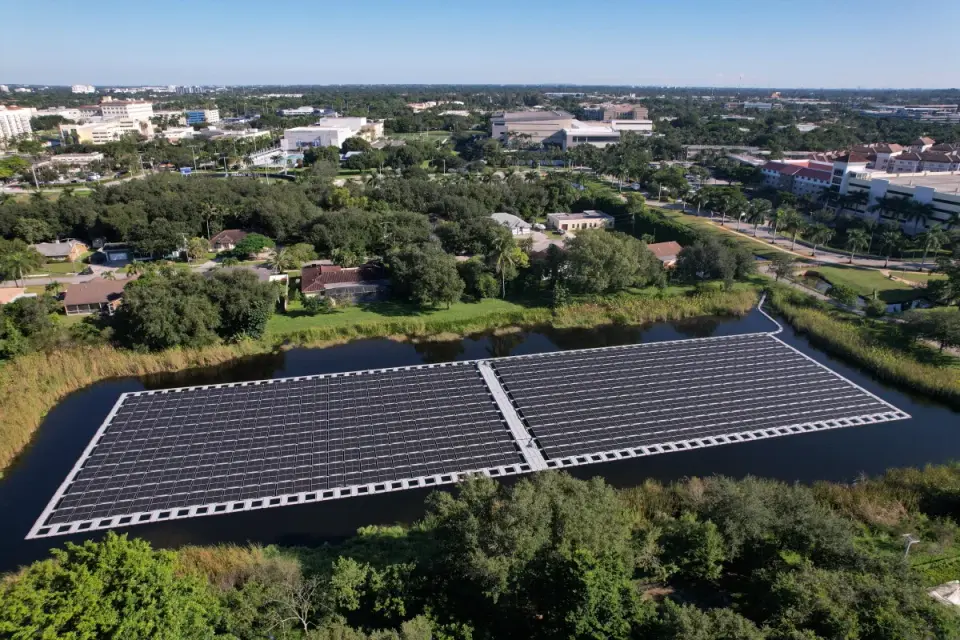
Florida is leveraging its extensive network of stormwater retention ponds to expand solar energy production through floating photovoltaic technology. A 2022 state law facilitates this transition, with the Orlando Utilities Commission launching the state’s largest 2-megawatt array in November 2025. While floating solar costs 10% to 25% more upfront than land-based systems, it offers advantages in land scarcity and cooling efficiency. However, experts warn that ecological impacts, such as altered oxygen levels and reduced photosynthesis, remain poorly understood, and global adoption remains under 1% of total solar capacity.
Key points
- Florida enacted a law in 2022 to support floating solar, utilizing its estimated 76,000 stormwater ponds, which cover 2.7% of urban land.
- The Orlando Utilities Commission launched a 2-megawatt floating array in November 2025, described as the state’s largest installation, comprising over 3,400 panels.
- Floating solar costs approximately 10% to 25% more upfront than land-based solar, though the median cost per watt dropped 48% between 2015 and 2024.
- Water cooling can boost output by 5% to 8% compared to rooftop arrays, though this benefit varies with wind and temperature conditions.
- D3Energy holds exclusive rights to develop floating solar on Florida Department of Transportation stormwater ponds, projecting over 1 gigawatt of generation capacity.
- Scientific concerns persist regarding ecological tipping points, specifically how shading affects aquatic food webs, oxygen levels, and nutrient removal in managed water bodies.
Background
This development follows broader global trends in solar adoption, where Asia dominates floating solar capacity, particularly in China, Japan, and South Korea, due to land constraints. The United States has lagged in adoption largely because of greater land availability for ground-mounted solar. Florida’s initiative represents a strategic shift to utilize existing urban infrastructure for energy generation, addressing high electricity demand without competing for scarce land. This approach contrasts with earlier concerns about large-scale solar installations altering local climates, as seen in studies regarding Sahara solar farms, by focusing on smaller, distributed systems on existing water bodies.
Why it matters
Floating solar offers a viable solution for urban areas with limited land, allowing cities to generate renewable energy without new construction. Florida’s success in deploying these systems through hurricanes demonstrates their resilience, potentially influencing national energy policy. However, unresolved ecological questions regarding water quality and aquatic habitats may limit widespread adoption if environmental tipping points are not identified.
What to watch
Regulators and scientists will continue monitoring the ecological impacts of floating solar on stormwater ponds to determine safe coverage limits. D3Energy is expected to expand its projects on state highway rights-of-way, aiming to reach gigawatt-scale generation. The Orlando Utilities Commission may further expand its arrays as it refines designs for changing water levels and wind conditions.
Want the full story? Read the original reporting
Read on AP News