Tag

Renewable Energy

All articles tagged with #renewable energy

Bahamas leverages quiet Atlantic season to deploy hurricane-proof microgrids
climate-and-energy13 hours ago

Bahamas leverages quiet Atlantic season to deploy hurricane-proof microgrids

The Bahamas is using the unusually quiet 2026 Atlantic hurricane season to accelerate its transition from fossil fuels to resilient renewable microgrids. Following the devastation of Hurricane Dorian, the nation is replacing centralized diesel-dependent infrastructure with localized solar and battery systems. These new grids, designed to withstand extreme winds and operate independently during outages, aim to reduce energy costs and improve reliability for schools, clinics, and communities across the islands.


California’s SB 868 Legalizes Balcony Solar, but HOA Rules and Limited Hardware Hinder Adoption
energy-and-policy3 days ago

California’s SB 868 Legalizes Balcony Solar, but HOA Rules and Limited Hardware Hinder Adoption

California Governor Gavin Newsom signed SB 868, the 'Plug and Play Solar Act,' in September 2026, allowing residents to install small solar systems on balconies starting January 2027. The law exempts these devices from standard interconnection requirements, aiming to lower energy costs for renters and homeowners. However, strict technical limits, including a 1,200-watt cap and mandatory certification, restrict current options to only two market devices. Critics note that high costs and landlord or HOA restrictions may limit the law's practical impact.

IEA Warns Iran War Has Permanently Reshaped Global Energy Security

IEA Warns Iran War Has Permanently Reshaped Global Energy Security

The International Energy Agency (IEA) released its annual World Energy Outlook, declaring that the Iran war has caused the largest supply disruption in oil market history. Executive Director Fatih Birol stated there is no credible pathway for the energy sector to return to its pre-war state. The report highlights permanent shifts toward energy security, with nations diversifying away from the Strait of Hormuz and increasing reliance on renewables, nuclear power, and coal as a backup.

IEA Report: Iran War Permanently Reshapes Global Energy Strategy
energy4 days ago

IEA Report: Iran War Permanently Reshapes Global Energy Strategy

The International Energy Agency (IEA) released its 2026 World Energy Outlook, declaring that the US-Israel war with Iran has caused the largest energy shock in history. The conflict, which disrupted the Strait of Hormuz, has permanently altered global energy security, accelerating a shift toward domestic power generation, electrification, and renewables. While the Middle East remains the top oil exporter, reliance on the strait is expected to plummet from 20 million barrels per day to under 2 million by 2035. This transition coincides with COP31 climate talks in Turkey, where nations debate balancing fossil fuel security with the urgent need to limit global warming to 1.5 degrees Celsius.

China’s emissions plateau while U.S. pollution rises amid policy shifts
climate-and-energy5 days ago

China’s emissions plateau while U.S. pollution rises amid policy shifts

China’s greenhouse gas emissions have remained flat or declined for 2.5 years, driven by massive renewable energy deployment and electric vehicle adoption. Conversely, U.S. emissions rose in 2025 due to increased coal and oil use, marking the only major economy with significant growth. Experts attribute this divergence to China’s consistent long-term industrial planning versus the U.S. policy instability between the Biden and Trump administrations.

Clouds and Dry Air Layers Dictate Offshore Wind Farm Efficiency
science5 days ago

Clouds and Dry Air Layers Dictate Offshore Wind Farm Efficiency

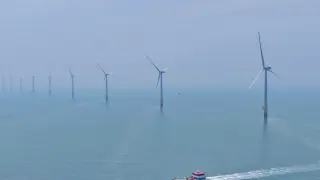
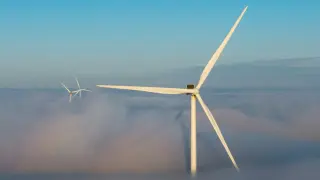
New research indicates that cloud cover and atmospheric conditions significantly impact the energy output of offshore wind farms. Scientists found that dry air above stratocumulus clouds can boost wind energy availability, while moist air reduces it. These findings suggest that future wind farm designs must account for two-way interactions between turbines and clouds to optimize power generation.

Florida Converts 76,000 Stormwater Ponds into Floating Solar Farms
energy-and-environment7 days ago

Florida Converts 76,000 Stormwater Ponds into Floating Solar Farms

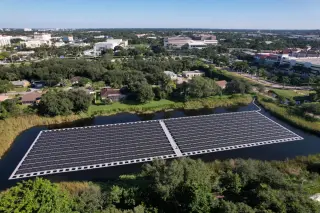
Florida is leveraging its extensive network of stormwater retention ponds to expand solar energy production through floating photovoltaic technology. A 2022 state law facilitates this transition, with the Orlando Utilities Commission launching the state’s largest 2-megawatt array in November 2025. While floating solar costs 10% to 25% more upfront than land-based systems, it offers advantages in land scarcity and cooling efficiency. However, experts warn that ecological impacts, such as altered oxygen levels and reduced photosynthesis, remain poorly understood, and global adoption remains under 1% of total solar capacity.

UCL researchers stabilize reactive iodine in water to double battery capacity
technology8 days ago

UCL researchers stabilize reactive iodine in water to double battery capacity

University College London researchers have developed a halogen-free electrolyte that enables water-based zinc-iodine batteries to retain nearly all capacity over thousands of cycles. By allowing iodine to transfer four electrons instead of two, the design doubles theoretical energy density while avoiding corrosive additives. The study, published in Nature, suggests a safer alternative to lithium-ion for grid storage, though large-scale testing is still required.

Hawaii Duo Relies on 7,000-Gallon Pool for Off-Grid Water Supply
lifestyle9 days ago

Hawaii Duo Relies on 7,000-Gallon Pool for Off-Grid Water Supply

Ellie Rose and her fiancé live on a 1-acre Big Island property purchased for $70,000 in 2021, using a 7,000-gallon above-ground pool to collect rainwater for household needs. The couple relies on solar panels and a generator for power, but dry spells force them to ration drinking water and skip daily chores. While the lifestyle offers financial independence from high rents, it requires constant maintenance and resource management.

Iran War Drives 2026 Fossil Emissions Dip, But Clean Energy Gap Persists
climate-and-energy13 days ago

Iran War Drives 2026 Fossil Emissions Dip, But Clean Energy Gap Persists

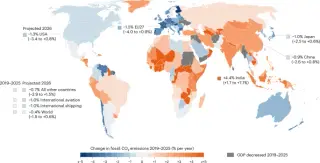
Global fossil fuel carbon dioxide emissions are projected to fall by 0.4% in 2026, reaching 38.2 billion tons, primarily due to the energy shock from the Iran war and Strait of Hormuz disruptions. While solar, wind, and electric vehicles offset 64-79% of demand-driven growth, experts warn this dip is temporary and not a structural peak. Total emissions, including land-use changes, are expected to rise to 43.3 billion tons, with the remaining carbon budget for 1.5°C warming now under four years.

2026 Fossil Emissions Dip 0.4% Due to Iran War, Not Clean Energy Progress
climate13 days ago

2026 Fossil Emissions Dip 0.4% Due to Iran War, Not Clean Energy Progress

Global fossil fuel carbon dioxide emissions are projected to fall by 0.4 percent in 2026, reaching approximately 38.2 billion tons. This decline, the first since the 2020 pandemic, is primarily attributed to the energy shock caused by the war in Iran and the closure of the Strait of Hormuz, which spiked oil prices and reduced consumption. While clean energy growth contributed to the drop, experts warn that the reduction is temporary and not a sign of a permanent peak in emissions.

Kerry urges global shift to China’s green energy model as Cop31 opens in Turkey
world13 days ago

Kerry urges global shift to China’s green energy model as Cop31 opens in Turkey

Former US Secretary of State John Kerry argues that the US and other nations must follow China’s lead in transitioning to green energy, citing China’s dominance in clean-tech exports and its recent pledge to lead global climate governance. As Cop31 opens in Turkey, analysts debate whether Beijing will translate its new 'five-year plan' rhetoric into concrete leadership, while a Tsinghua University report highlights the technological challenges China faces in achieving carbon neutrality by 2060.

2026 Fossil Fuel Emissions Dip 0.4% Amid Iran War, But Clean Energy Acceleration Still Needed for Peak
climate-and-energy13 days ago

2026 Fossil Fuel Emissions Dip 0.4% Amid Iran War, But Clean Energy Acceleration Still Needed for Peak

Global fossil fuel CO2 emissions are projected to fall by 0.4% in 2026, driven primarily by oil price spikes and supply constraints from the Iran conflict. While clean technologies offset 64-79% of demand-driven growth, experts warn this dip is temporary and not a structural peak without accelerated deployment.

Iran conflict drives slight 2026 fossil fuel drop, but total emissions rise
environment14 days ago

Iran conflict drives slight 2026 fossil fuel drop, but total emissions rise

Global fossil fuel emissions fell by 0.4% in 2026, marking the first decline since 2020. This drop was primarily driven by the Iran war and the closure of the Strait of Hormuz, which spiked oil prices and accelerated the shift to electric vehicles and renewables. However, total carbon emissions rose slightly due to increased deforestation and land-use changes. Scientists warn the trend is fragile and not yet a structural peak.

Grid Investment Lag Threatens Asia's Renewable Energy Transition
energy-and-climate14 days ago

Grid Investment Lag Threatens Asia's Renewable Energy Transition

Outdated power grids in Asia are becoming a critical bottleneck for the renewable energy transition, forcing countries to curtail clean electricity generation. While annual investment in power generation has surged to $1 trillion, grid spending has lagged significantly, rising at less than half that pace. The International Energy Agency warns that annual grid investment must increase by 50% from the current $400 billion to meet 2030 demand. This infrastructure gap threatens climate goals and energy security, particularly following recent geopolitical shocks, prompting new international funding initiatives and regional cooperation efforts.