
Texas Solar Surge Outpaces Coal as Data Centers Drive Record Demand
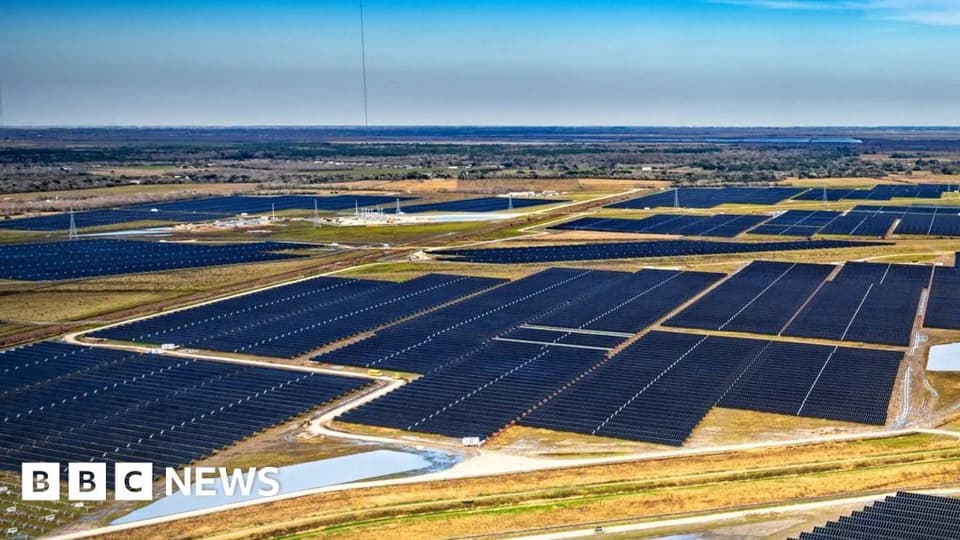
Texas has overtaken California as the US's largest solar power generator, driven by cheap technology, rapid grid connection, and surging electricity demand from data centers. While farmers benefit from lucrative long-term leases, rural communities face opposition over land clearing and battery safety.
Key points
- Texas became the US's top solar generator, surpassing California, with solar output exceeding coal for the first time in March 2025.
- The US Energy Information Administration projects solar generation in Texas's ERCOT grid to reach 78 TWh in 2026, surpassing coal annually for the first time.
- Farmers like Steve Cargil in Uvalde, Texas, earn up to $200,000 annually from leasing land to solar developers, providing financial stability for rural families.
- Data centers and manufacturing are driving record electricity demand, with MISO projecting a 63% increase in electricity use by 2046.
- Opposition in Franklin County, Texas, cites concerns over land clearing, visual impact, and battery fire risks, leading to a temporary moratorium on new solar construction.
Background
This development occurs amid broader US energy shifts, including recent geopolitical tensions affecting oil supplies and new international oil deals. While oil prices have fluctuated due to Middle East conflicts, Texas's solar expansion highlights a domestic pivot toward renewable energy to meet growing industrial and technological demand.
How outlets are covering it
BBC emphasizes the human impact, highlighting how solar leases provide financial security for farmers like Steve Cargil, while noting opposition from rural residents concerned about environmental and safety issues. pv magazine USA focuses on the macroeconomic drivers, citing data centers and manufacturing as key factors behind the 21% projected increase in US solar generation in 2026. Both sources agree on the rapid growth of solar in Texas but differ in emphasis: BBC on social and local impacts, pv magazine on national energy trends and infrastructure.
Why it matters
Texas's solar boom illustrates a shift in US energy policy and infrastructure, with renewables meeting growing demand from data centers and manufacturing. This transition impacts rural economies, grid reliability, and national energy independence, while also raising questions about environmental and safety regulations in rapidly expanding solar projects.
What to watch
Solar generation in Texas is expected to reach 99 TWh in 2027, with continued growth driven by data center demand. Opposition in rural areas may lead to further legal challenges or policy adjustments, while the Trump administration's stance on renewable energy tax credits could influence future development.
Want the full story? Read the original reporting
Read on BBC