A $20 billion revenue miss by OpenAI caused a brief dip in the Nasdaq, highlighting the fragility of the AI spending boom. While markets recovered quickly, analysts like Joachim Klement of Panmure Liberum argue that current investments in large data centers are misallocated, predicting a bubble burst between 2027 and 2028. Critics note that the market is heavily concentrated in a few tech giants, raising concerns about systemic risk if AI growth slows.
Prediction markets indicate a 75% likelihood that over 5,100 data centers will be planned or operating by 2027, despite a sharp rise in local opposition. Heatmap News reports that $260 billion in data center investments were canceled in 2026 due to community resistance, with half of those cancellations occurring in the third quarter alone. This backlash has prompted tech firms to hire specialized PR consultants to manage community relations, while legal experts note a surge in litigation over permitting and environmental concerns. The tension between rapid AI infrastructure expansion and public pushback over energy costs and water usage is reshaping the industry landscape.
Ukraine has launched drone attacks on two major data centers belonging to Yandex, Russia’s dominant technology firm, in direct retaliation for Moscow’s recent strikes on Ukrainian digital infrastructure. The attacks, which occurred in the Ryazan and Kaluga regions, have caused significant operational disruptions, including the suspension of services for major Russian entities such as the state railway monopoly and telecom giant MegaFon. Yandex confirmed that the Kaluga facility suffered severe damage to several modules, while the Ryazan site experienced a fire that forced a full operational shutdown. This escalation marks a significant shift in the conflict, moving beyond traditional military targets to critical civilian and economic infrastructure. Ukrainian President Volodymyr Zelenskyy stated that Kyiv is responding in kind to Russian aggression, while Yandex remains uncertain about the timeline for full restoration of its services. The strikes have also impacted Yandex’s artificial intelligence capabilities, as the Ryazan center hosts two of the three supercomputers used for its AI model development.
Ukrainian drone strikes have disabled two major data centers operated by Russian tech giant Yandex within 48 hours, disrupting the country's leading search engine and AI development capabilities. The attacks, described by Kyiv as a 'mirror-like' response to Russian strikes on Ukrainian infrastructure, have caused significant service outages and raised concerns about the resilience of Russia's digital backbone.
Ukraine launched a second drone attack on Russian tech giant Yandex in 48 hours, targeting its largest data center in the Kaluga region. The strike disabled several modules of the facility, causing widespread service disruptions across Russia. This follows a previous attack on a Yandex data center in the Ryazan region, which housed key AI supercomputers. Ukrainian President Volodymyr Zelensky framed the strikes as symmetric retaliation for recent Russian missile attacks on Ukrainian digital infrastructure. Yandex shares fell by 4% on the Moscow Exchange, and the company warned that full operational restoration could take an extended period.
Nvidia-backed Australian AI data center operator Firmus has withdrawn its planned initial public offering (IPO), citing market volatility and terms that did not reflect its long-term growth. The company had aimed to raise $5 billion at a $30.6 billion valuation, which would have been the second-largest share sale in Australian history. Instead, Firmus will pursue private funding. The withdrawal highlights growing investor skepticism toward high AI valuations, with critics noting the company’s limited operational capacity compared to its ambitious expansion plans.
A Ukrainian drone attack ignited a fire at Yandex's data center in Sasovo, Ryazan region, forcing the company to fully suspend operations at the facility. The strike disrupted Yandex Cloud, Disk, and Documents services, causing outages for major Russian entities including Russian Railways and Cian. While Yandex confirmed no casualties and stated core consumer services remained unaffected, the facility housed two of the company's three supercomputers, 'Lyapunov' and 'Chervonenkis,' used for AI training. Yandex shares dropped over 3% on the Moscow Exchange. This marks the first confirmed major Ukrainian strike on a Russian data center, occurring after Russia intensified attacks on Ukrainian digital infrastructure in late September.
Applied Digital reported fiscal Q1 2027 revenue of $341.9 million, up 322% year-over-year, significantly exceeding analyst expectations. The company achieved adjusted EBITDA of $64.4 million and expanded live capacity at its North Dakota campuses to 250 MW. Key developments include a $5.2 billion lease with a hyperscaler in Alabama and the first international power agreement in Finland.
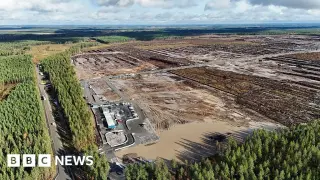
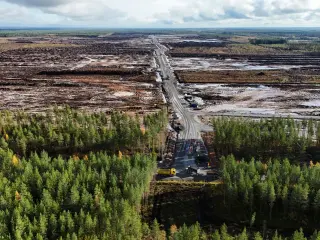
Finnish authorities have ordered Google to suspend construction at two data center sites in Muhos and Kajaani until mandatory environmental impact assessments are completed. The halt follows reports that Google’s subsidiary, Tuike Finland Oy, cleared over 300 hectares of forest without proper permits. This move interrupts a €13 billion investment plan, described as Google’s largest in Europe, which aims to support AI infrastructure by 2028.
Seven major technology companies signed a voluntary pledge to cover the electricity and grid upgrade costs for their AI data centers, aiming to prevent rate hikes for residential consumers. While the agreement includes a 'take-or-pay' clause to protect utilities from stranded assets, it lacks specific financial commitments and relies on state-level enforcement. Critics argue the voluntary nature of the pledge is insufficient, as state utility commissions remain the primary battleground for cost allocation, and some lawmakers have blocked federal legislation that would have made such protections mandatory.
Finnish authorities have ordered Google to suspend construction on two data center sites in Muhos and Kajaani until mandatory environmental impact assessments are completed. The halt follows reports that Google’s subsidiary, Tuike Finland, cleared over 300 hectares of forest without proper permits. This move interrupts a €13 billion investment plan, described as Google’s largest in Europe, which aims to support AI infrastructure by 2028.
Memphis City Council postponed a vote on a data center moratorium to October 20, triggering a chaotic protest that included a fistfight and internal council clashes. The proposed 12-month pause aims to study the impact of facilities like SpaceXAI's Colossus on local infrastructure, though council members remain divided on whether the delay will drive investment away.
A report by the Collapse Survival Institute, authored by retired Air Force Colonel Drew Miller, argues that living near AI data centers poses a life-or-death risk. The report claims a rogue artificial general intelligence (AGI) could target nearby residents as proxies for human resistance. Miller calls for a moratorium on new AI data center construction, mandatory kill switches, and full transparency for frontier AI labs. The report also warns that people near power plants and transmission lines face similar risks, as a rogue AGI might seek to control its power supply. Miller, a known figure in prepper circles, suggests rural residents arm themselves with shotguns to destroy AI-deployed drones and robots. The report cites former Anthropic researcher Jacob Coxon, who previously warned of a greater than 10% chance of AI ending humanity. While the report's claims are speculative, it highlights growing concerns about AI risks and the environmental and economic impacts of data centers on local communities.
Finnish authorities have ordered Google to suspend construction on two data center sites in Muhos and Kajaani until mandatory environmental impact assessments are completed. The halt follows reports that Google’s subsidiary, Tuike Finland Oy, cleared over 300 hectares of forest without proper permits. This move interrupts a €13 billion investment plan, described as Google’s largest in Europe, which aims to support AI infrastructure by 2028.
In the first Michigan gubernatorial debate, Republican John James and Democrat Jocelyn Benson traded accusations regarding data center profits, tariff impacts, and the Iran war. James shifted his stance to oppose a statewide data center moratorium, while Benson moved to support a state gas tax suspension. Fact-checkers found errors in both candidates' claims about voting records and economic impacts, though James’s rankings of Michigan’s economic decline were largely accurate.