
Trump declares national emergency to restrict foreign grid equipment
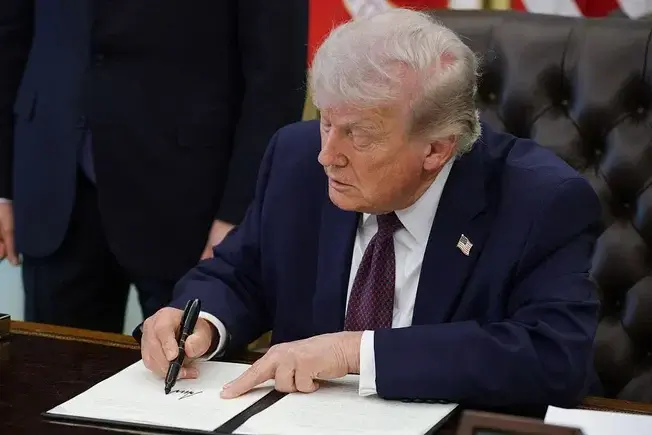
President Trump signed an executive order declaring a national emergency to restrict foreign-made equipment in the U.S. bulk-power system. The order targets transformers, batteries, and software, citing national security risks. The Department of Energy has 120 days to implement rules, while industry groups warn of compliance challenges and supply chain disruptions.
Key points
- Trump signed an executive order on Aug. 26, 2026, declaring a national emergency over foreign-made grid equipment.
- The order prohibits the acquisition and installation of certain foreign-produced bulk-power system equipment, including transformers, batteries, and inverters.
- It also covers associated software and digital capabilities that could pose cybersecurity or operational risks.
- The Department of Energy has 120 days to develop formal rules to implement the order.
- The order allows for conditions on the continued use of already-installed foreign equipment.
- China accounts for over 80% of global production for certain grid equipment, including lithium-ion battery cells.
Background
This move follows a 2020 executive order that focused on large power transformers from China, which was later suspended by the Biden administration. In July 2026, the Federal Communications Commission banned new foreign-made power inverters with remote communication capabilities. The current order expands on these previous measures, addressing a broader range of equipment and software.
How outlets are covering it
Utility Dive emphasizes the industry's need for clarity, particularly regarding software and digital products where country of origin may be difficult to determine. Al Jazeera highlights the immediate compliance burden on utilities, noting that blocking new purchases is easier than identifying and managing existing foreign-sourced equipment. CyberScoop focuses on the cybersecurity rationale, citing concerns about digital backdoors and malicious cyber activities, and notes that China supplies 85% of solar supply chain production capacity. All three sources agree that the order is a significant expansion of previous restrictions, but they differ in their emphasis on the immediate operational challenges versus the long-term security implications.
Why it matters
The executive order could significantly impact the U.S. energy sector's supply chains and capital expenditures, as utilities navigate new restrictions and compliance requirements. It also raises questions about the balance between national security and the reliability and affordability of electricity, especially as demand grows due to data centers and AI.
What to watch
The Department of Energy is expected to publish formal rules within 120 days. Industry groups are likely to engage with the administration to seek clarifications on the order's scope, particularly regarding software and digital products. Utilities will need to compile inventories of existing foreign-sourced equipment to ensure compliance.
- Trump declares emergency, moves to block some foreign-made equipment from grid Utility Dive
- Trump declares national emergency to ban some foreign grid equipment The Hill
- Trump executive order bans some foreign equipment in US energy grid Al Jazeera
- Trump signs order banning some foreign equipment from US energy grid Reuters
- Cyber threats nudge Trump to sign executive order on foreign equipment in U.S. energy infrastructure CyberScoop
Want the full story? Read the original reporting
Read on Utility Dive