
Normandy Solar Canopy Keeps Dairy Cows Grazing Longer in Heat
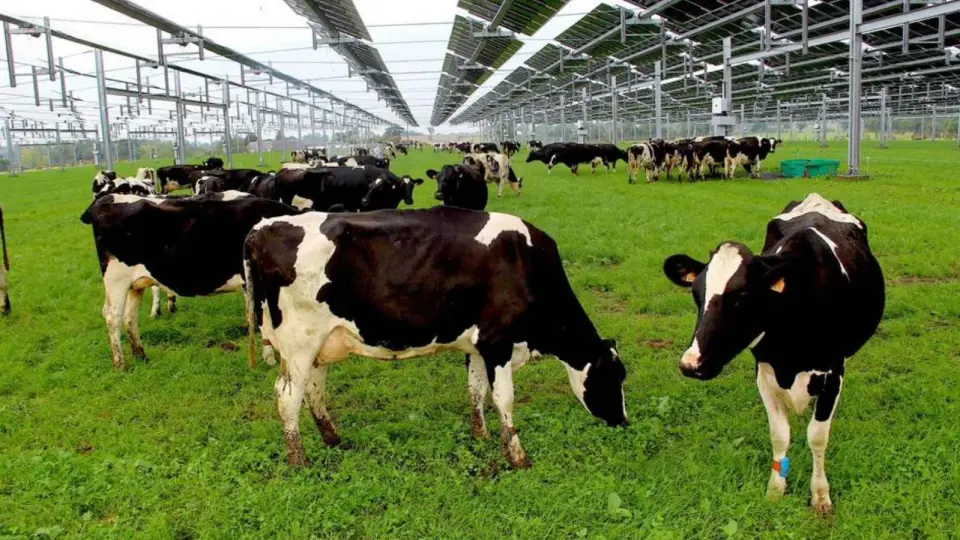
French solar company TSE installed 5,184 tracking panels 16.4 feet above a 7.4-acre dairy pasture in Souleuvre-en-Bocage, Normandy. During July’s drought, the shaded pasture remained green while the adjacent 14.8-acre open field dried out. Cows under the canopy grazed until noon on hot days, compared to 9:30 a.m. for those in the sun, as heat stress reduced grazing time. The system generates 2.9 MW peak capacity, yielding about 3.59 million kWh annually, enough for 330 homes. Forage under the canopy showed 15–47% higher protein than open fields, though final milk yield data is pending. TSE plans to publish comprehensive forage results in October.
Key points
- TSE’s agrivoltaic canopy in Normandy kept pasture green during July drought while adjacent open field dried out.
- Cows under solar panels grazed until noon on hot days, versus 9:30 a.m. for those in full sun, indicating reduced heat stress.
- The 2.9 MW system produces 3.59 million kWh annually, powering approximately 330 households, with panels tracking sun to optimize shade and energy.
- Forage under the canopy contained 15–47% more protein than open-field forage, potentially reducing purchased feed costs for dairy farmers.
- TSE has not yet released milk yield or herd size data, though partners include Idele, INRAE, and the Normandy chamber of agriculture.
Background
This follows earlier findings from Oregon State University, where lambs grazing under solar arrays consumed 38% less forage but achieved similar weight gain due to higher forage quality. The Normandy case extends agrivoltaics research to dairy cattle, addressing heat stress thresholds where cows experience discomfort at 65–72°F. TSE’s project was funded by local residents to restore pasture use after heat and drought reduced milk production. The system’s 16.4-foot clearance allows standard farm machinery access, with posts occupying only 0.5% of ground area.
Why it matters
As climate change intensifies heat stress for livestock, agrivoltaics offers a dual-use solution that maintains pasture productivity while generating renewable energy. The Normandy case demonstrates measurable behavioral and forage benefits for dairy cows, potentially reducing feed costs and improving animal welfare. If TSE’s October data confirms milk yield gains, this model could scale to other regions facing similar drought and heat challenges, supporting both energy independence and agricultural resilience.
What to watch
TSE will publish final forage results from Souleuvre-en-Bocage in October 2026, including dry matter tonnage and milk yield data. The company aims to expand similar canopies to other farms, with partners including Idele, INRAE, and the Normandy chamber of agriculture. The project’s success may influence broader adoption of agrivoltaics in European dairy regions.
Want the full story? Read the original reporting
Read on Autonocion.com