
Refinery outages, not crude prices, drive global fuel crisis
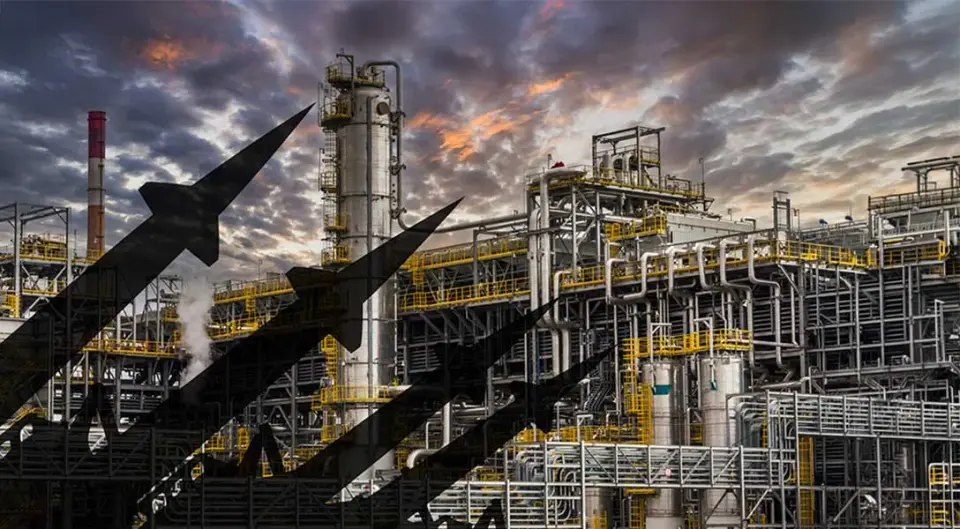
Global fuel prices remain elevated despite normalized crude flows because refinery capacity has dropped by up to 10 percent. The Federal Reserve Bank of Dallas attributes this to a decade of underinvestment, Ukrainian drone strikes on Russian refineries, and Middle East conflicts. While crude oil moves through the Strait of Hormuz, refined product shipments remain constrained, causing crack spreads to exceed 2022 levels. The U.S. Strategic Petroleum Reserve is at its lowest level since 1982, and governments are prioritizing domestic fuel security over exports.
Key points
- Global refinery capacity has declined by as much as 10 percent due to geopolitical conflicts and a decade of minimal investment.
- Crack spreads, the difference between crude and refined fuel prices, have exceeded levels seen after Russia’s 2022 invasion of Ukraine.
- U.S. gasoline prices average $4.36 per gallon, while diesel prices are near all-time highs, driven by tight supply rather than crude costs.
- The U.S. Strategic Petroleum Reserve holds 284 million barrels, its lowest level since 1982, and could last less than six months at current draw rates.
- China and Russia have restricted fuel exports to secure domestic supply, while Europe faces severe shortages due to reduced imports from Russia and the Middle East.
Background
This crisis follows a series of disruptions beginning in February 2026 with the Iran conflict and the closure of the Strait of Hormuz. Earlier reports indicated that while crude flows normalized by October, refined fuel shipments remained severely constrained. The situation has worsened as Ukrainian drone attacks on Russian refineries intensified, reducing Russia’s refining capacity by up to 60 percent in summer 2026. Additionally, Houthi attacks in the Red Sea and damaged Middle East refineries have further tightened global supply. The Federal Reserve Bank of Dallas notes that long-term refining demand had softened due to improved vehicle efficiency and rising electric vehicle adoption, but capacity expansion in China and the Middle East was offset by closures in Europe and North America.
How outlets are covering it
The Federal Reserve Bank of Dallas emphasizes that the current price surge is driven by acute supply constraints in refined fuels rather than retailer markups, noting that even if the Strait of Hormuz normalizes, U.S. fuel prices will likely remain elevated. CNN highlights the 'insane' cost of transporting crude, with supertanker rates reaching $1.6 million per day, and notes that the U.S. is the only major source of refined fuels left standing. OilPrice.com focuses on the rise of 'energy nationalism,' where countries like China and Russia ban fuel exports to secure domestic supply, while Europe faces a diesel crunch due to its dependence on imports. All sources agree that the crisis is multifaceted, involving multiple conflicts and logistical challenges, but differ in emphasis: the Fed focuses on structural underinvestment, CNN on transportation costs, and OilPrice.com on political responses to fuel shortages.
Why it matters
The refining crisis threatens to keep inflation elevated and disrupt global trade, as diesel is essential for transportation, agriculture, and industry. Depleted inventories and constrained supply could lead to higher prices, greater volatility, and reduced consumption. The U.S. Strategic Petroleum Reserve is nearly exhausted, limiting the government’s ability to respond to future disruptions. Europe faces particular vulnerability due to its reliance on imported fuels, while the U.S. struggles to balance domestic demand with global supply needs. The crisis underscores the fragility of global energy systems and the need for long-term investment in refining capacity and energy security.
What to watch
Analysts expect fuel prices to remain elevated as long as a significant portion of global refining capacity stays offline. The U.S. Strategic Petroleum Reserve could last less than six months at current draw rates, and further depletion could pressure prices higher. Governments may continue to restrict fuel exports to secure domestic supply, while Europe may seek alternative sources of refined products. The situation could improve if the Strait of Hormuz remains passable and Middle East refineries recover, but this is uncertain. In the meantime, consumers may face higher prices, greater volatility, and reduced consumption as markets adjust to tight supply.
- Refinery outages pumping up fuel prices more than cost of crude oil Federal Reserve Bank of Dallas
- If the Strait of Hormuz is open, why are gas and diesel so expensive? | CNN Business CNN
- Oil Is Flowing Again But Gasoline And Diesel Prices Aren’t Cooperating Forbes
- Global Diesel Crunch Fuels New Wave of Energy Nationalism Crude Oil Prices Today | OilPrice.com
- Why are gas prices still high even as traffic improves in the Strait of Hormuz? ABC News - Breaking News, Latest News and Videos
Want the full story? Read the original reporting
Read on Federal Reserve Bank of Dallas