
Analysts Warn of 21% Market Crash and 5% Yield Era Amid Late-Stage Bubble
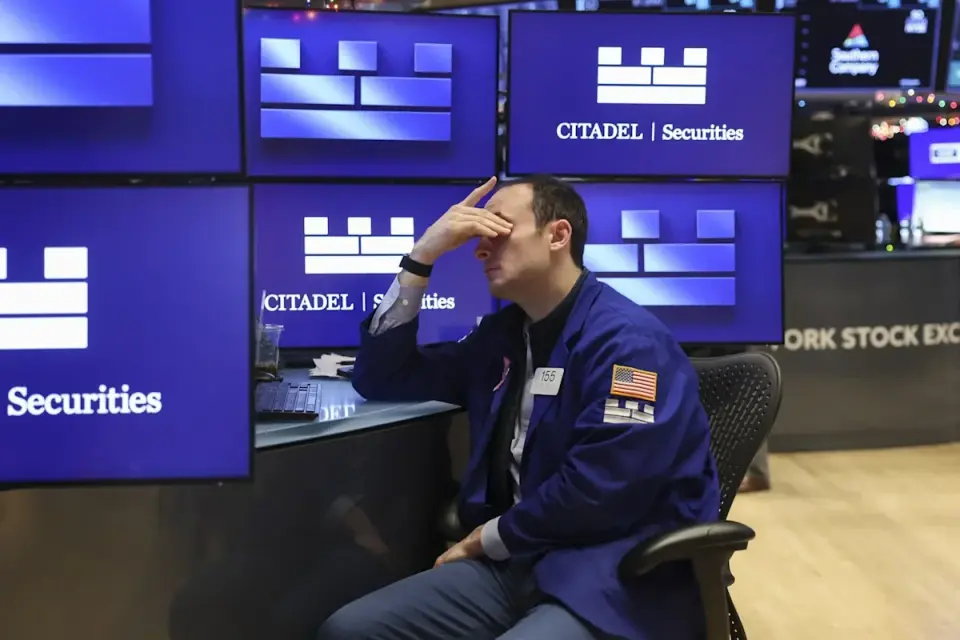
Financial analysts predict a 21% stock market decline next year, attributing the risk to a late-stage bubble. They also warn that Treasury yields exceeding 5% will mark a new era of tight monetary conditions, signaling increased borrowing costs and potential economic contraction.
Key points
- Analysts forecast a 21% drop in stock prices for the coming year, citing bubble dynamics.
- Treasury yields surpassing 5% are identified as a critical threshold for a new monetary regime.
- The current market environment is characterized by stretched valuations and heightened sensitivity to interest rate changes.
Background
Recent data shows the S&P 500’s Shiller CAPE ratio has remained above 40 since May 2026, a level comparable to the dot-com era, indicating significant valuation pressure. In August 2026, Treasury yields spiked after the government signaled increased long-term bond purchases, pushing the 10-year yield to 4.71% and the 30-year to 5.27%. While some analysts argue that historical patterns suggest recovery within a year after energy or geopolitical shocks, the current combination of high valuations and rising yields presents distinct risks. The market is currently navigating a period of elevated debt levels, with national debt exceeding $40 trillion, which complicates fiscal and monetary policy responses.
Why it matters
A 21% market decline would represent a severe correction, potentially triggering widespread portfolio losses and economic slowdown. Sustained Treasury yields above 5% would increase borrowing costs for businesses and consumers, likely dampening investment and spending. This scenario marks a shift from the low-interest-rate environment that fueled recent asset price growth, requiring investors to reassess risk exposure and diversification strategies to mitigate potential losses.
What to watch
Investors should monitor Treasury yield movements for sustained levels above 5%, which could trigger further market volatility. Portfolio diversification and defensive positioning may become critical as analysts warn of a potential crash. Regulatory actions or monetary policy adjustments by the Federal Reserve in response to rising yields will also influence market stability. Long-term investors may need to balance quality holdings with caution, avoiding overexposure to high-valuation sectors while preparing for a potential period of tighter financial conditions.
- Stocks are in a late-stage bubble and poised to crash 21% next year, while Treasury yields above 5% will signal a new era of tight money, analysts say Yahoo Finance
- AI is losing its stranglehold on the U.S. stock market. Here's why CNBC
- The AI Trade Is Not Broken, But It Is Handcuffed by a Single Number InvestorPlace
- Higher bond rates and elevated AI stock valuations prompt market questions, Richard Baldwin notes Traders Union
- Five Warning Signs the AI Stock Bubble Is in Its Final Stages barrons.com
Want the full story? Read the original reporting
Read on Yahoo Finance