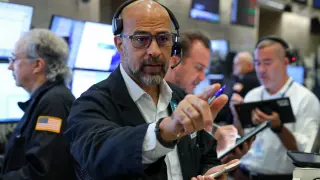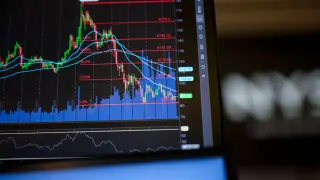
Stocks were relatively muted after tense U.S.-Iran discussions, with oil retreating toward sub-$80 a barrel and U.S. Treasuries yields rising toward 4.5% as investors price in potential Fed rate hikes to counter inflation, while hopes for Middle East stability persist.
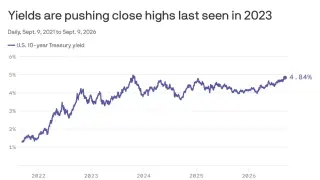
A strong May jobs report cooled fears of weakness but sent markets into a wobble as the 10-year yield neared 4.6% and the 30-year crossed 5%, helping drive a Nasdaq drop of about 4% and a S&P slide of around 1%. Barclays warns we’re entering a “warning zone” for valuations as higher rates compress the value of future profits, especially for AI-related stocks, prompting a rotation into near-term earnings plays. Inflation pressures persist due to strong demand, supply bottlenecks, oil/shock risks, and tariffs, while an active IPO pipeline (SpaceX, Anthropic, OpenAI) looms as one of the market’s recent bright spots. Trump even chimed in on Truth Social, saying great jobs data should lift stocks.
A stronger-than-expected May payrolls report kept the labor market resilient, sending U.S. Treasury yields higher: the 10-year rose to about 4.538%, the 2-year to 4.153% and the 30-year to 5.005%, with unemployment at 4.3% and leisure/hospitality leading gains, reinforcing bets that the Fed will delay rate cuts.
Samsung Display is reported to have achieved over 90% yields on its Gen 8.6 IT OLED line for laptop panels, with some steps hitting about 95%—a “golden yield” level that could enable June shipments and mass production of 14-inch and 16-inch MacBook Pro OLED panels, with around 2 million units expected this year. The panels will use brighter tandem two-stack OLED technology, oxide TFT backplanes, and hybrid encapsulation, and Samsung could activate a second production line if demand grows. Apple’s MBP OLEDs are expected to include touchscreen support, with launch timing now pegged for late 2026 to early 2027, though供应 timing may shift due to chip shortages.
U.S. stocks finished lower as renewed inflation concerns pushed yields higher, weighing on valuations and pressuring tech and growth names, with mixed moves across sectors and notable volatility in several big-name equities.
Asia-Pacific stocks fell as investors digested higher bond yields, with the U.S. 30-year yield near 5.18%—its highest since 2007—and Japan’s long bonds at elevated levels; Nikkei, Kospi and Kosdaq declined while U.S. futures were modestly higher and Wall Street closed lower for a third straight session amid the yield rally and renewed geopolitical tensions around Iran.
U.S. stock futures were little changed ahead of Nvidia’s Q1 results, while Tuesday’s session saw losses as rising yields pressured equities: the S&P 500 fell about 0.7%, the Nasdaq roughly 0.8%, and the Dow around 0.6%. The 30-year Treasury yield topped 5.19% (its highest in ~19 years) and the 10-year yield neared 4.69%, reigniting inflation concerns. Nvidia’s results are a key gauge for AI demand; Fed minutes from the April meeting are due Wednesday at 2:00 p.m. ET. Before the open, Lowe’s, Target, Hasbro, VF Corp, Analog Devices, and TJX report; after hours, Toll Brothers, Cava, Red Robin, and Keysight moved on earnings or guidance.
U.S. equities moved into the red after an initial rally as long-term yields climbed—10-year around 4.60% and the 30-year at 19-year highs—raising debt costs and pressuring valuations. Morgan Stanley warned of a meaningful correction if rates stay elevated, with bond volatility likely to persist until the U.S.–Iran conflict subsides.
Futures slip modestly after a record-setting week as investors brace for Nvidia, Target and Walmart earnings; oil prices rise and global yields climb, boosting caution for tech stocks and keeping a lid on gains amid rising tensions between the U.S. and Iran and higher rates ahead of a G7 meeting.
The S&P 500 hit new highs on strong CY26 earnings expectations and Fed liquidity, but hotter inflation readings, rising long-term yields, and a downward revision to CY26 EPS growth to about 23.2% raise risk. The piece maintains a neutral stance on SPY, advising caution and selective pruning until inflation pressures ease, highlighting the tension between earnings-driven rally optimism and a backdrop of higher risk-free rates.
Global bond prices dropped and yields rose as investors priced in persistent inflation, triggering a broad sell-off across government and corporate debt and weighing on related risk assets.
U.S. stock index futures edged lower as Treasury yields climbed, signaling cautious trading after news that the Trump–Xi summit had ended. Declines were led by technology and other growth-sensitive names, with the broader market awaiting further data and policy cues.
Inflation is reaccelerating, led by oil, with April CPI expected at 0.6% month-over-month and 3.7% year-over-year. Markets price in no Fed rate cuts and potential ECB tightening; despite higher inflation, bond markets show a dovish Fed bias as real yields fall and inflation swaps rise, making the CPI release a key catalyst that could trigger a major shift in Treasury yields and the dollar.
Friday’s rally faded as U.S. inflation stayed elevated and oil prices remained high ahead of Saturday’s Iran talks in Islamabad, leaving investors cautious about risk-taking. The Dow fell about 0.6%, the S&P 500 barely moved, and the Nasdaq gained, while the 10-year yield rose to around 4.32% as traders weigh inflation, energy costs, and how talks will influence Fed policy.