
Buffett's Simple S&P 500 Strategy Outperforms Despite Market Concentration Risks
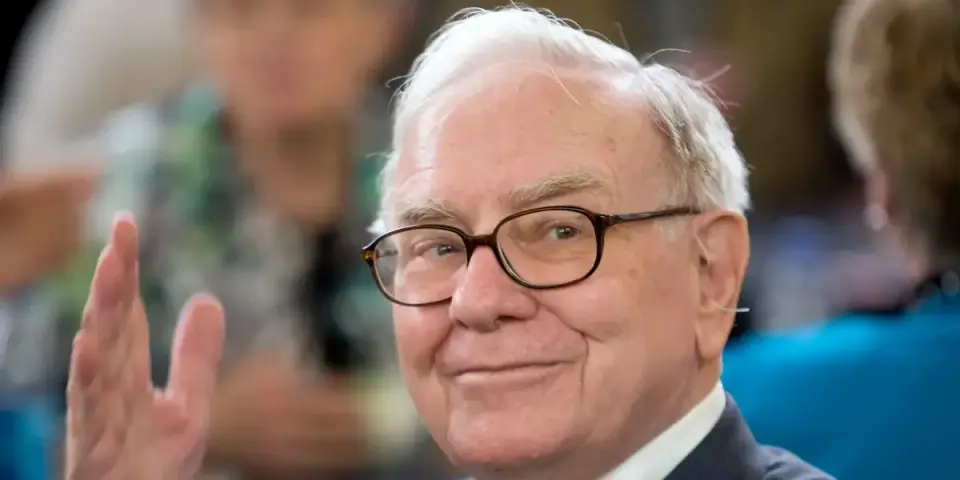
Warren Buffett’s decades-old advice to invest in low-cost S&P 500 index funds continues to yield strong returns, with the index hitting a record 7,819 points. While the strategy avoids high fees and active management pitfalls, critics warn that extreme concentration in AI-heavy tech giants creates fragility. Buffett remains confident in the long-term US market, despite recent leadership transitions at Berkshire Hathaway.
Key points
- The S&P 500 reached a record 7,819 points on October 7, 2026, gaining 14% year-to-date and nearly 80% over five years.
- Buffett recommends 90% allocation to low-cost S&P 500 index funds and 10% to short-term government bonds for long-term wealth preservation.
- The top 10 companies now account for approximately 40% of the index’s market capitalization, with Nvidia approaching $6 trillion and Apple and Alphabet exceeding $4 trillion each.
- Buffett won a 2008 bet that an S&P 500 index fund would outperform a basket of hedge funds over a decade, reinforcing his passive investing thesis.
- Critics, including Michael Burry, argue that indiscriminate stock buying and AI-driven concentration have created a bloated and fragile market structure.
Background
This advice follows Buffett’s recent transition to chairman emeritus at Berkshire Hathaway, where his son Howard took over the chair role in September 2026. Earlier this month, Buffett also advised holding cash during potential bear markets, emphasizing patience during volatility. His long-standing philosophy contrasts with active management strategies that often fail to beat index funds after fees.
How outlets are covering it
Business Insider highlights the enduring success of Buffett’s passive strategy, noting that his approach avoids high fees and complex portfolio management. Yahoo Finance, while not providing a full article, references Buffett’s specific recommendation of a Vanguard index fund, illustrating how $400 monthly investments could grow to $820,000. However, both sources acknowledge concerns from investors like Michael Burry, who warn that the current market’s heavy reliance on a few AI-driven tech giants increases systemic risk. While Buffett remains bullish on the US market’s long-term trajectory, critics argue that the current concentration makes the market more vulnerable to a sharp correction.
Why it matters
Buffett’s advice remains relevant for the majority of investors seeking reliable, low-cost returns without the complexity of active stock picking. The S&P 500’s record performance underscores the power of passive investing, but the growing concentration in a few mega-cap tech companies raises questions about market resilience. As Buffett transitions to an emeritus role, his continued endorsement of index funds serves as a benchmark for retail investors navigating a market increasingly driven by AI and technological innovation.
What to watch
Investors will likely continue to monitor the S&P 500’s performance as it navigates potential volatility from concentrated tech holdings. Buffett’s ongoing influence, despite stepping back from daily leadership at Berkshire Hathaway, will shape market sentiment, particularly regarding passive investing strategies. The next few months may reveal whether the current market structure can withstand a downturn or if the concentration risk leads to a more severe correction.
- Warren Buffett's classic advice to 99% of investors is still paying off Business Insider
- Warren Buffett Says Buy This Vanguard Index Fund -- It Could Turn $400 Per Month Into $820,000 Yahoo Finance
- Is VOO Still the Best S&P 500 ETF You Can Own? Here's How It Stacks Up Against the Alternatives. The Motley Fool
- Why I'd Choose VOO Over QQQ For The Next 20 Years (NYSEARCA:VOO) Seeking Alpha
- If You Invest Just $50 per Month in the Stock Market, Here's What History Says It Could Be Worth in 20 Years The Globe and Mail
Want the full story? Read the original reporting
Read on Business Insider