
FDIC Closes United Fidelity Bank, Largest US Failure Since 2024
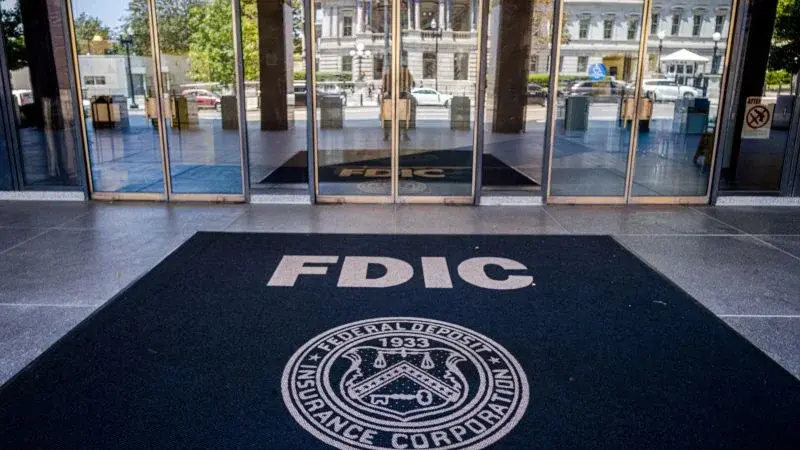
Federal regulators closed United Fidelity Bank on November 27, 2026, marking the largest US bank failure since April 2024. The FDIC appointed as receiver and arranged for First Citizens Bank & Trust Company to assume substantially all deposits and assets. The closure will cost the Deposit Insurance Fund $1.83 billion, reflecting a 31% loss on the bank's $5.9 billion in assets. First Citizens will reopen United Fidelity's 22 branches as its own starting November 28, 2026, and depositors retain full access to their funds and insurance coverage. The OCC cited an 'unsafe or unsound condition' as the reason for the closure, while First Citizens accepted a $2.6 billion discount on assets, suggesting concerns about loan quality.
Key points
- The OCC closed United Fidelity Bank on November 27, 2026, after finding it in an 'unsafe or unsound condition' and likely unable to meet depositor demands. The FDIC was appointed as receiver.
- First Citizens Bank & Trust Company agreed to assume substantially all deposits and purchase substantially all assets of United Fidelity. The deal includes a $2.6 billion discount on assets, indicating First Citizens views the loans as troubled.
- The FDIC estimates the failure will cost the Deposit Insurance Fund $1.83 billion, representing a 31% loss on United Fidelity's $5.9 billion in total assets as of September 30, 2026.
- First Citizens will assume $4.5 billion of United Fidelity's $5.4 billion in deposits, excluding 'certain brokered deposits' as noted by the FDIC. The bank's 22 branches across Indiana, Illinois, Florida, Colorado, and the US Virgin Islands will reopen as First Citizens locations starting November 28, 2026.
- United Fidelity's closure is the largest US bank failure since Republic Bank's closure in April 2024 and the second-largest since the 2023 regional banking crisis. The bank had a history of rapid growth and acquired eight other banks since 2014, with a Federal Reserve cease-and-desist order in June 2024 over management concerns.
Background
United Fidelity Bank, headquartered in Evansville, Indiana, had a reputation for fast growth, partly due to affordable housing finance ventures and the acquisition of eight other banks since 2014. In June 2024, the Federal Reserve issued a cease-and-desist order over bank management concerns. The 2026 failure is the seventh US bank failure of the year, following two years of relative calm with only two failures each in 2024 and 2025. First Citizens Bank & Trust Company, with $241 billion in assets, has been a serial purchaser of failed banks' assets, having successfully bid on failed banks roughly 20 times since 2009, including substantial acquisitions from Silicon Valley Bank in 2023.
How outlets are covering it
CNN and the FDIC emphasized the financial impact of the failure, noting the $1.83 billion cost to the Deposit Insurance Fund and the 31% loss on assets. CNN highlighted the $2.6 billion asset discount in First Citizens' bid as a sign of concern over loan quality. The OCC focused on the regulatory basis for closure, citing an 'unsafe or unsound condition.' Courier & Press provided local context, noting United Fidelity's Evansville headquarters and the last Evansville bank failure in 2011. All sources agreed on the transfer of deposits and assets to First Citizens and the immediate reopening of branches. No sources reported on the specific reasons for the exclusion of 'certain brokered deposits' from the transfer.
Why it matters
The closure of United Fidelity Bank is significant as the largest US bank failure since 2024, highlighting ongoing vulnerabilities in regional banking. The $1.83 billion cost to the Deposit Insurance Fund and the $2.6 billion asset discount suggest deep financial distress, potentially signaling broader risks in the banking sector. The rapid acquisition by First Citizens, a serial purchaser of failed banks, underscores the role of large institutions in stabilizing the system during failures. The exclusion of 'certain brokered deposits' may indicate regulatory concerns about specific types of funding, which could have implications for future banking practices.
What to watch
First Citizens will reopen United Fidelity's 22 branches as its own locations starting November 28, 2026, with Saturday branches opening on Saturday and others on Monday. Depositers can access funds immediately via checks, ATMs, and debit cards. The FDIC's Call Center will be open to assist customers with questions about the acquisition. First Citizens will complete systems changes to allow its branches to process United Fidelity accounts, after which customers will receive notice. The FDIC will release further information about the resolution of the bank, including details on the excluded 'certain brokered deposits.'
- Federal regulators shut $6 billion Indiana lender in biggest bank failure in over two years CNN
- Federal government closes Evansville-based United Fidelity Bank Courier & Press
- OCC Appoints Receiver for United Fidelity Bank, Evansville, Indiana Office of the Comptroller of the Currency (OCC) (.gov)
- First-Citizens Bank & Trust Company, Raleigh, North Carolina Assumes Substantially All Deposits and Purchases Substantially All Assets of United Fidelity Bank, fsb, Evansville, Indiana Federal Deposit Insurance Corporation (FDIC) (.gov)
- First Citizens Bank Enters Into Whole Bank Purchase Of United Fidelity Bank, FSB TradingView
Want the full story? Read the original reporting
Read on CNN