
Hedge Fund Industry Faces Severe Talent Drain as AI Trade Unwind Triggers Record Losses
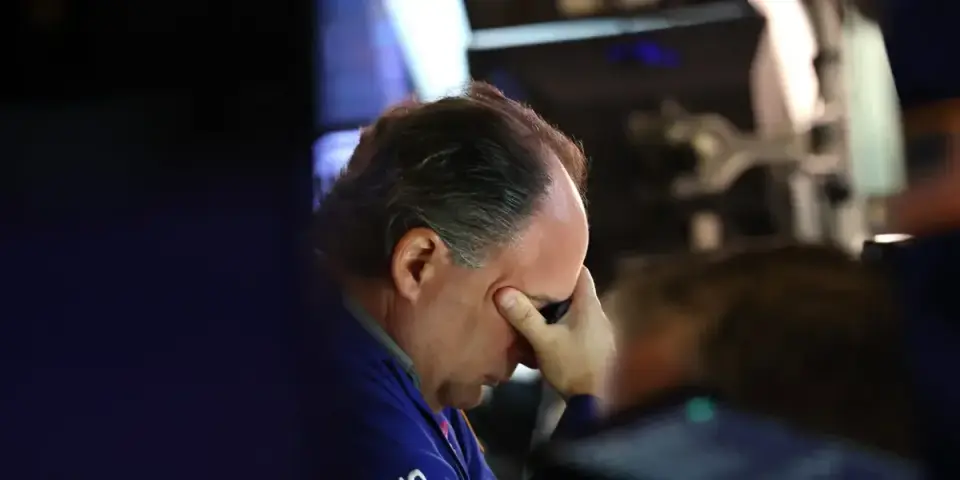
October marked a historic downturn for the hedge fund industry, with major multi-strategy firms and macro traders suffering significant losses. The pain stems from a sharp unwind of artificial intelligence and semiconductor stocks, triggered by profit-taking ahead of year-end and fears of regulatory shifts following the Democratic midterm sweep. Consequently, firms like Walleye Capital and Balyasny Asset Management have cut senior leadership and reduced equity exposure, signaling a potential end to the industry's talent boom.
Key points
- October was a brutal month for nearly all hedge fund strategies, with multi-strategy giants like Millennium Management and Balyasny Asset Management posting losses.
- The Nasdaq dropped 5% on November 5, 2026, as investors rushed to lock in 2026 gains, causing a 'wildly acute' unwind of high-momentum AI trades.
- Semiconductor stocks led the decline, with Lam Research down 36% and Applied Materials down 30% over the past month, while Nvidia and AMD fell 15% and 22%, respectively.
- Walleye Capital restructured its equity long/short business after a 5.9% loss in October, parting ways with head Anil Gondi and a substantial portion of its investment team.
- Macro traders faced challenges from rising interest rates and oil price fluctuations; Kirkoswald Capital recorded its worst month on record, dropping over 6%.
- Credit traders also faced turmoil, with Brevan Howard shedding five portfolio managers and Arini Capital's founder selling hundreds of millions in positions amid a drawdown.
Background
This volatility follows a period of insatiable demand for investing personnel, which Elliott Management founder Paul Singer previously described as an 'exaggerated' talent war driven by a non-stop bull market. The current losses may justify his view that a serious bear market could lead to a comprehensive rethink of how investors determine excellence. Earlier this week, the Nasdaq 100 dropped 6.4%, erasing $2.5 trillion in market value, as the Cboe Volatility Index spiked to an eight-month high. Retail investors executed their largest single-stock sell-off since the 2020 pandemic crash, while hedge funds and leveraged ETFs amplified the move through forced rebalancing.
How outlets are covering it
Business Insider emphasizes the industry-wide carnage and the resulting personnel cuts, noting that multi-strategy funds typically turn over 20% of their portfolio managers annually. Hedgeweek focuses on the specific restructuring at Walleye Capital, highlighting CEO Will England's decision to review every aspect of the business after its worst monthly performance since March 2020. Yahoo Finance frames the sell-off as an institutional shakeout driven by profit-taking rather than fundamental deterioration, with Nomura strategist Charlie McElligott describing the single-name stock moves as 'BONKERS' and approaching 'Round Trip' levels. While all sources agree on the severity of the losses, they differ in emphasis: Business Insider and Hedgeweek focus on the human and structural consequences, while Yahoo Finance highlights the mechanical drivers of the market move.
Why it matters
The current volatility signals a potential shift in the hedge fund industry's hiring practices and investment strategies. As losses mount, firms are becoming less patient with underperforming managers, leading to a wave of departures and restructurings. This could mark the end of the talent war and a return to more conservative hiring and investment approaches. Additionally, the unwind of AI trades may indicate a broader rotation in the market, with investors shifting away from crowded, high-momentum positions and into previously lagging areas.
What to watch
Investors will watch for further signs of a bear market, which could lead to a comprehensive rethink of how excellence is determined in the industry. The upcoming September nonfarm payrolls data may provide clues about Federal Reserve interest rate policy, potentially affecting macro traders. Additionally, the performance of AI stocks and semiconductor companies will be closely monitored to determine if the sell-off is a temporary profit-taking event or a fundamental shift in the market.
- Inside October's hedge fund bloodbath — and why the pain might not be over Business Insider
- Crowded Hedge Fund Trades Are Unwinding Fast After Ugly October Bloomberg.com
- Hedge Funds Dump Positions, Cut Staff Amid Selloff WSJ
- 'They're shooting the generals': AI trade stocks drop as hedge funds rush to protect 2026 gains Yahoo Finance
- Walleye Capital restructures equity long/short business following 5.9% October loss Hedgeweek
Want the full story? Read the original reporting
Read on Business Insider